Building Agentic AI
Introduction to Agentic AI
Beyond the Prompt
For a while now, we've gotten used to AI that responds. You type a question, and a chatbot gives you an answer. You give a command, and a system executes it. This is reactive AI. It's powerful, but it's fundamentally passive—it waits for your instructions.
Agentic AI is different. It represents a shift from a reactive tool to a proactive partner. Instead of just answering your questions, an agentic system can take on a goal and work towards it on its own. It's the difference between a calculator that waits for you to punch in numbers and a financial assistant who actively manages a budget to help you save for a vacation.
Agentic AI represents a fundamental paradigm shift in artificial intelligence, moving from passive, prompt-driven systems to autonomous, goal-oriented agents that can plan, learn, and execute complex tasks with minimal human intervention.
This ability to act independently is what makes these systems “agents.” They have autonomy, a clear objective, and the capacity to adapt. Let's break down what these core principles mean.
An AI with a Mission
The two most important traits of an agentic AI are autonomy and goal-directed behavior. They are two sides of the same coin.
autonomy
noun
The ability to operate and make decisions independently, without constant human guidance for every step.
In the context of AI, autonomy doesn't mean the system has its own desires. It means it has the freedom to figure out the how once a human provides the what. This is where goal-directed behavior comes in. You don't give an agentic AI a list of step-by-step commands; you give it an objective.
For example, instead of telling an AI:
- Search for flights from New York to London for next Tuesday.
- Find hotels near Buckingham Palace.
- Check the weather forecast for London next week.
You would simply give it the goal: "Plan a 5-day business trip to London for me for next week, staying under a $2,000 budget."
The agent then works autonomously to achieve this goal. It breaks the problem down, performs the necessary tasks, evaluates options, and pieces together a complete plan. It takes initiative.
This ability to learn and adapt is crucial. An agentic system isn't static; it improves over time. If it tries something that doesn't work, it notes the failure and adjusts its strategy. If it discovers a more efficient way to perform a task, it incorporates that learning into its future actions. This makes the system more robust and effective with each cycle.
Building Trustworthy Agents
Giving AI this much autonomy can seem daunting. How do we ensure these systems work reliably, safely, and for our benefit? Two key design principles are essential: modularity and transparency.
Modularity means building the AI system from distinct, interchangeable components. Think of it like building with LEGO bricks. There might be one module for reasoning, another for accessing information, and a third for communicating. This approach has several advantages. It makes the system easier to build, test, and update. If a new, better reasoning module is developed, you can swap it in without rebuilding the entire system from scratch.
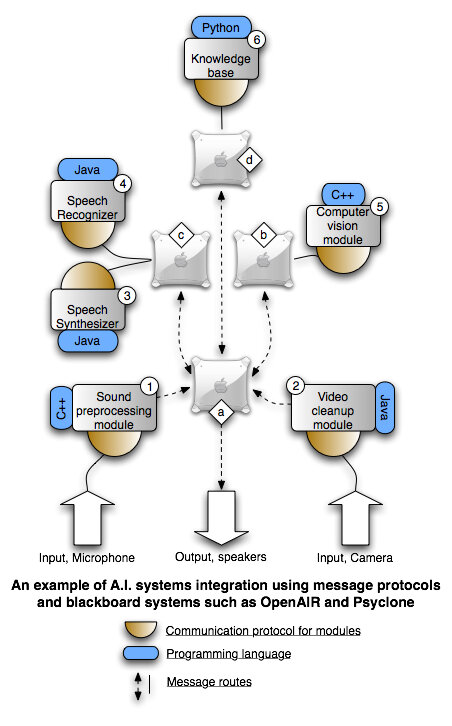
Transparency, sometimes called explainability, is about understanding how the AI makes its decisions. A transparent system can show its work. If an agent books a specific flight, it should be able to explain why it chose that flight over others—perhaps because it offered the best balance of cost, travel time, and convenience based on the stated goal.
This is vital for building trust. When we can see the 'thought process' of an AI, we can verify its reasoning, correct its mistakes, and feel confident in its actions. Without transparency, an autonomous agent is just an unpredictable black box.
Well-designed agentic AI isn't just more capable; it's also more understandable and reliable.
Let's check your understanding of these foundational ideas.
What is the primary difference between reactive AI and agentic AI?
In the context of agentic AI, what does 'autonomy' mean?
Understanding these core concepts—autonomy, goal-direction, adaptability, and trustworthy design—is the first step into the world of agentic AI. These are the principles that allow AI to evolve from simple tools into sophisticated partners.