Building a Social Network
Introduction to Social Networks
What Are Social Networks?
At its core, a social network is a platform that connects people. It's a digital space for building and maintaining relationships with friends, family, and colleagues, or for meeting new people who share your interests. Think of it as a web of connections, where each person is a point, and the lines between them are their relationships.
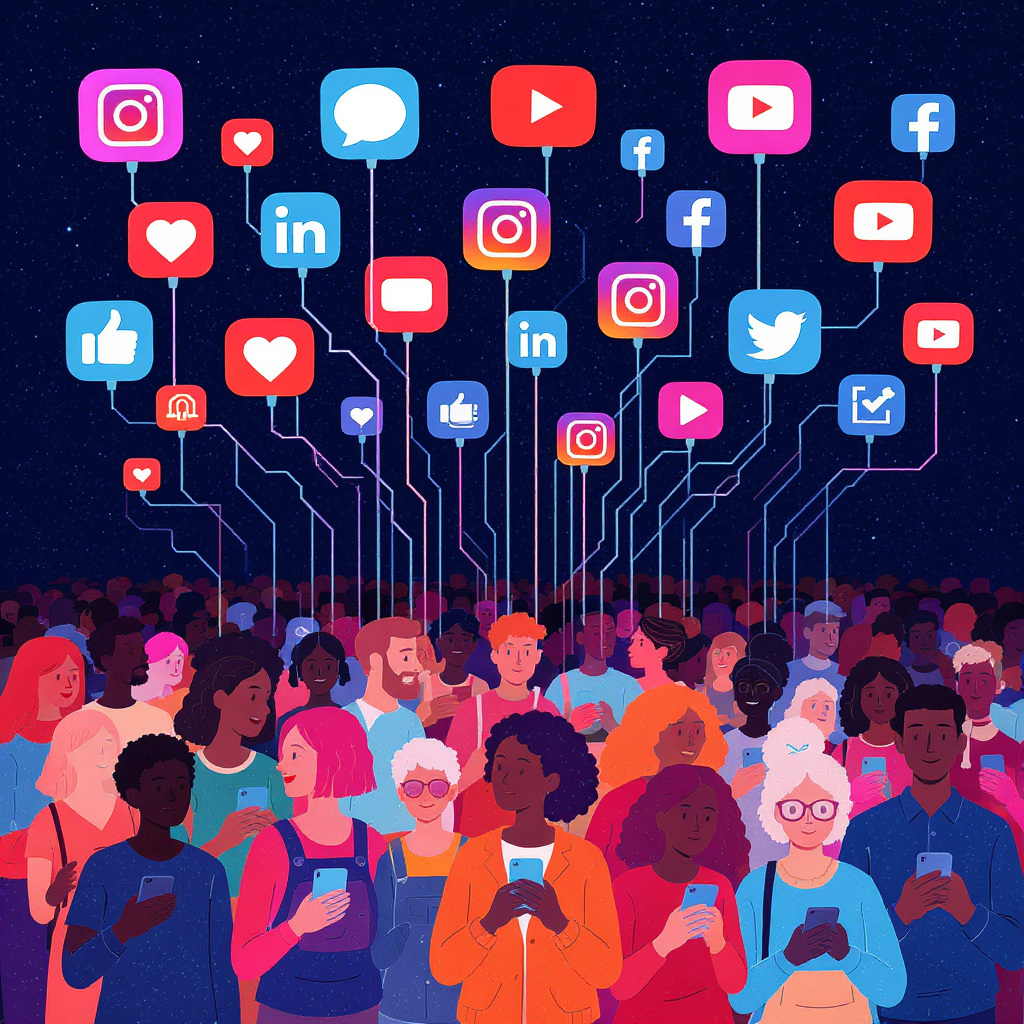
The main purpose of these platforms is to facilitate communication and sharing. You might share photos from a vacation, post an update about your life, share an interesting article, or join a group dedicated to a hobby. They help us stay in touch with people who are far away and build communities around shared ideas and passions.
Core Features
While social networks can look very different, most of them share a few key features that make them work. These are the basic building blocks of our online social lives.
Here’s a breakdown:
- Profiles: This is your personal page. It typically includes your name, a photo, and some information about yourself. It's your digital identity within the network.
- Connections: These are the links you form with other users. On Facebook, they're "friends." On Twitter or Instagram, they're "followers." This network of connections is what makes the platform social.
- Content Sharing: The ability to post and share things like text updates, photos, videos, and links. This is the substance of the conversation on the network.
- News Feed: A constantly updating stream of content from your connections. It’s a personalized feed that shows you what the people you're connected to are sharing and doing.
- Interaction: Tools like likes, comments, and direct messages allow you to engage with other users and their content. This is how conversations happen.
Centralized vs. Decentralized
Not all social networks are built the same way. The biggest difference lies in who controls the platform and the data. Most platforms today are centralized.
A centralized network is owned and operated by a single company, like Meta (Facebook, Instagram) or X (formerly Twitter). This company stores all user data on its servers, sets the rules, and controls the user experience.
Recently, a different model has gained traction: the decentralized, or federated, network. Instead of one company in charge, a decentralized network consists of many independent, interconnected servers, often run by different people or groups. Mastodon is a well-known example.
Think of it like email. You can have a Gmail account and send a message to someone with a Yahoo account. Even though Google and Yahoo are different companies, their systems can talk to each other. Decentralized social networks work similarly. You can join one server but still connect with users on thousands of others.
The tradeoff is often between convenience and control. Centralized platforms are typically more polished and easier to join, but they concentrate power and data in the hands of a few large corporations. Decentralized networks give users more freedom and control over their data, but can sometimes be more complex to navigate.
From BBS to Global Phenomenon
Social networking didn't start with Facebook. Its roots go back to the early days of the internet. In the 1980s, Bulletin Board Systems (BBSs) allowed users to dial in with their computers to leave messages and share files. In the 1990s, sites like GeoCities and TheGlobe let users create their own homepages, while AOL Instant Messenger and ICQ popularized real-time chat.
The first site that resembles a modern social network was SixDegrees.com, launched in 1997. It allowed users to create profiles and make lists of friends. But it was ahead of its time. Widespread internet access wasn't there yet.
The 2000s were the breakout decade. Friendster, MySpace, and LinkedIn launched, each targeting different audiences. Then, in 2004, Facebook appeared. Initially limited to college students, it quickly expanded and came to dominate the landscape. The rise of smartphones in the late 2000s and 2010s fueled the growth of mobile-first networks like Twitter, Instagram, and Snapchat, making social media an ever-present part of daily life.
Societal and Economic Impact
The rise of social networks has profoundly changed how we live, work, and interact. They have reshaped communication, allowing for instant connection and information sharing on a global scale. Social movements can organize, families can stay connected across continents, and individuals can find communities that were previously out of reach.
Economically, social networks have created entirely new industries. Digital marketing, social media management, and the "creator economy" are all built on these platforms. Businesses now use social media to connect with customers, build their brand, and sell products directly. This has created immense value and opportunity, turning companies like Meta into some of the largest in the world.
However, this impact isn't without its challenges. Issues like data privacy, misinformation, and the effects of social media on mental health are significant concerns that society is still grappling with.
Understanding how these platforms work is the first step toward navigating this complex digital world. They are powerful tools that have connected humanity in unprecedented ways, bringing both incredible benefits and new responsibilities.
What is the primary purpose of a social network?
In a social network, which feature presents a constantly updating stream of content from your connections?