Building a Scalable Business
Understanding Business Scalability
What is Scalability?
Scalability is a business's capacity to handle a growing amount of work without its performance or quality suffering. Think of it as building a system that can serve 10 customers just as efficiently as it serves 10,000.
A scalable business is designed for efficiency from the ground up. Its secret is that as revenue increases, its costs don't increase at the same rate. This allows profit margins to expand significantly as the company grows.
Scalability is the ability of a system, network, or process to handle a growing amount of work or its potential to accommodate growth.
Imagine a food truck that sells tacos. To sell more tacos, the owner needs to buy more ingredients, hire more staff, and maybe even get a bigger truck. Revenue and costs go up together. Now, imagine a company that sells an online recipe book for tacos. Once the book is created, they can sell 10 copies or 10 million copies. The cost of selling an additional copy is almost zero. That's a scalable model.
Growth vs. Scaling
Many people use the terms 'growth' and 'scaling' interchangeably, but they describe two different paths. Understanding the difference is crucial.
Growth is about increasing revenue by adding resources. A law firm grows by hiring more lawyers to take on more cases. A freelance designer grows by taking on more projects, which requires more of their time. In these models, costs tend to rise in lockstep with revenue. It's linear.
Scaling is about increasing revenue without a substantial increase in resources. It breaks the linear relationship between revenue and cost. A software-as-a-service (SaaS) company, for example, can add new users with very little additional cost, making each new customer increasingly profitable.
| Feature | Business Growth | Business Scaling |
|---|---|---|
| Revenue | Increases | Increases exponentially |
| Resources | Added at a similar rate to revenue | Remain stable or increase slightly |
| Costs | Increase proportionally with revenue | Increase marginally |
| Profit Margin | Stays relatively constant | Expands over time |
Hallmarks of a Scalable Company
Scalable businesses aren't built by accident. They share common characteristics that enable them to expand efficiently. These traits are woven into their DNA from the beginning.
Scalable businesses are built on systems and processes, not just individual effort. This allows for consistency and efficiency as the company grows.
First, they rely on repeatable processes. Whether it's onboarding a new customer or launching a marketing campaign, the steps are standardized and optimized. This reduces errors and makes it easy to train new team members.
Second, they leverage adaptable technology. Modern cloud infrastructure, for example, allows a company to automatically increase its server capacity to handle a traffic spike without any manual intervention. This technological flexibility is a cornerstone of modern scalability.
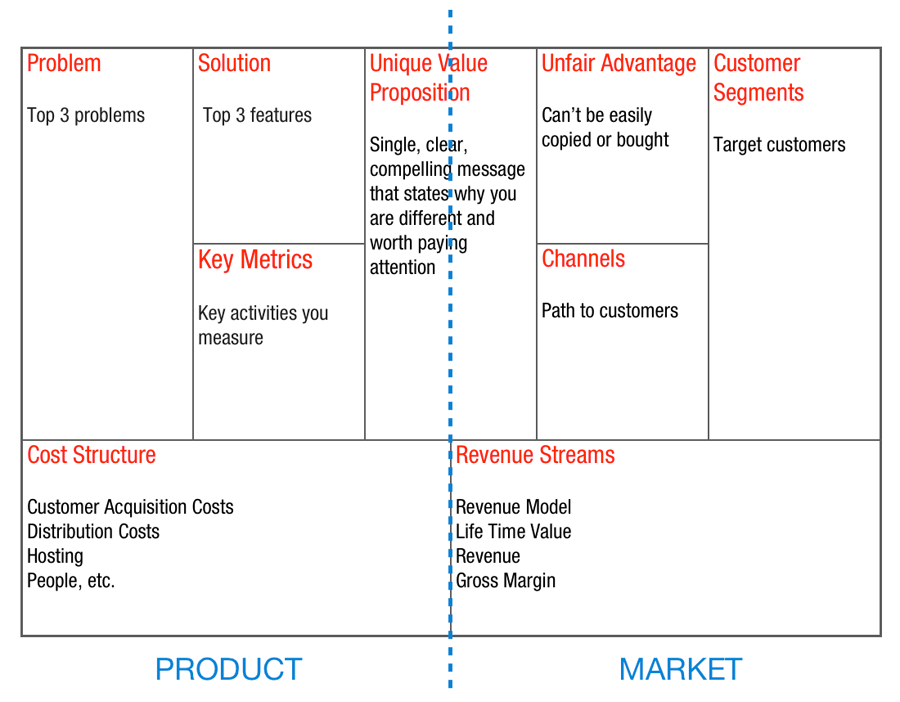
Finally, they have a strong value proposition that can be delivered at a low marginal cost. This is why digital products, software, and media are inherently more scalable than service-based businesses that rely on human hours. The cost to produce one more unit is negligible.
Take Netflix as an example. The cost to stream a movie to one more person is incredibly small, yet each new subscriber adds directly to their revenue. Or consider Shopify. They built a platform that thousands of businesses use to create their own online stores. Shopify's core product doesn't need to be rebuilt for each new customer, allowing them to scale their user base massively with a relatively small team.
These examples show that scalability isn't just about getting bigger. It's about getting bigger, smarter.
Which of the following best describes the core principle of a scalable business?
A freelance graphic designer takes on more clients by working longer hours. This is an example of: