Build Your Personal Portfolio Website
Understanding Personal Websites
Your Corner of the Internet
Think of a personal website as your online home base. It’s a space on the internet that you own and control, where you can introduce yourself and your work to the world. Unlike a social media profile, which is limited by the platform's rules and layout, a personal website lets you tell your own story, in your own way.
Essentially, it’s a digital business card, resume, and portfolio all rolled into one.
Whether you’re a freelance designer, a writer, a software developer, or a recent graduate looking for a job, a personal site gives potential employers or clients a direct look at what you can do. It’s your chance to make a great first impression and stand out from the crowd.
Why Bother Having One?
In a world full of LinkedIn profiles and social media accounts, you might wonder if a personal website is still necessary. The answer is a definite yes. Here’s why:
-
You control the narrative. On your own site, you decide what to highlight. You can showcase the projects you're most proud of, share your professional philosophy, and present your skills in the best possible light. You’re not just another profile in a long list.
-
You can show, not just tell. A resume can list your skills, but a website can demonstrate them. You can display your photography, link to articles you've written, or embed videos of your public speaking engagements. This provides tangible proof of your abilities.
-
It builds credibility. A well-maintained personal website signals professionalism and shows that you are serious about your career. It gives people a central, reliable place to learn more about you and your work.
-
It increases your visibility. When someone searches for your name online, your personal website is likely to be one of the top results. This makes it easier for recruiters, potential clients, and collaborators to find you and learn what you have to offer.
Finding Your Format
Personal websites aren't one-size-fits-all. The right format for you depends on your profession and what you want to achieve. Most sites fall into one of three main categories.
| Type | Best For | Key Feature |
|---|---|---|
| Portfolio | Designers, developers, photographers, artists | A gallery showcasing your best work. |
| Blog | Writers, experts, thought leaders | Regularly updated articles and posts. |
| Hybrid | Most professionals | A mix of portfolio pieces, services, and a blog. |
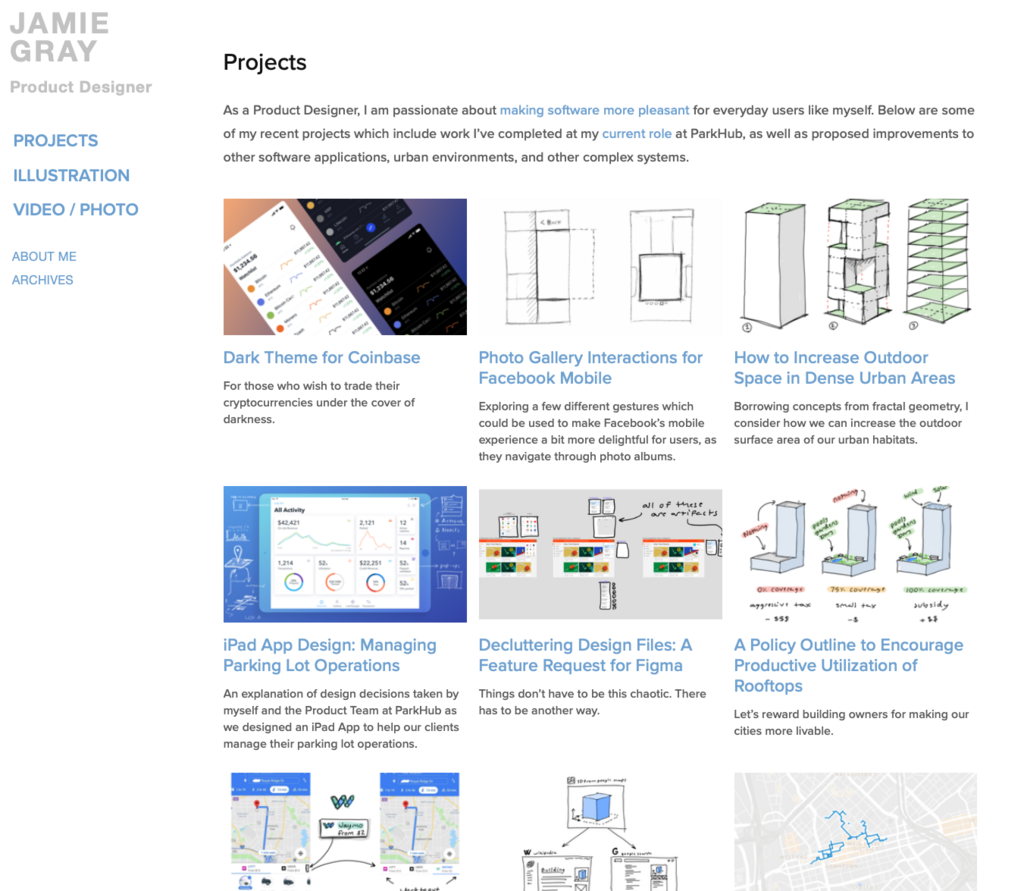
A portfolio site is highly visual and acts as a gallery of your work. It's perfect for anyone in a creative field. The focus is on the projects themselves, often with brief descriptions of your process and the outcome.
A blog is centered on your writing and ideas. It’s an excellent way to establish yourself as an expert in your field by sharing insights, tutorials, and opinions. This format helps build an audience and demonstrates your knowledge.
The hybrid model is the most flexible and often the most effective. It combines elements of a portfolio and a blog. You might have a main page showcasing key projects, an “About Me” section, and a blog where you share industry thoughts. This approach allows you to show off your work and your expertise.
A personal website is a living document—it should evolve as you do.
Let's review the key concepts we've covered.
Ready to test your knowledge?
What is the main advantage of a personal website compared to a social media profile?
A personal website is no longer necessary because of professional networking platforms like LinkedIn.
No matter which format you choose, a personal website is a powerful tool for shaping your professional identity online. It provides a platform to showcase your unique skills and accomplishments to the world.