Build Your Own AI Agent
Introduction to AI Agents
What Is an AI Agent?
An agent is anything that can observe its environment and then act on it. A simple thermostat is an agent. It senses the room's temperature (perceives) and turns the furnace on or off (acts). An AI agent is a smarter, more autonomous version of this. It uses artificial intelligence to make decisions and pursue goals on its own.
An artificial intelligence (AI) agent is a software system that builds upon AI models (e.g., large language models (LLMs)) and autonomously perceives and acts upon its environment to achieve specific goals.
Think of an AI agent as an independent worker you've given a task to. You don't tell it how to do the task step-by-step. You just tell it what you want to achieve. The agent then figures out the best way to get it done, adapting to new information as it works.
This ability to perceive, reason, and act without constant human input is what makes AI agents so powerful. They can handle complex, dynamic situations that would overwhelm a simple, rule-based program.
A Family of Agents
Not all AI agents are created equal. They range from simple reactors to complex learners, each suited for different kinds of tasks. We can group them into a few main types based on their intelligence and capabilities.
Simple Reflex Agents
These are the most basic agents. They operate on a simple "if-then" logic. If they perceive a certain condition, they execute a corresponding action. They don't have memory or think about the future. A robotic vacuum that changes direction when it bumps into a wall is a simple reflex agent.
If it's raining (perception), open the umbrella (action). It's pure reaction.
Model-Based Reflex Agents
These agents are a step up. They maintain an internal "model" or representation of the world around them. This allows them to handle situations that aren't immediately obvious. A self-driving car uses a model to track a nearby vehicle even if it's temporarily blocked from view by a pillar. It knows the other car is still there because its internal model remembers it.
Goal-Based Agents
Instead of just reacting, these agents have a specific goal. They choose actions that will bring them closer to achieving that goal. If you ask a GPS to find the fastest route, it's acting as a goal-based agent. It considers various paths and selects the sequence of turns that will get you to your destination.
Utility-Based Agents
Sometimes, reaching a goal isn't enough. There might be multiple ways to get there, some better than others. A utility-based agent aims for the best outcome. It evaluates different paths based on a "utility" function, which might measure factors like speed, cost, safety, or passenger comfort. A travel booking agent that finds a flight that's not just cheap but also has fewer layovers is a utility-based agent.
Learning Agents
This is the most advanced type. Learning agents can improve their own performance over time. They have a learning element that analyzes feedback and modifies its decision-making process for the future. A spam filter that gets better at identifying junk mail as you mark more emails as spam is a learning agent. Every action provides a new data point to learn from.
Agents in the Real World
AI agents aren't just theoretical concepts; they're already at work across many industries, often behind the scenes.
| Industry | Application | Agent Type(s) Commonly Used |
|---|---|---|
| Customer Service | Chatbots that answer common questions and route complex issues to human agents. | Goal-Based, Learning |
| Healthcare | Systems that analyze medical images to detect diseases like cancer. | Model-Based, Learning |
| Finance | Automated trading bots that execute trades based on market conditions. | Utility-Based, Learning |
| Logistics | Route optimization software that plans the most efficient delivery routes. | Goal-Based, Utility-Based |
| Entertainment | Recommendation engines that suggest movies or songs based on your viewing history. | Learning |
In healthcare, AI agents can analyze X-rays or MRIs, flagging potential issues for a radiologist to review. In finance, they execute high-frequency trades faster than any human could, responding to tiny market fluctuations. And every time you interact with a customer service chatbot, you're talking to an agent designed to understand your goal (like checking an order status) and help you achieve it.
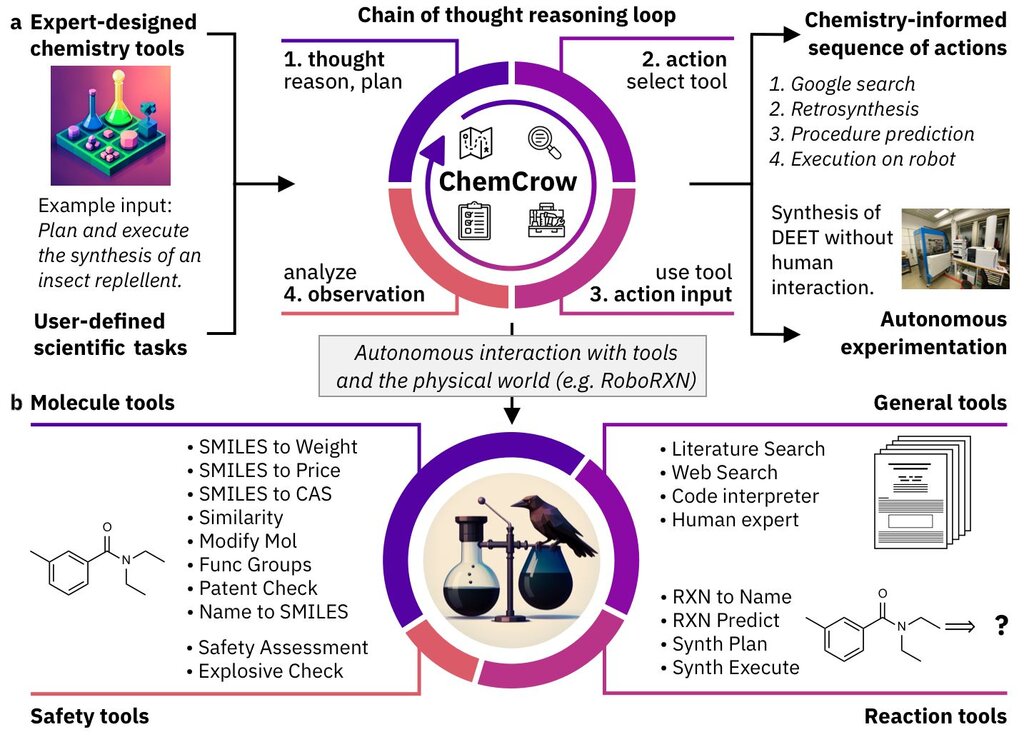
As AI technology evolves, these agents are becoming more sophisticated and autonomous. They are moving from simple tools that follow instructions to partners that can reason, plan, and execute complex tasks on our behalf.
What is the primary characteristic that defines an AI agent?
A self-driving car is momentarily unable to see a pedestrian hidden behind a bus, but it still 'knows' the pedestrian is there and waits for them to reappear. This is possible because it is a: