Build Your Own AI Agent
Introduction to AI Agents
What Is an AI Agent?
An AI agent is an autonomous software entity capable of understanding goals, reasoning through multiple steps, interacting with tools or environments, and adjusting its actions based on outcomes.
Think of an AI agent as a digital employee you can hire to do a job. You give it a goal, and it works on its own to figure out how to achieve it. Unlike a simple program that just follows a strict set of instructions, an agent can sense its surroundings, make decisions, and take actions to get things done.
Every agent, whether it's a smart thermostat adjusting your home's temperature or a sophisticated trading bot, operates on a fundamental loop: perceive, decide, and act. It perceives the current situation (the room is too cold), decides what to do (turn on the heat), and then acts on that decision (sends a signal to the furnace).
Different Kinds of Agents
Not all agents think the same way. Their complexity depends on the job they're designed for. We can group them into a few main categories.
Reactive Agents are the simplest. They operate on a simple "if-then" logic. If they perceive a certain condition, they react with a pre-programmed action. They don't have memory or a long-term plan; they just respond to what's happening right now.
A good example is a robotic vacuum cleaner. If its sensor detects an obstacle, it immediately changes direction. It isn't thinking about the overall layout of the room or remembering where it's already cleaned. It's just reacting to its immediate environment.
Deliberative Agents are more thoughtful. They maintain an internal model of their world and can think ahead. Before acting, they consider how their actions might affect the future and choose the one that best helps them reach their goal.
Imagine a GPS navigation app. It doesn't just react to the next turn. It has a map of the entire area (its internal model) and calculates the best overall route to your destination, considering traffic, road closures, and distance. It's deliberating to find the optimal path.
Hybrid Agents combine the best of both worlds. They have a deliberative, long-term planning ability but can also react quickly to immediate changes. This layered approach allows them to be both strategic and responsive.
A self-driving car is a great example of a hybrid agent. It has a long-term goal of navigating to a destination (deliberative). But if a pedestrian suddenly steps into the road, it uses its reactive layer to hit the brakes instantly, without needing to re-calculate its entire route.
Agents in the Wild
An agent is only as effective as its understanding of its environment. The environment is everything the agent can sense and act upon. For a trading bot, the environment is the stock market data. For a smart thermostat, it's the temperature, humidity, and whether anyone is home.
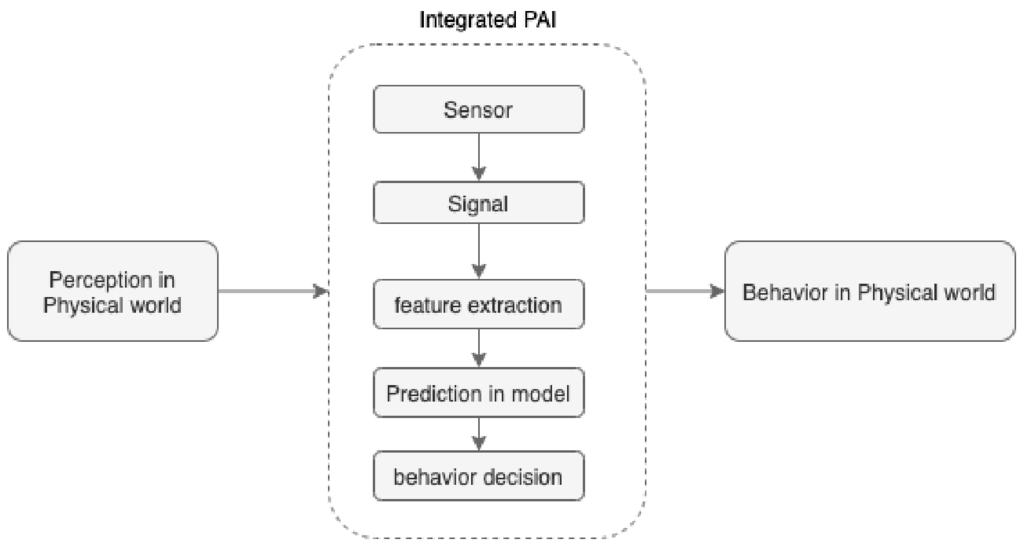
Agents perceive their environment through sensors. These aren't always physical. A camera is a sensor for a self-driving car, but an API that provides stock prices is the sensor for a trading bot. They then use "actuators" to take action. A car's actuators are its steering wheel and brakes; a trading bot's actuator is the command it sends to buy or sell a stock.
This basic model is used everywhere. AI agents help manage complex power grids, personalize your shopping recommendations, and even explore other planets. They are the workhorses of the modern AI world, quietly perceiving, deciding, and acting to make complex systems run.
Ready to check your understanding?
What are the three core steps in the fundamental loop of any AI agent?
A GPS navigation app that calculates the best route by considering a map, traffic, and your final destination is best described as what type of agent?
By understanding these core concepts, you can begin to see how agents form the building blocks for more advanced and autonomous AI systems.