Build Your Online Portfolio
Understanding Personal Websites
Your Space on the Web
Think of a personal website as your digital home base. It’s a space online that you own and control, separate from social media profiles. Here, you can tell your professional story, showcase your work, and connect with people on your own terms. It’s a central hub where potential employers, clients, or collaborators can find everything they need to know about you in one place.
Your personal website is like your digital resume, portfolio, and public persona wrapped up in one easy-to-use package.
Unlike a resume, which is a static, one-page summary, a website can be dynamic and rich with examples. You can include images, videos, detailed project descriptions, and personal reflections that wouldn’t fit on a traditional application.
Why Bother?
In a crowded digital world, a personal website helps you stand out. It shows initiative and gives you complete control over your professional brand. You decide the narrative, the visuals, and what work to highlight. This is your chance to make a strong first impression before you even walk into an interview.

Having your own site also makes you more visible. When someone searches your name online, your personal website is likely to appear high in the search results. This directs traffic to a platform you control, rather than a social media profile that might not be fully professional. It’s an investment in your career that works for you 24/7.
Different Flavors of Sites
Personal websites aren't one-size-fits-all. The right format depends on your goals and your profession. Let's look at three common types.
The Static Site: This is the simplest type of personal website. It's like an online business card or resume. It usually has a few pages, like a homepage, an 'About Me' page, and a contact page. The content doesn't change often. This format is great for professionals who want a straightforward, low-maintenance online presence to establish their credibility.
Next up is the blog.
The Blog: If you want to share your thoughts, expertise, or updates regularly, a blog format might be for you. It’s organized around posts that appear in reverse chronological order. A blog is perfect for writers, thought leaders, and anyone who wants to build an audience by sharing valuable content over time. It shows you're actively engaged in your field.
Finally, we have the portfolio.
The Portfolio: This type of site is all about showcasing your work. It’s a visual collection of your best projects. Designers, photographers, developers, and artists often use portfolio sites. Each project typically gets its own page with images, descriptions of the process, and the final outcome. It's a direct way to prove your skills and experience.
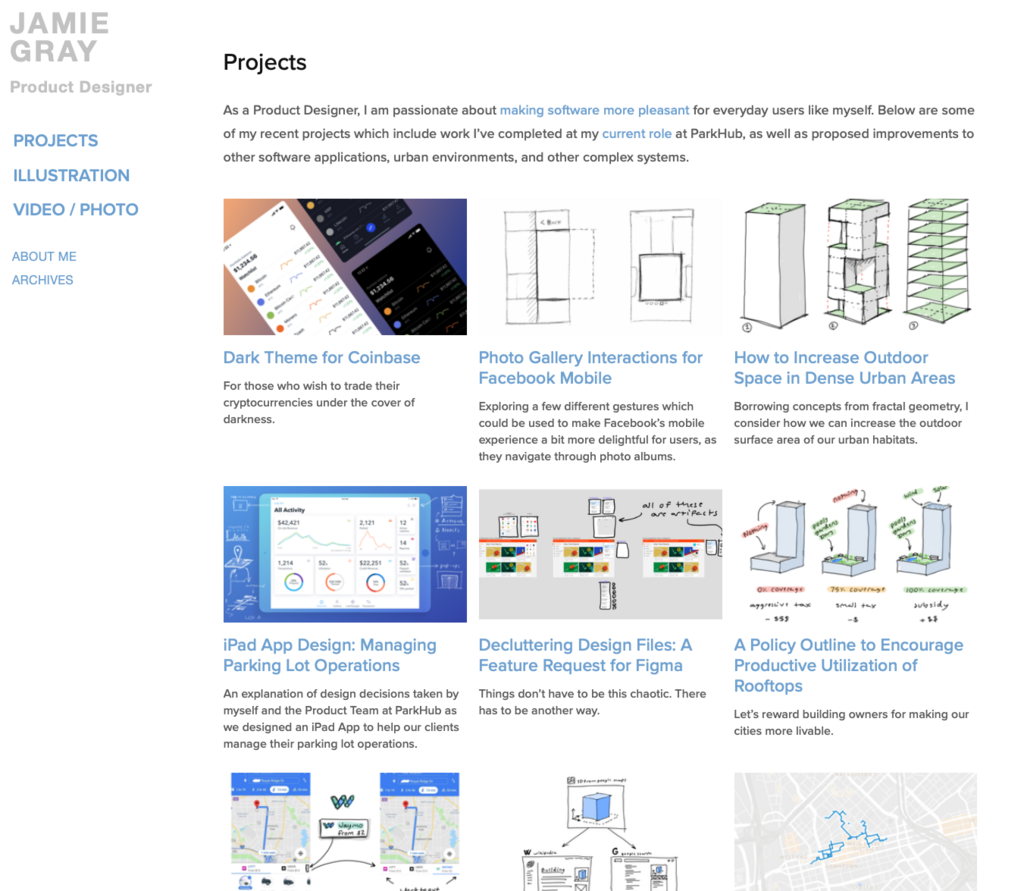
Of course, these types can be mixed. You might have a portfolio website that also includes a blog, or a static 'About Me' page that links to your various projects. The key is to choose the format that best helps you achieve your professional goals.
Let's check your understanding of these concepts.