Build Your GRC Portfolio
GRC Fundamentals
What is GRC?
Think of a successful organization as a well-built stool. It needs at least three strong legs to stay balanced: Governance, Risk Management, and Compliance. Together, they form a unified approach known as GRC.
GRC is the integrated collection of capabilities that enable an organization to reliably achieve objectives, address uncertainty, and act with integrity.
Let's break down each leg of the stool.
Governance (G) is the 'how' of running an organization. It's the set of rules, practices, and processes used to direct and control a company. Think of it as the company's internal rulebook and leadership structure. Good governance ensures everyone is working towards the same goals, decisions are made ethically, and the company is accountable to its stakeholders, like investors and customers.
Risk Management (R) is about preparing for the unexpected. Every organization faces potential problems, from cybersecurity threats to supply chain disruptions. Risk management is the process of identifying these potential threats, assessing how likely they are to happen, and deciding what to do about them. It's not about avoiding all risk, but about making smart decisions to minimize potential harm.
Compliance (C) means playing by the rules. These aren't the company's internal rules, but the external laws, regulations, and industry standards that apply to its business. This could include everything from financial reporting laws to data privacy regulations. Compliance ensures the organization operates legally and ethically, avoiding fines and reputational damage.
How They Work Together
These three components aren't separate functions; they're deeply connected. Governance sets the direction and objectives. Risk Management identifies the obstacles that could prevent the organization from reaching those objectives. Compliance ensures the journey to those objectives follows all required laws and standards.
For example, a company's leadership (Governance) decides to expand into a new country. The Risk Management team would then identify potential issues, like navigating unfamiliar tax laws or political instability. The Compliance team would ensure the company follows all the new country's employment and data protection laws. Each part informs the others, creating a stronger, more resilient organization.
Common GRC Frameworks
To implement GRC effectively, organizations often use established frameworks. These are like blueprints that provide a structured approach. You don't need to know the fine details, but it's helpful to recognize a few key names.
| Framework | Focus Area | What It Does |
|---|---|---|
| ISO 31000 | Risk Management | Provides principles and generic guidelines for managing risk. It's adaptable to any organization. |
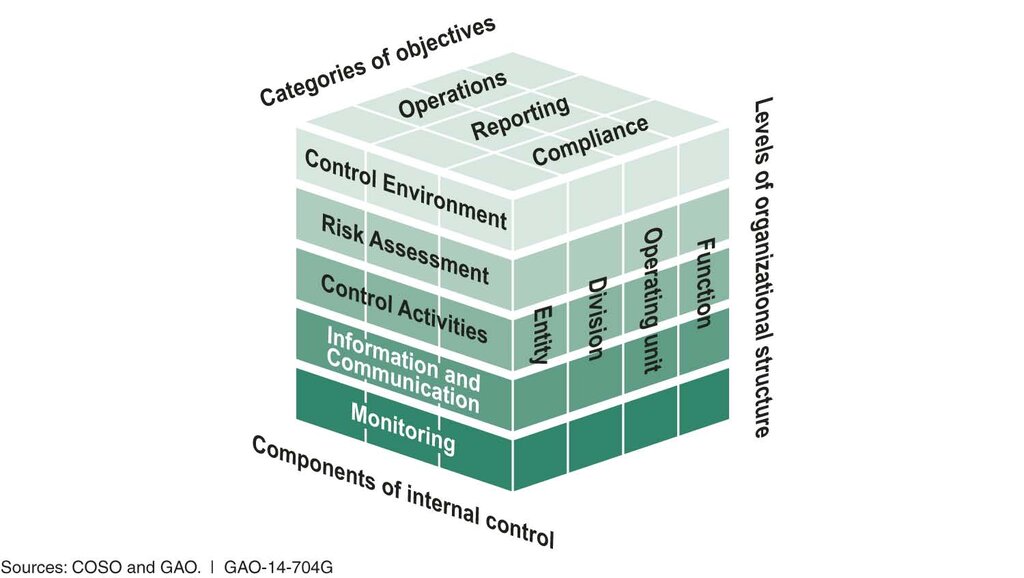
| COSO | Internal Controls | Helps organizations design and implement controls to manage risk, prevent fraud, and ensure reliable financial reporting. |
| NIST Cybersecurity Framework | Cybersecurity | Offers guidance for organizations to prevent, detect, and respond to cybersecurity attacks. |
These frameworks provide a common language and a proven methodology, helping organizations build a robust GRC strategy without starting from scratch.
What is the primary goal of integrating Governance, Risk Management, and Compliance (GRC) into a single framework?
Which component of GRC is best described as the organization's internal 'rulebook' and leadership structure, responsible for setting direction and ensuring accountability?