Build Your First Database Web App
Introduction to Web Development
The Two Sides of a Website
Every website or web application is like a theater production. There's the stage, with its actors, sets, and lights that the audience sees. Then there's the backstage area, where scripts are managed, scenes are changed, and all the behind-the-scenes work happens. In web development, we call these two parts the front-end and the back-end.
The front-end is what you see and interact with in your browser—the layout, the buttons, the text. It's the stage. The back-end is everything that happens behind the curtain. It processes your requests, retrieves information, and makes sure the right things appear on stage.
While frontend focuses on user interfaces and experience, backend development handles the behind-the-scenes logic, databases, and server-side processes that power web applications.
For a website to work, these two sides must communicate constantly and effectively. Let's look at how they each play their part.
Front-End: The User's View
The front-end, also known as client-side development, is all about the user experience. Its job is to present information clearly and make interaction intuitive. This is built using three core languages that your browser understands:
- HTML (HyperText Markup Language): This provides the basic structure and content of a page. Think of it as the skeleton of a house.
- CSS (Cascading Style Sheets): This is the styling. It controls colors, fonts, and layout, making the website visually appealing. It's the paint, furniture, and decorations.
- JavaScript: This adds interactivity. It makes things happen when you click a button, submit a form, or view a photo gallery. It's the plumbing and electricity that make the house functional.

When you visit a website, your browser receives files written in these languages and uses them to render the page you see. The front-end's main goal is to create a seamless experience for you, the user.
Back-End: The Engine Room
The back-end, or server-side, is where data is processed and stored. It's the part of the website you don't see directly, but it powers everything on the front-end. When you log into an account, post a comment, or search for a product, you're sending a request from the front-end to the back-end.
This interaction is known as the client-server model. Your browser is the client. It sends requests over the internet to a powerful computer called a server. The server contains the back-end logic that processes your request, finds the necessary information, and sends a response back to your browser, which then displays it.
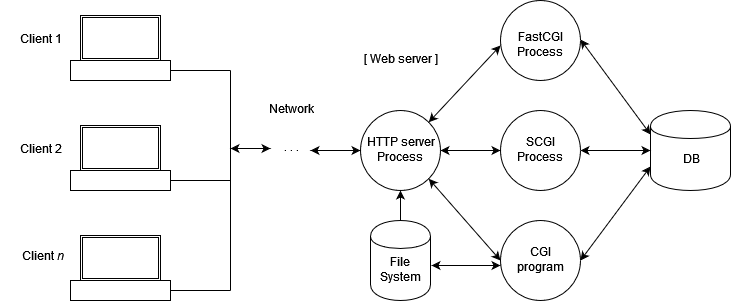
But where does the server get all this information? That's where databases come in.
Databases The Website's Brain
A database is an organized collection of data, like a vast digital filing cabinet. For a social media site, the database stores user profiles, posts, comments, and photos. For an e-commerce store, it holds product listings, customer information, and order histories.
The back-end application communicates with the database to retrieve, create, update, or delete data based on the client's requests.
Let's put it all together. Imagine you're logging into your favorite website:
- Front-End: You type your username and password into a form and click "Log In."
- Client-Server Request: Your browser (the client) sends this information as a request to the website's server.
- Back-End: The back-end application on the server receives the request. It doesn't store your password directly, but it can check if what you entered is correct.
- Database: The back-end queries the database to find your user profile and verify your credentials.
- Client-Server Response: Once verified, the server sends a response back to your browser, telling it the login was successful. The front-end then shows you your personalized homepage.
This entire process happens in seconds. The front-end, back-end, and database all work together to create the dynamic, interactive web experiences we use every day.
Using the analogy of a theater production, what part of a website corresponds to the backstage area where scenes are changed and scripts are managed?
Which front-end technology is primarily responsible for adding interactivity, such as animations or form submissions, to a website?
Understanding this structure is the first step in learning how to build web applications yourself. It provides a map of how information flows and how different parts of an application fit together.