Build Your First AI Application
Introduction to AI
What Is Artificial Intelligence?
Artificial intelligence is about making machines smart. The goal is to create systems that can perform tasks that typically require human intelligence, like learning from experience, solving problems, understanding language, and recognizing objects in the world.
Artificial Intelligence
noun
A field of computer science dedicated to creating systems that can perform tasks that normally require human intelligence. This includes abilities like learning, reasoning, problem-solving, perception, and language understanding.
Think about how you learn. You observe, you try things, and you adapt. AI tries to replicate this process in a machine. Instead of giving a computer a rigid set of instructions for every single possibility, we build systems that can figure things out on their own. This could be as simple as a spam filter learning to spot junk email or as complex as a medical program identifying diseases from scans.
A Quick Trip Through Time
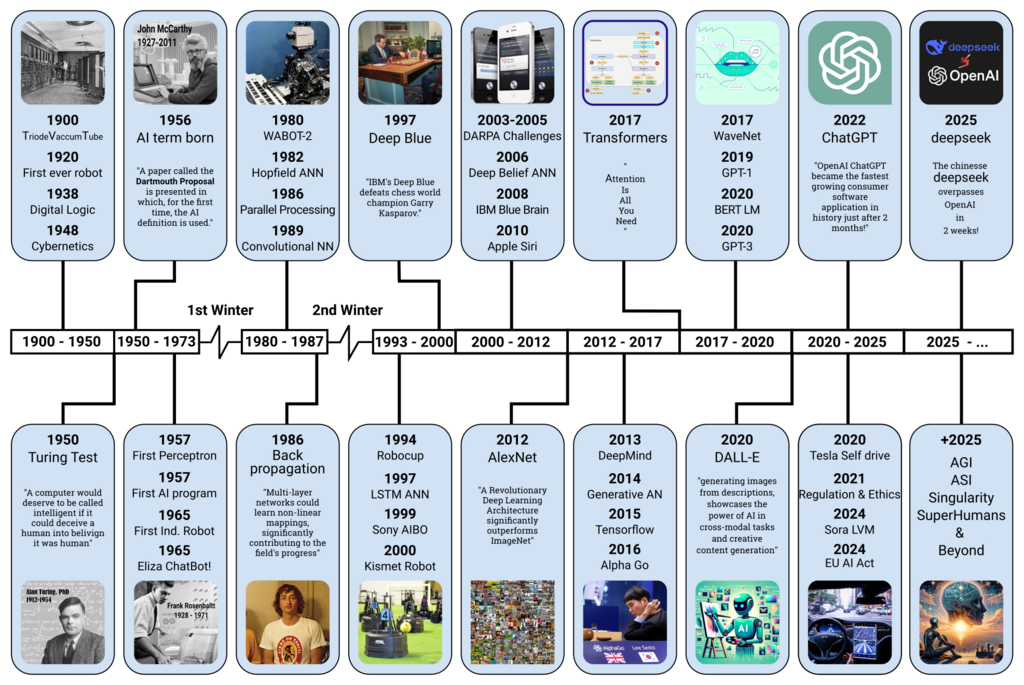
The idea of intelligent machines has been around for centuries, but the formal field of AI research began in the 1950s. The term "artificial intelligence" was coined at a workshop at Dartmouth College in 1956, where a small group of scientists gathered to explore the possibility of creating thinking machines.
Early excitement led to big promises, but the technology wasn't ready. Progress was slow, leading to periods known as "AI winters" in the 1970s and late 1980s, when funding and interest dwindled. But the ideas never went away. In recent decades, two things changed everything: the explosion of digital data and the development of much more powerful computers. These advances fueled a massive resurgence, leading to the AI boom we see today.
The AI Family Tree
AI isn't just one thing; it's a broad field with many specialized areas. Think of it like a big family, with several important branches.
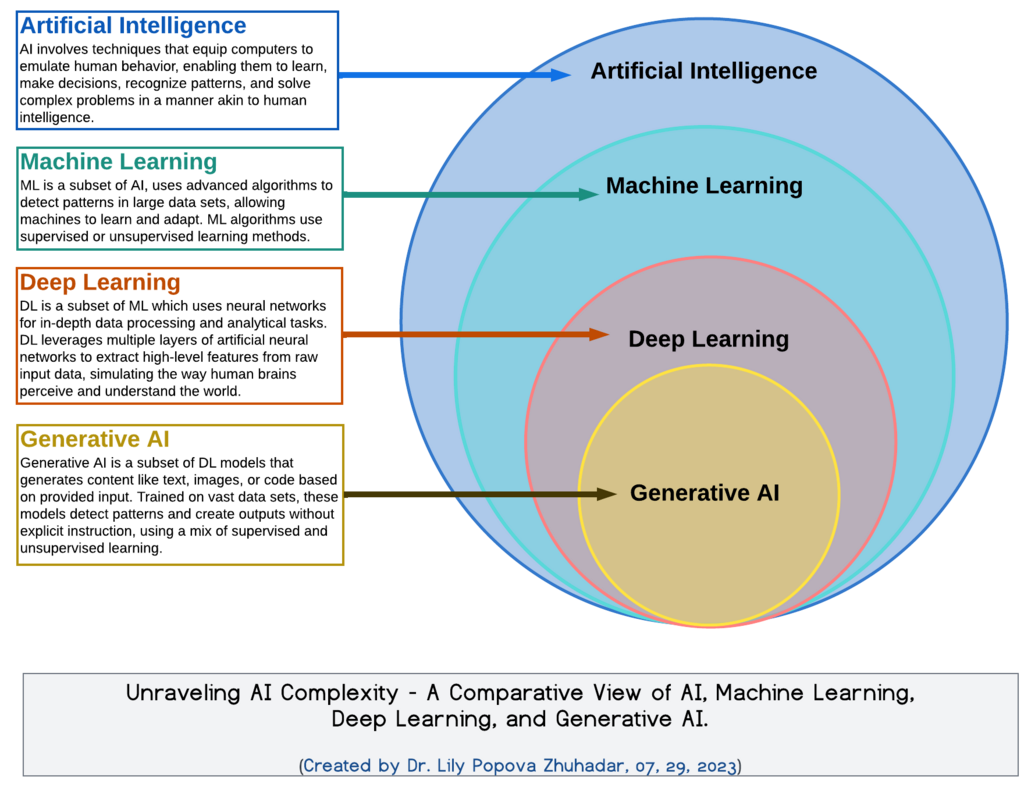
Machine Learning (ML) is the most common type of AI today. Instead of being programmed with explicit rules, ML systems learn patterns directly from data. You show a machine learning model thousands of pictures of cats, and eventually, it learns to recognize a cat on its own. It's the engine behind recommendation systems on streaming services and the facial recognition on your phone.
Deep Learning (DL) is a powerful type of machine learning that uses structures called neural networks, which are loosely inspired by the human brain. These networks have many layers that allow them to learn very complex patterns from huge amounts of data. Deep learning is what makes advanced applications like natural-sounding voice assistants and self-driving cars possible.
Natural Language Processing (NLP) focuses on the interaction between computers and human language. The goal is to enable machines to read, understand, interpret, and generate human languages. Every time you use a translation app, talk to a chatbot, or see your email service suggest a reply, you're interacting with NLP.
How AI Systems Work
Not all AI systems are built the same way. Their internal logic can be quite different.
Some are rule-based systems. These are the oldest form of AI. They operate using a set of handcrafted if-then rules. For example, a simple chatbot might have a rule like: "If a user types 'hello', then respond with 'Hi, how can I help you?'" These systems are straightforward but brittle; they can't handle situations they weren't explicitly programmed for.
Rule-based systems are like a cook following a recipe exactly. They can make a great dish, but they can't invent a new one or adapt if an ingredient is missing.
Machine learning-based systems, as we've seen, don't rely on pre-programmed rules. They learn from data. Instead of being given a recipe, this type of AI is given thousands of pictures of finished dishes and learns to identify which one is which. This approach is far more flexible and powerful for complex problems where the rules are not easily defined.
Finally, many modern applications use hybrid systems that combine both approaches. A system might use machine learning to understand a user's general request and then use a set of rules to take a specific, safe action. This combination can offer the best of both worlds: the flexibility of learning with the reliability of rules.
Ready to test your knowledge on these core AI concepts?
What is the primary goal of Artificial Intelligence?
The periods in the 1970s and 1980s when AI funding and interest decreased due to slow progress are known as what?
Understanding these foundational ideas is the first step in seeing how AI is already changing our world and where it might go next.