Build Your First 1-Bit Memory Circuit
Understanding Bits
The Smallest Piece of Information
At the heart of every computer, from the simplest calculator to the most powerful supercomputer, is a single, fundamental unit of information: the bit. Think of it as an atom in the digital universe. It's the smallest possible piece of data a computer can handle.
Bit
noun
The basic unit of information in computing and digital communications. A bit can have only one of two values, most commonly represented as 0 or 1.
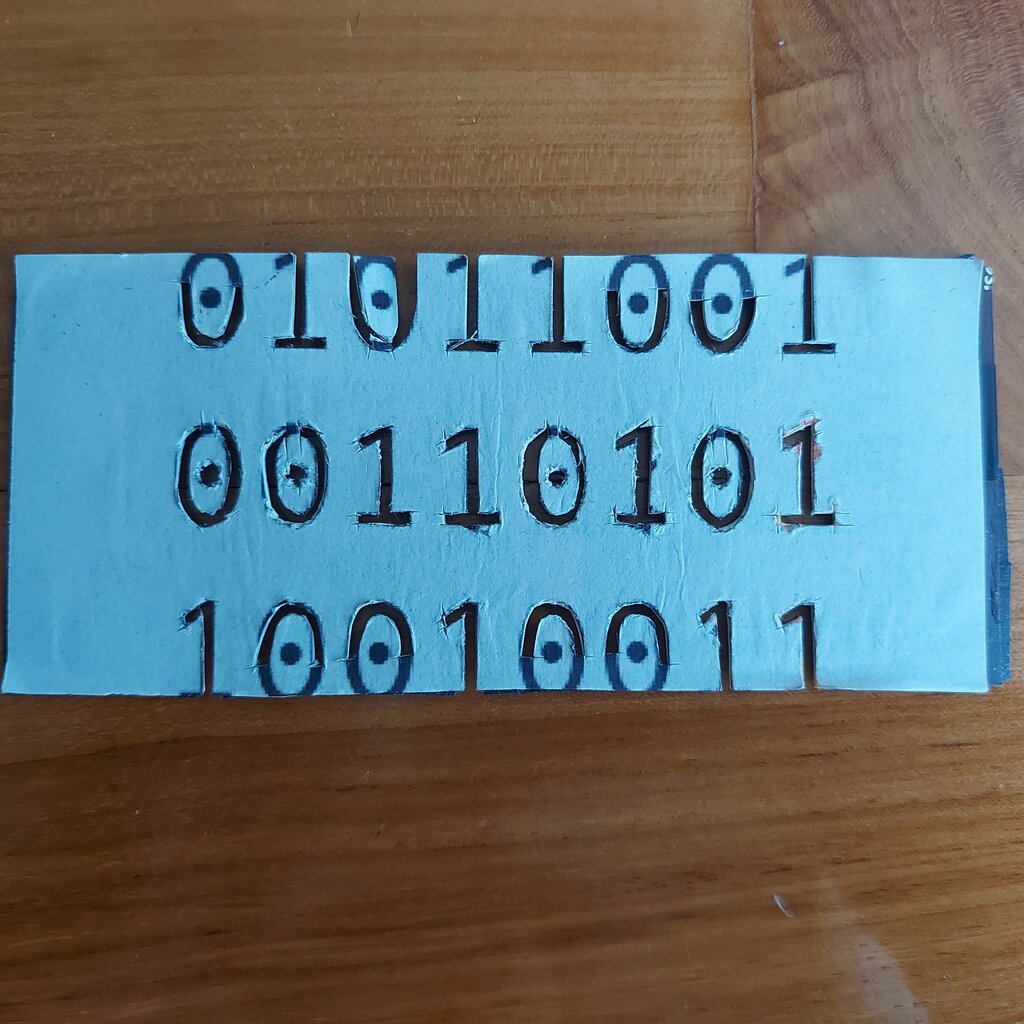
The term "bit" is a contraction of "binary digit." This name hints at its nature. A bit exists in one of two states. We label these states as 0 and 1, but they could just as easily be called on/off, true/false, or up/down. This binary, two-state system is the language of modern computers. Every piece of information, from the text you're reading to a complex video game, is ultimately broken down into a vast sequence of these 0s and 1s.
The Power of Combination
A single bit isn't very useful on its own. It can only answer a simple yes-or-no question. The real power emerges when we start grouping bits together. Each bit you add to a sequence doubles the number of unique combinations you can represent.
With two bits, you can represent four different values (00, 01, 10, 11). With three bits, you get eight combinations. This exponential growth is the key to representing complex data.
| Number of Bits | Possible Combinations | Total States |
|---|---|---|
| 1 | 0, 1 | 2 () |
| 2 | 00, 01, 10, 11 | 4 () |
| 3 | 000, 001, 010, ... | 8 () |
| 4 | 0000, 0001, ... | 16 () |
| 8 (1 Byte) | ... | 256 () |
A standard group of eight bits is called a byte. A single byte can represent 256 different values, enough to encode every letter (uppercase and lowercase), number, and common symbol on a keyboard. By stringing together thousands or millions of bytes, computers can represent virtually anything.
Why Binary?
Computers use a binary system because it's incredibly reliable from an engineering standpoint. Electronic circuits are much easier to design and build when they only have to distinguish between two states, such as a high voltage (1) and a low voltage (0). A switch is either on or off; there is little room for ambiguity.
A system with ten states (like our decimal number system) would require circuits that could accurately detect ten different voltage levels. This would be far more complex and susceptible to noise and errors. The simplicity of binary is its greatest strength.
The entire digital world is built on the simple, unambiguous foundation of the bit. Its two-state nature provides the reliability needed to perform trillions of calculations without error.
Understanding the bit is the first step in understanding how computers work at a fundamental level. It's the simple building block from which all digital complexity is constructed. As we move forward, we'll see how these bits are stored and manipulated in physical circuits.
The term "bit" is a contraction of which two words?
If you have 4 bits, how many unique combinations can you represent?