Build Strength Safely and Consistently
Strength Training Basics
More Than Just Lifting Heavy
Strength training is any physical activity designed to improve muscular strength and fitness by exercising a specific muscle or muscle group against external resistance. This resistance can come from free weights like dumbbells, weight machines, resistance bands, or even your own body weight.
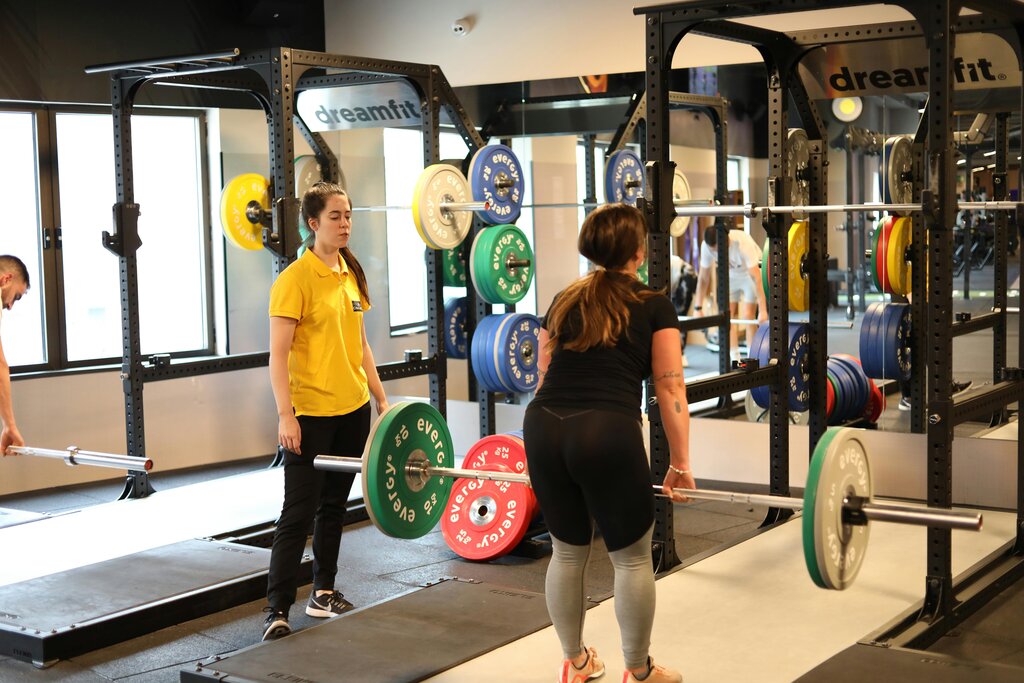
But it's not just about building bigger muscles. The benefits are far-reaching. When you challenge your muscles, you're also strengthening your bones. The stress from resistance exercise signals your body to build denser, stronger bones, which is crucial for preventing osteoporosis later in life.
Strength training also boosts your metabolism. Muscle tissue burns more calories than fat, even when you're resting. By increasing your muscle mass, you turn your body into a more efficient calorie-burning machine, which helps with weight management.
Everyday tasks, from carrying groceries to playing with your kids, become easier and safer when you're stronger.
The Language of Lifting
To get started, you need to know a few key terms. Workouts are structured around repetitions and sets. Think of them as the basic building blocks of any strength training routine.
Repetition
noun
One complete motion of an exercise. For example, one push-up or one bicep curl is one repetition, or 'rep' for short.
Reps are grouped together into sets.
Set
noun
A group of consecutive repetitions. For example, if you do 10 reps of a bicep curl and then stop, you've completed one set.
Between each set, you take a short break called a rest interval. This gives your muscles a moment to recover before you start the next set. A workout plan might call for "3 sets of 10 reps of squats." This means you'll perform 10 squats in a row, rest, perform another 10, rest again, and then do a final 10 to complete the exercise.
Your Body's Major Movers
A good strength training program is balanced, meaning it works all the major muscle groups of your body. This ensures you develop proportional strength and reduces your risk of injury. The primary groups to focus on are the chest, back, shoulders, arms, core, and legs.
Targeting these groups ensures you're building a strong, functional foundation. Your upper body push and pull muscles (chest, back, shoulders, arms) work together with your core and a powerful lower body (legs and glutes) to create stability and strength for all of life's movements.
Strength training is the most effective way to build and maintain muscle mass, crucial for metabolism, strength, and function.
Now that you understand the what, why, and how of strength training basics, it's time to test your knowledge.
Besides building muscle, what is a key benefit of strength training?
If your workout plan says to do "3 sets of 12 reps" of squats, how many total squats will you perform?
Understanding these core concepts is the first step on your fitness journey. They provide the foundation for building effective and safe workout routines.