Build Strength Safely and Consistently
Strength Training Basics
More Than Just Muscle
Strength training is about building a more resilient, capable body. While bigger muscles are a common outcome, the benefits run much deeper. Regular resistance training helps increase your bone density, making your skeleton stronger and less prone to fractures. It also revs up your metabolism, meaning you burn more calories even when you're resting.
Think about your daily life. Carrying groceries, lifting a child, or rearranging furniture all require strength. By training your muscles, you're making these everyday tasks easier and reducing your risk of injury. It's not just about looking better; it's about functioning better for years to come.
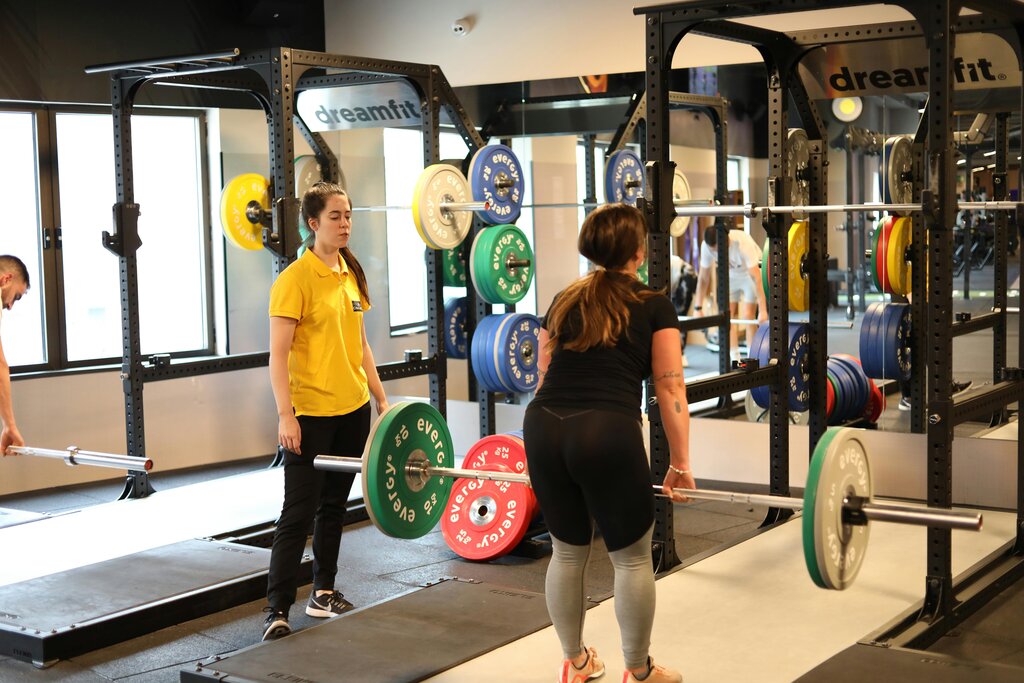
The Language of Lifting
Walking into a gym can feel like visiting a foreign country where you don't speak the language. Let's break down the basic vocabulary so you can navigate any workout program with confidence.
Repetition
noun
A single completion of an exercise movement. For example, one push-up is one repetition, or 'rep.'
Reps are the building blocks of your workout. They are grouped together into sets.
Set
noun
A group of consecutive repetitions performed without resting. After a set is complete, you'll typically rest for a short period before starting the next one.
Finally, there's intensity. This refers to how challenging the exercise is. It's often measured by the amount of weight you're lifting, but it can also relate to how much effort you're putting in. The right intensity pushes your muscles just enough to stimulate growth without causing injury.
How Muscles Grow
Getting stronger isn't magic. It's a biological process of adaptation. When you lift weights or perform other resistance exercises, you create tiny, microscopic tears in your muscle fibers. This might sound bad, but it's actually the first step toward growth.
In response to this stress, your body gets to work. During your rest periods, it repairs these damaged fibers, rebuilding them to be slightly bigger and stronger than they were before. This process is called muscle hypertrophy. Over time, with consistent training and proper recovery, this cycle of breakdown and repair leads to noticeable gains in muscle size and strength.
To build muscle, you first have to challenge it. The repair process is what makes it stronger.
Types of Exercises
Not all exercises are created equal. They can generally be categorized based on how many joints and muscle groups they involve. Understanding the difference helps you build a balanced and efficient routine.
| Type | Description | Examples |
|---|---|---|
| Compound | Multi-joint movements that work several muscle groups at once. | Squats, Deadlifts, Push-ups, Overhead Press |
| Isolation | Single-joint movements that target one specific muscle group. | Bicep Curls, Tricep Extensions, Leg Curls |
Compound exercises are fantastic for building overall strength and burning more calories because they're so efficient. Isolation exercises are useful for targeting specific, smaller muscles or addressing weaknesses. A good program usually includes a mix of both.
Now, let's test your understanding of these core concepts.
Beyond making muscles larger, what is a key benefit of consistent strength training?
In a workout program, several repetitions (reps) are grouped together to form one _________.
With these fundamentals in place, you have the foundational knowledge to understand how strength training programs are designed and why they work.