Build Strength Consistently
Strength Training Basics
More Than Just Muscle
Strength training is about building capability. While it does build muscle, the benefits run much deeper, strengthening your entire body from the inside out.
When you lift weights or challenge your muscles with resistance, you’re not just making them bigger. You're also sending a signal to your bones to become denser and stronger. This is a powerful defense against osteoporosis, a condition that makes bones brittle as we age.
A body with more muscle also has a higher metabolic rate. Muscle tissue burns more calories at rest than fat tissue does. By increasing your muscle mass, you effectively turn up your body's furnace, helping you manage your weight more efficiently even when you're not actively exercising.
The Secret to Getting Stronger
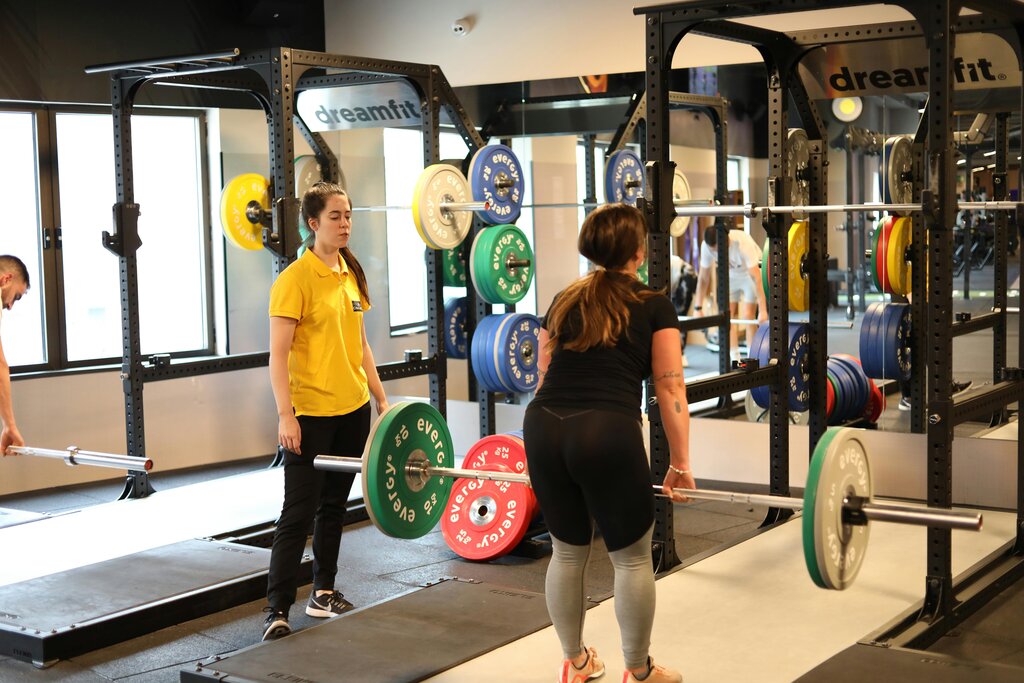
Muscles don't grow by doing the same easy thing over and over. They grow when they are challenged to do more than they're used to. This fundamental concept is called progressive overload.
Think of it like learning a new language. You don't master it by only practicing the alphabet. You start there, but then you move on to simple words, then sentences, and eventually complex conversations. Each step is a little harder than the last, forcing your brain to adapt and grow.
Strength training works the same way. To continuously get stronger, you must gradually increase the demand on your muscles. There are a few ways to do this:
- Increase the Weight: Lift slightly heavier than you did before.
- Increase the Reps: Do more repetitions with the same weight.
- Increase the Sets: Add another set of the exercise.
- Decrease Rest Time: Shorten the rest periods between your sets.
You don't need to do all of these at once. Small, consistent increases are the key to long-term progress.
Progressive overload is the cornerstone of strength training, dictating that in order to continually make gains in strength and muscle mass, you must gradually increase the demands placed on your muscles over time.
Form First, Weight Second
While challenging your muscles is important, doing it safely is paramount. The fastest way to halt your progress is to get injured, and the most common cause of injury is poor technique.
Always prioritize proper form over lifting heavier weight. It's much better to lift a lighter weight with perfect control than to struggle with a heavy weight and risk hurting yourself. Mastering the movement pattern first builds a solid foundation for future strength gains.

Remember: form matters more than weight. Train smart, not heavy. Pair each workout with stretching and proper rest to allow muscles to rebuild stronger.
If you're unsure about your form, consider recording yourself or asking an experienced friend or trainer for feedback. Getting it right from the start will pay off in the long run.
Building Your Toolkit
Strength training exercises can be broadly categorized into two types: compound and isolation movements. A balanced routine will include a mix of both.
Compound exercises are multi-joint movements that work several muscle groups at the same time. They are highly efficient for building overall strength and muscle mass. Think of them as the big, foundational pillars of your workout.
Examples of Compound Exercises: Squats, Deadlifts, Bench Presses, Overhead Presses, Rows.
Isolation exercises are single-joint movements that target one specific muscle group. These are great for addressing weaknesses or focusing on muscles that might not get as much attention during compound lifts. They are the finishing touches.
Examples of Isolation Exercises: Bicep Curls, Tricep Extensions, Leg Curls, Calf Raises.
By understanding these core principles—the benefits, progressive overload, proper form, and the types of exercises—you have the foundational knowledge to approach strength training safely and effectively.
Time to check what you've learned.
Which of the following is a primary benefit of strength training for your skeletal system?
The principle of gradually increasing the demand on your muscles over time to stimulate growth and strength gains is known as ____.
With these fundamentals in mind, you're ready to build a routine that works for you.