Build and Sell AI Agents Online
Introduction to AI Agents
Your Digital Teammate
Think of an AI agent as an autonomous software program that acts like a specialized employee. It perceives its digital environment, makes decisions, and takes actions to achieve a specific goal, all without constant human supervision. It's not just a tool that waits for commands; it's an active participant.
An AI agent is a software program designed to understand its environment, process information, and take actions to achieve specific goals.
The core idea is autonomy. While a simple script just follows a rigid set of instructions, an agent has a degree of freedom. It's given an objective, like “monitor customer emails for urgent issues,” and it figures out the best way to do it. This ability to sense, think, and act is what makes agents so powerful. They don't just automate tasks; they manage them.
Different Kinds of Agents
Not all agents are created equal. They range from simple reactors to complex planners, much like how different jobs require different levels of thinking. We can group them into a few main categories.
Reactive Agents are the simplest. They operate purely on a stimulus-response basis. They perceive the world and act based on a set of predefined rules, without any memory of the past or plans for the future. A spam filter is a classic example. It sees an email, checks it against its rules (e.g., "Does it contain these keywords?"), and immediately acts by moving it to the spam folder or leaving it in the inbox.
Reactive agents follow a simple logic: if this happens, then do that.
Deliberative Agents are more sophisticated. They maintain an internal “model” of their environment and can plan ahead. They consider how their actions will affect the future to achieve a specific goal. Think of a robot vacuum cleaner mapping your home. It doesn't just react to bumping into a wall; it builds a map (its internal model), remembers where it has already cleaned, and plans an efficient path to cover the entire floor (its goal).
Hybrid Agents combine the best of both worlds. They have a reactive layer for quick, instinctual responses and a deliberative layer for long-term planning. This structure allows them to handle unexpected events gracefully while still working towards a larger goal. A self-driving car is a great example. It follows a planned route (deliberative), but it will instantly hit the brakes if a car in front stops suddenly (reactive).
Agents in the Wild
AI agents are not futuristic concepts; they are already at work across many industries, quietly improving efficiency and creating new possibilities.
In customer service, chatbot agents handle thousands of customer queries simultaneously, 24/7. They can answer common questions, process returns, or escalate complex issues to a human representative, freeing up people to focus on problems that require creativity and empathy.
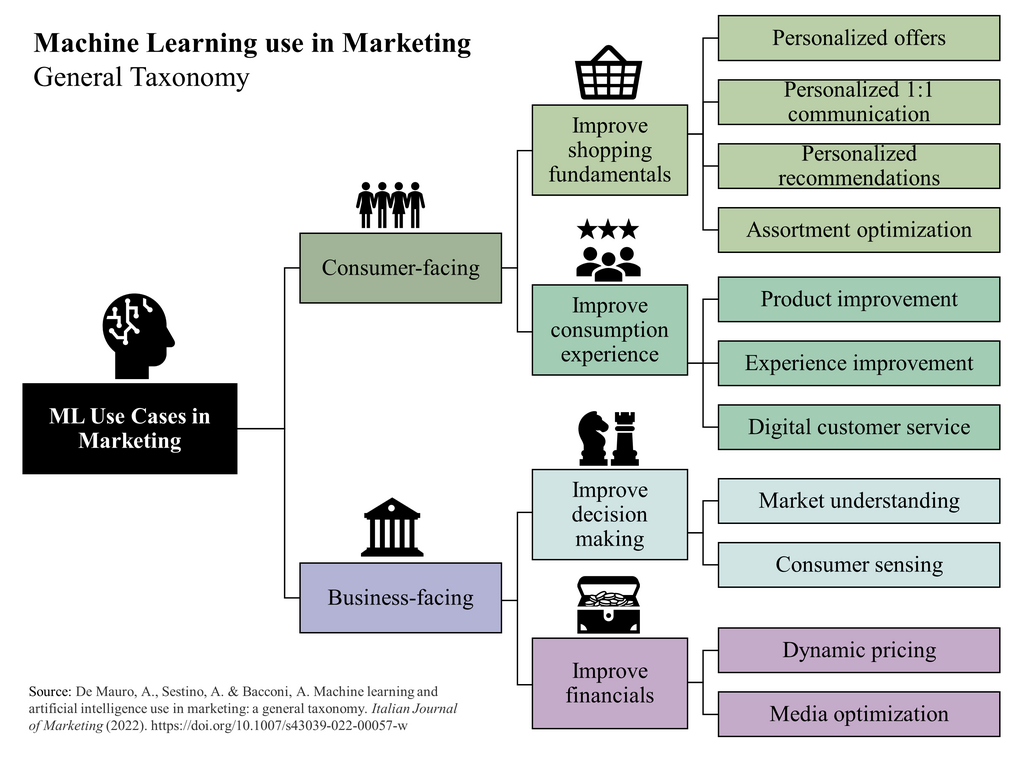
In marketing, agents analyze customer data to personalize advertising campaigns. They can automatically adjust bids in online ad auctions or send targeted promotional emails based on a user's browsing history, leading to more effective outreach.
For data management, agents can monitor vast datasets for anomalies. An agent might oversee a company's sales data and flag a sudden, unexpected drop in a particular region, alerting managers to a potential problem before it gets worse.
By automating complex, repetitive tasks, AI agents allow businesses to scale their operations and make smarter, faster decisions.
The true benefit of these agents is their ability to take on complex workflows and execute them tirelessly. They can analyze information, interact with different software tools, and adapt to changing conditions to get the job done. This drives innovation by allowing businesses to tackle challenges that were previously too time-consuming or complex for human teams alone.
Ready to check your understanding?
What is the primary characteristic that distinguishes an AI agent from a simple automated script?
A spam filter that immediately moves an email to the spam folder based on a list of forbidden keywords is a classic example of which type of agent?
AI agents represent a shift from creating tools that need to be operated to designing teammates that can be delegated to. As they become more capable, they'll continue to reshape how we work.