Build an Inventory App
Introduction to Inventory Management
What is Inventory Management?
At its heart, inventory management is the process of ordering, storing, and using a company's inventory. This includes raw materials, components, and finished products. It’s not just about counting what you have in a stockroom; it’s about making sure you have the right amount of the right items, in the right place, at the right time.
If your business sells products, inventory management will be key to your financial success.
Good inventory management directly impacts a business's bottom line. When done well, it ensures that you can meet customer demand without running out of popular items, a situation known as a stockout. It also prevents you from tying up too much cash in products that aren't selling, which leads to high storage costs and potential waste if the items expire or become obsolete.
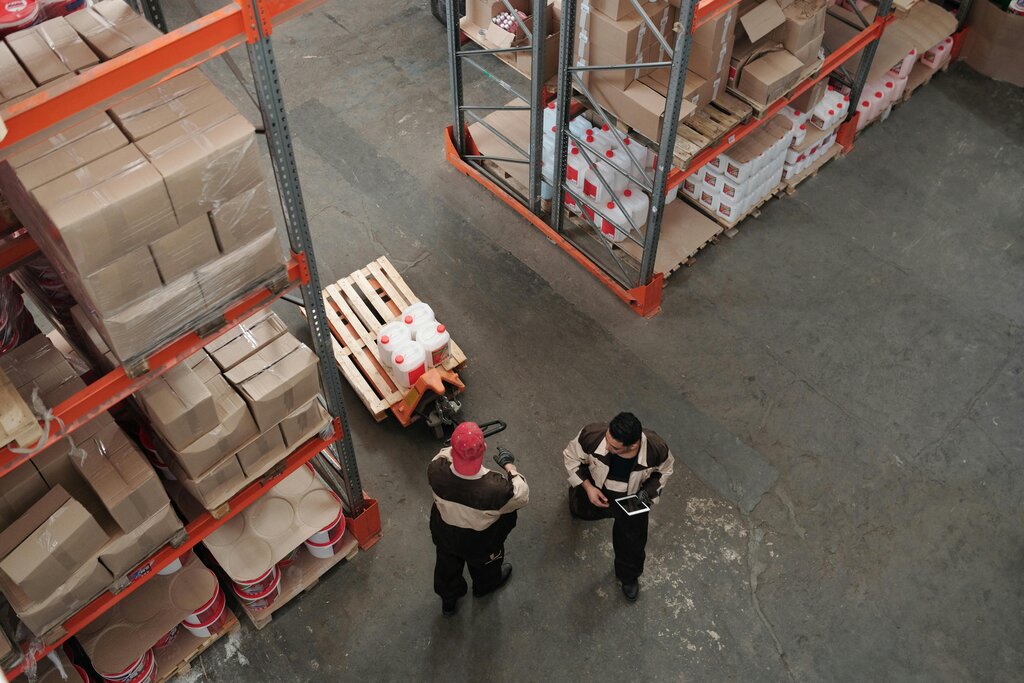
Think of it as a balancing act. Too little inventory means lost sales and unhappy customers. Too much inventory means wasted money and space. The goal is to find that sweet spot.
The Language of Inventory
To get a handle on inventory, you first need to understand a few key terms. They form the basic vocabulary for tracking and managing products.
Stock
noun
The goods or materials a business holds for the purpose of resale or repair. It's the collection of all items you have on hand.
The next term gets more specific.
SKU
noun
Short for Stock Keeping Unit, an SKU is a unique alphanumeric code assigned to a specific product to track its price, product options, and inventory level.
Two final terms are crucial for knowing when to order more stock.
Lead Time
noun
The total time it takes from placing an order with a supplier to receiving the goods. This includes order processing, manufacturing, and shipping time.
Reorder Point
noun
The specific inventory level at which a new order should be placed to replenish stock before it runs out.
The reorder point is a simple but powerful concept. It's calculated based on your lead time and how fast you sell an item. For example, if you sell 10 bags of coffee a day and the lead time from your supplier is 7 days, you'd need to reorder when you have at least 70 bags left. This ensures the new shipment arrives just as you're about to run out.
Common Challenges
If inventory management were easy, every business would be perfectly stocked all the time. In reality, it's filled with challenges that require constant attention.
| Challenge | Description |
|---|---|
| Inaccurate Forecasting | Poorly predicting customer demand leads to either too much or too little stock. Seasonal trends, promotions, and economic shifts can all make forecasting difficult. |
| High Carrying Costs | The costs of storing inventory can be substantial. This includes warehouse rent, insurance, security, and the cost of capital tied up in unsold goods. |
| Inefficient Processes | Relying on manual tracking with spreadsheets or pen and paper is slow and prone to human error. This can lead to discrepancies between recorded stock and actual stock. |
| Supply Chain Disruptions | Unexpected delays from suppliers, shipping problems, or quality control issues can disrupt the flow of goods, making it hard to maintain ideal stock levels. |
Overcoming these challenges is the core work of inventory management. It involves using better tools, analyzing data to improve forecasts, and building strong relationships with suppliers.
Now, let's test your understanding of these core concepts.
What is the primary goal of effective inventory management?
A situation where a business runs out of an item and cannot fulfill customer orders is known as a ________.
Understanding these fundamentals is the first step. With these concepts in mind, you're ready to explore how to build systems that solve these very problems.