Build an Event Ticket Sales Chatbot
Chatbot Fundamentals
What Is a Chatbot?
A chatbot is a computer program designed to simulate human conversation. You've probably interacted with one when asking for your bank balance, checking an order status, or getting quick answers on a website. They're everywhere, working behind the scenes to provide instant support.
Chatbots generally fall into two categories: rule-based and AI-powered.
Rule-based chatbots operate on a set of predefined rules. They are like a phone tree or a simple flowchart. They can only respond to specific commands and follow a script. If you say something outside their script, they get stuck. They're great for straightforward tasks like answering frequently asked questions where the path is predictable.
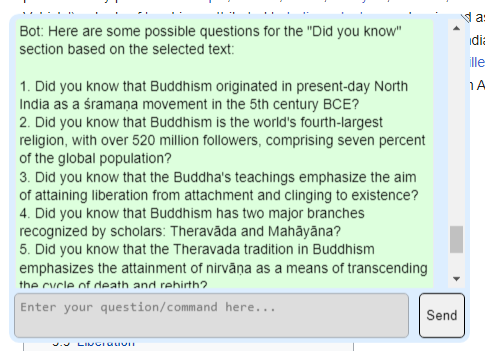
AI-powered chatbots are much more sophisticated. They use artificial intelligence and machine learning to understand, process, and respond to human language in a more flexible way. They learn from conversations and can handle variations in how people ask questions. Think of them less like a script and more like a person who can understand the meaning behind your words, even if you phrase them differently each time.
How Chatbots Think
So how does an AI chatbot understand what you're saying? The magic behind it is Natural Language Processing (NLP). NLP is a field of AI that gives computers the ability to read, understand, and interpret human language. It's the engine that powers an AI chatbot's conversational skills.
NLP bridges the gap between human communication and computer understanding.
A chatbot's core architecture involves a few key steps. When you type a message, the NLP engine breaks it down. First, it tries to figure out your intent—what you're trying to accomplish. For example, if you say, "I need a flight to Boston tomorrow," the intent is to book a flight. It also identifies entities, which are the key pieces of information, like "Boston" (destination) and "tomorrow" (date).
Once the bot understands your request, its dialogue management system decides what to do next. Should it ask a clarifying question? Look up information? Based on that decision, it uses Natural Language Generation (NLG) to craft a reply in plain English. The entire process happens in a split second.
Tools for Building Bots
You don't need to be an AI expert to build a chatbot. Several platforms provide the tools to create and deploy conversational agents with relative ease. They handle the complex NLP work, allowing you to focus on designing the conversation.
Here are a few popular choices:
-
Dialogflow (by Google): A user-friendly platform that's great for beginners. It integrates seamlessly with Google Assistant and other Google services.
-
Microsoft Bot Framework: A powerful and flexible set of tools for developers. It supports multiple languages and can be deployed on various channels, including websites, Slack, and Facebook Messenger.
-
Rasa: An open-source option that gives you full control over your data and infrastructure. It's highly customizable and is preferred by teams who want to build sophisticated, in-house AI assistants.
| Platform | Best For | Key Feature |
|---|---|---|
| Dialogflow | Beginners, Google integrations | Ease of use, pre-built agents |
| Microsoft Bot Framework | Developers, multi-channel support | Flexibility, extensive tools |
| Rasa | Teams wanting full control | Open-source, high customization |
Each platform has its strengths, but they all share the same goal: to make it easier to build bots that can communicate effectively with people.
Which type of chatbot operates like a flowchart, following a predefined script and getting stuck if a user says something unexpected?
What is the core AI technology that enables a chatbot to understand the meaning behind human language?
Understanding these fundamentals—what chatbots are, how they process language, and the tools available to build them—is the first step toward creating your own conversational experiences.