Build AI Powered Software
Introduction to AI
What Is AI, Really?
Artificial Intelligence is about making computers smart. The goal is to create machines that can think, learn, and solve problems like a human. Instead of just following instructions, AI systems can recognize patterns, make predictions, and adapt to new information.
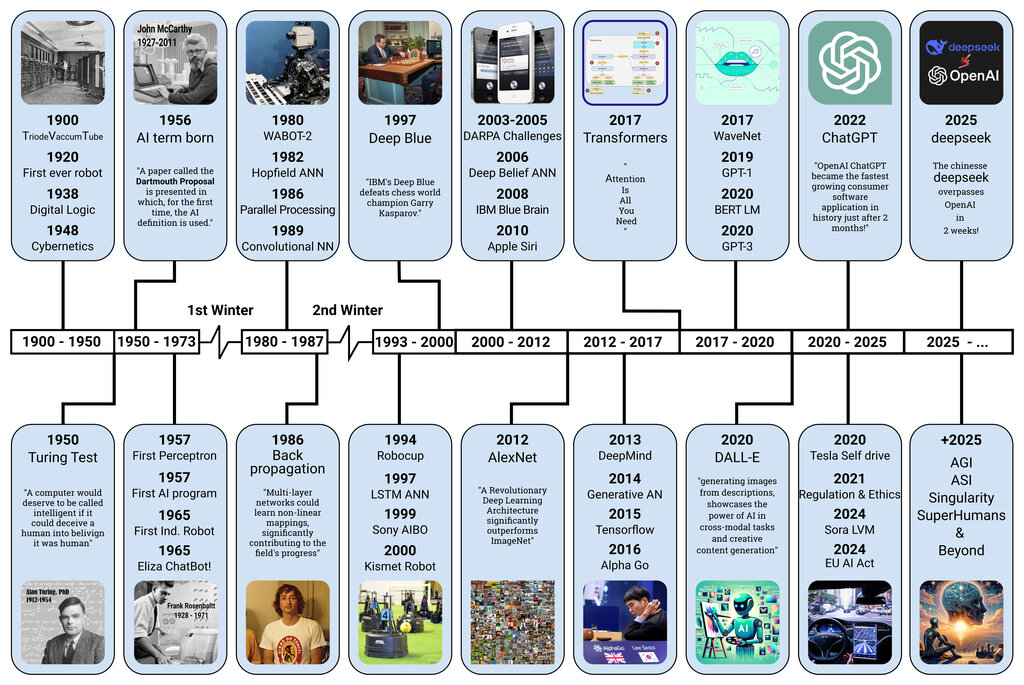
This isn't a new idea. The concept has been around since the 1950s, starting as a philosophical question: can a machine think? Over the decades, thanks to more powerful computers and huge amounts of data, that question has evolved from a theoretical debate into a practical reality that shapes our daily lives.
Think of it this way: traditional software is like a cookbook. You give it a precise recipe (code), and it follows the steps exactly to bake a cake. AI is more like a chef. You can show the chef thousands of pictures of cakes, and it learns to create its own, new cake. It doesn't need an exact recipe for every single variation.
The AI Family Tree
AI is a broad field, like the term "science." Just as science has branches like biology and physics, AI has its own specialized areas. Understanding these subfields helps clarify what people mean when they talk about "AI."
Machine Learning (ML) is the most common type of AI. It’s the practice of teaching a system to learn from data. Instead of being programmed with explicit rules, an ML model is trained on a dataset to find patterns. For example, a bank's fraud detection system learns what a fraudulent transaction looks like by analyzing millions of past transactions, both legitimate and fraudulent.
Deep Learning (DL) is a specialized subfield of machine learning. It uses complex, multi-layered structures called neural networks, which are loosely inspired by the human brain. Deep learning excels at finding intricate patterns in large datasets, making it the powerhouse behind technologies like voice assistants and self-driving cars.
Natural Language Processing (NLP) focuses on the interaction between computers and human language. Its goal is to enable computers to understand, interpret, and generate human text and speech. Every time you use a translation app, a grammar checker, or a chatbot, you're using NLP.
Computer Vision gives machines the ability to “see.” It involves processing and analyzing images and videos to identify objects, people, and activities. This technology is used in everything from unlocking your phone with your face to medical imaging analysis that helps doctors spot diseases earlier.
AI in the Real World
AI isn't just a futuristic concept; it's already integrated into many industries and products you use daily.
Healthcare: AI helps analyze medical records, design new drugs, and identify patterns in medical images like X-rays and MRIs to assist in diagnoses. This can lead to earlier detection of diseases and more personalized treatment plans.
Finance: Banks use AI to detect fraud, assess credit risk, and automate trading. AI algorithms can analyze market data in real-time to make split-second decisions that would be impossible for a human.
Retail: Online stores use AI to recommend products you might like based on your browsing history. It also helps manage inventory by predicting what products will be in high demand, ensuring items are in stock when you want them.
Entertainment: Streaming services like Netflix and Spotify use AI to suggest movies, shows, and music tailored to your tastes. In video games, AI controls non-player characters, making them behave in realistic and challenging ways.
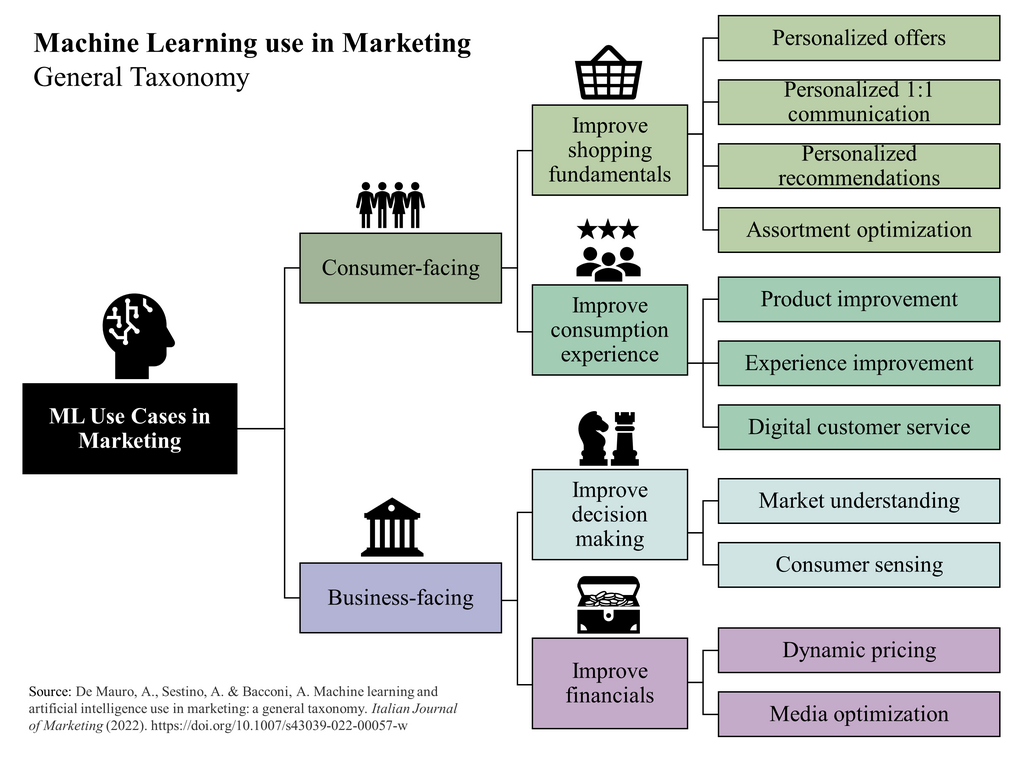
These examples are just the beginning. As technology advances, AI is becoming a fundamental tool for solving complex problems and creating new opportunities across all sectors.
Ready to check your understanding?
According to the 'chef vs. cookbook' analogy, what is the key difference between an AI system and traditional software?
A streaming service like Spotify or Netflix suggests a new song or movie based on your listening and viewing history. This is a practical application of which AI subfield?
By grasping these core ideas—what AI is, its main subfields, and how it's applied today—you have a solid foundation for understanding its role in technology and business.