Build a CRM Application
CRM Fundamentals
What is a CRM?
At its heart, a Customer Relationship Management (CRM) system is a tool that helps businesses manage their interactions with customers and potential customers. Think of it as a central hub where all your customer data lives. It's much more than a simple address book; it's a dynamic system designed to improve business relationships.
CRM
noun
Stands for Customer Relationship Management. It refers to the strategies, practices, and technologies that companies use to manage and analyze customer interactions and data throughout the customer lifecycle.
The main goal is simple: to help companies stay connected with their customers, streamline processes, and ultimately improve profitability. By centralizing information, a CRM ensures that anyone in your company can quickly get up to speed on a customer's history and status.
Core Features
While CRM platforms can offer a vast array of features, they typically revolve around three core functionalities.
Contact Management: Storing and organizing all information about your customers.
This is the foundation of any CRM. It's a centralized database that stores customer and prospect information, such as names, email addresses, phone numbers, and social media handles. But it goes further by tracking every interaction. Every phone call, email, meeting, and support ticket is logged, creating a complete history for each contact. This gives your team a 360-degree view of the customer, enabling more personalized and context-aware conversations.
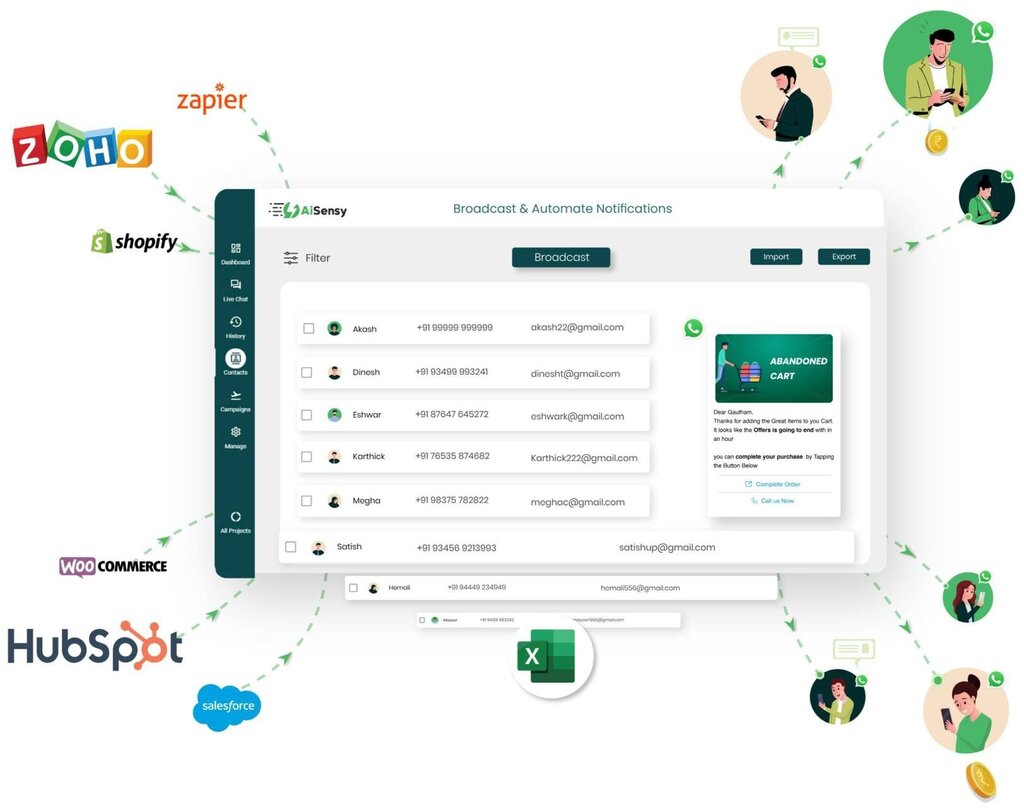
Next up is sales tracking.
Sales Pipeline Tracking: Visualizing and managing the path from lead to customer.
A sales pipeline represents the stages a potential customer goes through before making a purchase. A CRM provides a clear, visual overview of this pipeline, allowing sales teams to track leads, identify opportunities, and forecast future revenue. You can see at a glance how many deals are in each stage, what needs to be done next, and where potential bottlenecks are forming.
Finally, there's the automation component.
Marketing Automation: Automating repetitive tasks to nurture leads efficiently.
Modern CRMs help marketing teams automate tasks that would otherwise be time-consuming. This can involve sending automated welcome emails to new subscribers, creating email campaigns that nurture leads over time with targeted content, or flagging hot leads for the sales team based on their activity.
Set up email workflows that:
Welcome new subscribers
Nurture leads over time
Follow up on abandoned carts
Re-engage inactive customers
Why Bother with a CRM?
Understanding the features is one thing, but the real power of a CRM lies in the benefits it brings to a business. By centralizing and organizing customer data, CRMs drive significant improvements across the board.
| Benefit | How a CRM Helps |
|---|---|
| Improved Customer Satisfaction | With a full history of interactions, support and sales teams can provide faster, more personalized service. Customers don't have to repeat themselves, and their needs are anticipated. |
| Increased Sales Efficiency | Automation handles repetitive tasks, and pipeline management helps salespeople prioritize leads. This frees them up to focus on what they do best: selling. |
| Enhanced Data-Driven Decisions | CRMs provide a wealth of data. Dashboards and reports can reveal trends in sales, customer behavior, and marketing effectiveness, allowing leaders to make strategic decisions based on real numbers, not guesswork. |
Implementing a CRM is a foundational step for any business looking to scale. It organizes the present and provides the insights needed to plan for the future. By having a single source of truth for all customer-related activities, teams can work together more effectively to create a seamless customer experience.
What is the primary function of a Customer Relationship Management (CRM) system?
A sales pipeline in a CRM is used to visually represent the stages a potential customer goes through before making a purchase.