Buddhism in Daily Life
Foundations of Buddhism
The Heart of the Matter
At its core, Buddhism offers a framework for understanding our experience and finding a way to live more peacefully. It starts with a straightforward diagnosis of the human condition, much like a doctor would assess a patient. This diagnosis is known as the Four Noble Truths.
The four key tenets that Buddhists adhere to are collectively known as the four noble truths.
These truths aren't commands or beliefs you must accept on faith. Instead, they're presented as observations to be explored and verified through your own experience.
The Four Noble Truths
The Buddha's first teaching after his enlightenment laid out these four principles. They form the foundation of all Buddhist thought.
1. The Truth of Suffering (Dukkha) Life inevitably involves suffering. This doesn't just mean big tragedies like illness or loss. It also includes more subtle forms of dissatisfaction: the stress of a daily commute, the frustration of not getting what you want, or the vague feeling that something is missing. It’s the inherent friction of existence.
Dukkha
noun
A Pali word that is often translated as 'suffering,' but also encompasses concepts like stress, unease, and unsatisfactoriness.
2. The Truth of the Origin of Suffering (Samudāya) The cause of this dissatisfaction is craving and aversion. We suffer because we cling to things we want (pleasure, praise, a good reputation) and push away things we don't want (pain, criticism, discomfort). This constant wanting and not-wanting creates a cycle of stress and disappointment.
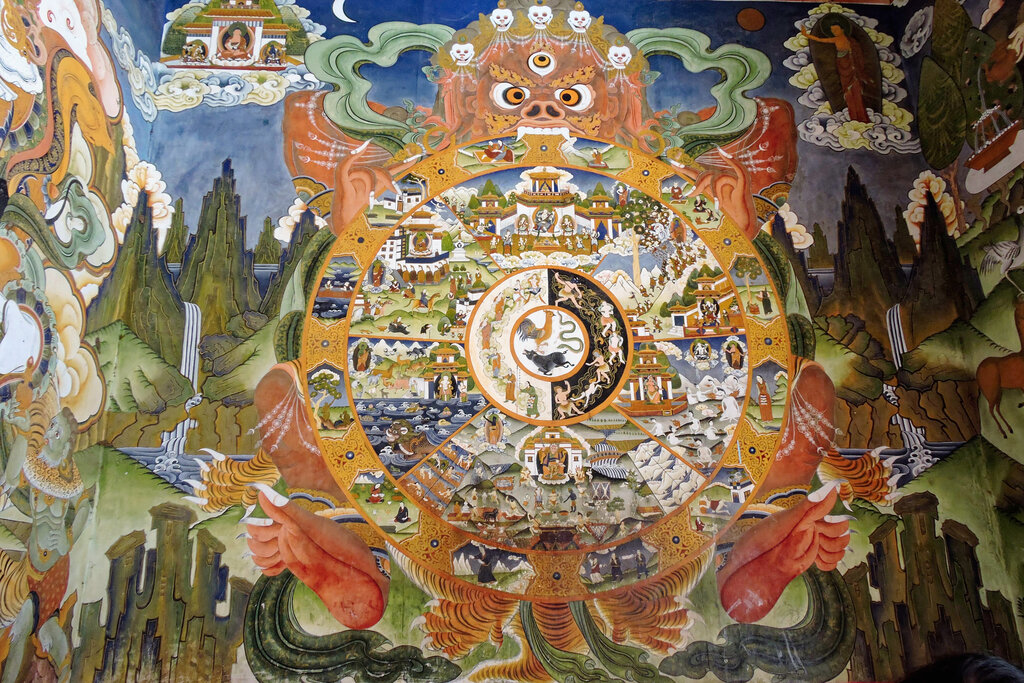
3. The Truth of the Cessation of Suffering (Nirodha) There is a way to end this suffering. By letting go of craving and aversion, we can find a state of peace and liberation known as Nirvana. This isn't a heavenly place, but a state of mind free from the grip of attachment.
4. The Truth of the Path to the Cessation of Suffering (Magga) The way to end suffering is to follow a practical set of guidelines called the Noble Eightfold Path. This path is a blueprint for living an ethical, mindful, and wise life.
The Path to Freedom
The Noble Eightfold Path is not a series of sequential steps you master one by one. Instead, its eight elements are meant to be cultivated together, each one supporting the others. The path is often divided into three main sections.
Wisdom (Prajñā)
- Right Understanding: Seeing things as they are, according to the Four Noble Truths.
- Right Intention: Cultivating intentions of goodwill, non-harming, and letting go.
Ethical Conduct (Śīla)
- Right Speech: Speaking truthfully and kindly, avoiding gossip, lies, and harsh words.
- Right Action: Behaving in ways that don't cause harm, such as not stealing or killing.
- Right Livelihood: Earning a living in a way that is ethical and doesn't harm others.
Mental Discipline (Samādhi)
- Right Effort: Actively cultivating positive states of mind and letting go of negative ones.
- Right Mindfulness: Paying attention to the present moment without judgment.
- Right Concentration: Developing the ability to focus the mind, often through meditation.
Three Marks of Existence
To develop Right Understanding, Buddhism encourages us to see reality through the lens of three fundamental characteristics, often called the Three Marks of Existence. Recognizing them helps loosen the grip of craving and attachment.
1. Impermanence (Anicca) Everything changes. Nothing is permanent. Our thoughts, feelings, bodies, relationships, and the world around us are in a constant state of flux. Resisting this flow is a primary source of suffering.
When we truly accept that everything is impermanent, we can appreciate the present moment more fully and let go of the past more easily.
2. Unsatisfactoriness (Dukkha) Because everything is impermanent, relying on temporary things for lasting happiness will always lead to disappointment. This is the same dukkha from the First Noble Truth. It's the unease that comes from seeking stability in an unstable world.
3. Non-Self (Anattā) This is perhaps the most challenging concept. It suggests there is no permanent, unchanging, independent "self" or soul at our core. What we think of as "me" is actually an ever-changing combination of physical and mental components. Grasping for a solid, permanent self is another source of suffering.
Understanding these core principles—the Four Noble Truths, the Eightfold Path, and the Three Marks of Existence—provides a complete and practical guide for navigating life with greater wisdom and compassion.
Ready to check your understanding?
What is the name of the foundational Buddhist teaching that diagnoses the human condition and offers a path to liberation?
According to the Second Noble Truth, the origin of suffering (Samudāya) is primarily due to...
These teachings offer a path, not a destination. They are tools for exploring your own mind and experience, leading to a more peaceful and insightful way of being.