Buddhism An Introduction
Introduction to Buddhism
The Prince Who Woke Up
Buddhism begins with a man named Siddhartha Gautama, a prince who lived in present-day Nepal around the 5th century BCE. Raised in luxury, his father shielded him from all forms of suffering. He never saw sickness, old age, or death. But curiosity eventually led him outside the palace walls.
On his journeys, Siddhartha encountered what are known as the Four Sights. He saw an old man, a sick person, and a corpse. For the first time, he understood the raw, unavoidable realities of human life. Then he saw a fourth sight: a peaceful ascetic, a holy man who had renounced worldly life. This encounter planted a seed. Siddhartha realized there might be a way to understand and overcome suffering.
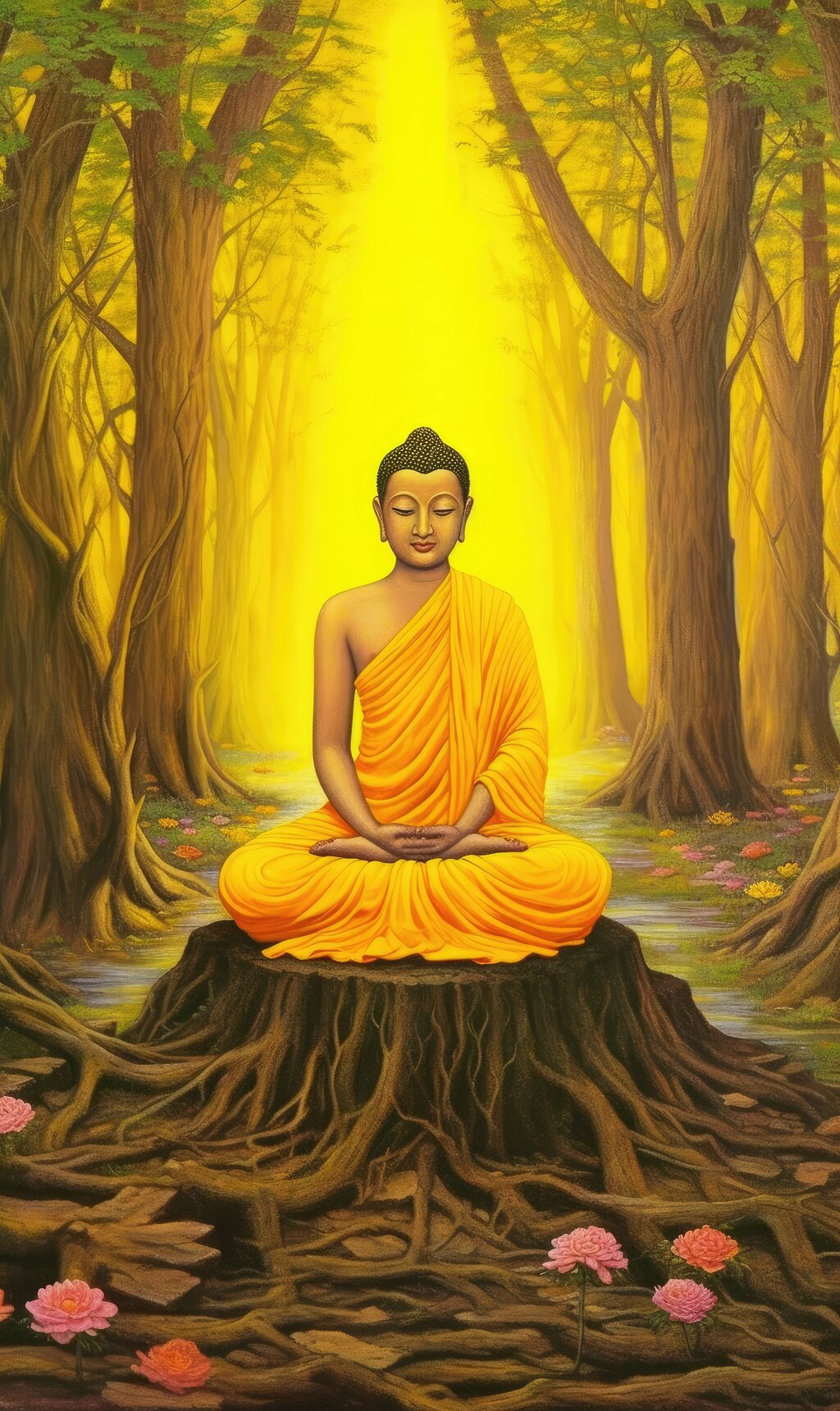
At age 29, he left his wife, child, and royal life behind to search for answers. He studied with different teachers and practiced extreme self-denial for years, but found no lasting peace. Finally, he sat under a Bodhi tree, determined not to rise until he found the truth. After a profound period of meditation, he achieved enlightenment. He became the Buddha, which means “the awakened one.” He had woken up to the true nature of reality.
The Core Teachings
After his enlightenment, the Buddha spent the rest of his life teaching others what he had discovered. His first sermon laid out the foundation of Buddhism: The Four Noble Truths. They are framed like a doctor's diagnosis: identifying the illness, its cause, the prognosis, and the prescription for a cure.
| Noble Truth | Description |
|---|---|
| 1. The Truth of Suffering | Life inevitably involves suffering (dukkha), from major pain to subtle feelings of dissatisfaction and stress. |
| 2. The Truth of the Cause of Suffering | The root of suffering is craving, attachment, and aversion. We suffer because we cling to things that are impermanent. |
| 3. The Truth of the End of Suffering | It is possible to end this suffering and achieve a state of lasting peace and liberation, known as Nirvana. |
| 4. The Truth of the Path | The way to end suffering is to follow a practical set of principles called the Eightfold Path. |
This framework isn't pessimistic. Instead, it’s a realistic and hopeful guide. It acknowledges a universal problem but also offers a clear solution.
The Path to Enlightenment
The prescription for ending suffering is the Noble Eightfold Path. It's not a list of rules to follow in order, but eight interconnected practices that support and strengthen one another. They are often grouped into three main categories: Wisdom, Ethical Conduct, and Mental Discipline.
The goal of the path is to see things as they truly are, act with compassion and integrity, and train the mind to be clear and focused. This holistic approach gradually untangles the habits that cause suffering.
The ultimate goal is Nirvana, a state of profound peace and freedom. It’s not a heaven or a place you go after death, but a state of being that can be realized in this very life. It's the extinguishing of the 'fires' of greed, hatred, and ignorance that cause suffering.
The Three Jewels
For Buddhists, the journey is supported by three core principles, known as the Three Jewels or Three Refuges. They are the essential supports for anyone walking the path.
| Jewel | Meaning | Description |
|---|---|---|
| The Buddha | The Awakened One | Taking refuge in the Buddha means looking to his example as a guide—a human who achieved enlightenment and showed it's possible for others. |
| The Dharma | The Teachings | This is the path itself: the Four Noble Truths and the Eightfold Path. It’s the collection of principles and practices that lead to awakening. |
| The Sangha | The Community | This refers to the community of fellow practitioners. The support, friendship, and guidance of others on the same path is invaluable. |
Together, these elements—the story of the Buddha, his core diagnosis of the human condition, a clear path to follow, and a supportive framework—form the foundation of Buddhism. It's a practical philosophy focused on transforming the mind to achieve lasting well-being.
What discovery prompted Prince Siddhartha to leave his life of luxury and seek answers about human existence?
The title 'Buddha' means: