British New Year Traditions Unpacked
Origins of New Year's Celebrations
Ancient Beginnings
For thousands of years, people have marked the start of a new year. But the date hasn't always been January 1. Most early celebrations were tied to the cycles of the sun and seasons, often landing in spring when new life emerged after a long winter.
In ancient Mesopotamia, the Babylonians celebrated their new year, a festival called Akitu, for 11 days around the spring equinox. This was a deeply religious event honoring the victory of the sky god Marduk over the sea goddess Tiamat. It symbolized the triumph of order over chaos. During Akitu, debts were settled, and the king's right to rule was reaffirmed. It was a time for a fresh start.
The tradition is thought to have first caught on among the ancient Babylonians, who made promises in order to earn the favor of the gods and start the year off on the right foot.
The Roman Way
Like the Babylonians, the early Romans also began their year in the spring. Their calendar originally had ten months and started with March (Martius), named for the god of war, Mars. This made sense for an agricultural and military society. The planting season began, and it was a good time to launch military campaigns.
This early calendar is still visible in our month names today. September, October, November, and December come from the Latin words for seven, eight, nine, and ten—their original positions in the year.
So why the change to January? The answer lies with a particular Roman god.
All Hail Janus
The Romans worshipped Janus, the god of doors, gates, and transitions. He was a fitting deity for the new year. He was depicted with two faces, one looking back at the past and the other looking forward to the future. His name gave us the month of January (Ianuarius).
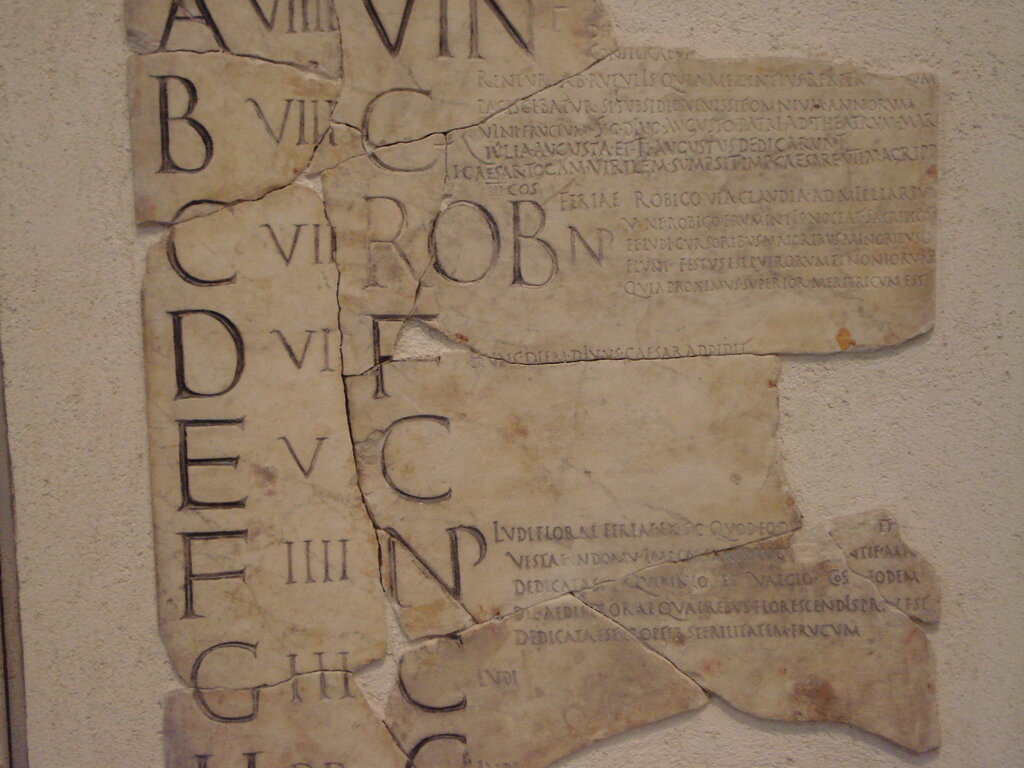
In 46 BCE, Julius Caesar introduced a new calendar, the Julian calendar. To align the calendar with the sun and fix the drift that had occurred over centuries, he reformed the system. As part of this major change, he officially set a new starting point for the year.
As part of his reform, Caesar established January 1 as the first day of the year, partly to honor the month’s namesake: Janus, the Roman god of beginnings, whose two faces allowed him to look back into the past and forward into the future.
This move disconnected the start of the year from the agricultural cycle and gave it a more symbolic, civil meaning. These ancient Babylonian and Roman traditions created the foundation for how New Year's has been celebrated for centuries.