Britain's Industrial Revolution Unpacked
Introduction to the Industrial Revolution
The World Remade
Before the 18th century, life had a certain rhythm. Most people were farmers. Work was dictated by the sun and seasons, and goods were made by hand, one at a time. Then, everything changed. A wave of invention and new ways of thinking swept across Great Britain, fundamentally altering how people lived, worked, and organized society. This period of intense change is known as the Industrial Revolution.
Industrial Revolution
noun
The transition to new manufacturing processes in Europe and the United States, in the period from about 1760 to sometime between 1820 and 1840. This transition included going from hand production methods to machines, new chemical manufacturing and iron production processes, the increasing use of steam power and water power, the development of machine tools and the rise of the mechanized factory system.
While it's called a "revolution," it wasn't a single event. It was a gradual transformation that unfolded over decades, roughly from 1750 to 1850. But its impact was as profound as any political upheaval. It replaced muscle power with machine power, forever changing the scale of human productivity.
Why Britain?
The seeds of this revolution found fertile ground in Great Britain. The island nation had a unique combination of advantages. It possessed abundant coal and iron ore, the raw materials that would fuel the new machines and factories. A stable political system and a society that encouraged commercial enterprise created an environment ripe for innovation.
Furthermore, Britain's expanding colonial empire provided both vast markets for finished goods and a steady supply of resources. Its powerful navy protected these trade routes, creating a virtuous cycle of production and profit that drove industrialization forward.
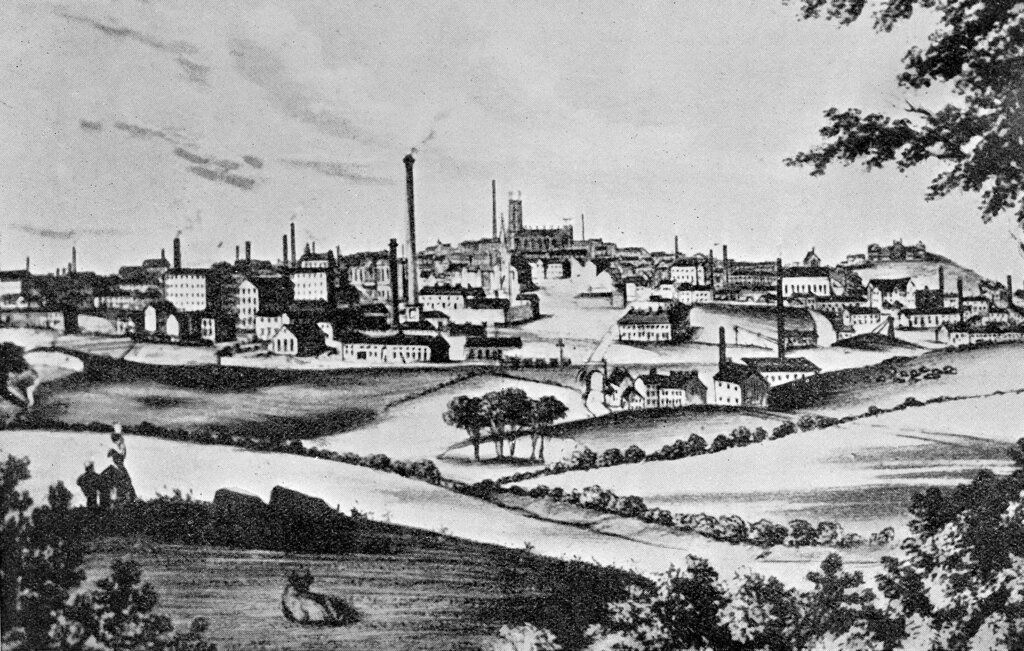
This wasn't just about a few clever inventions. It was about a new way of organizing work itself: the factory system. For the first time, large numbers of workers were brought together under one roof to operate machinery, leading to the rapid growth of cities.
A Global Turning Point
The changes that began in British workshops and coal mines did not stay there. The technologies and ideas of the Industrial Revolution spread across Europe, to North America, and eventually around the globe, reshaping economies and societies wherever they went. It kicked off an era of sustained economic growth that was unprecedented in human history.
The world we live in today, with its sprawling cities, global trade, and advanced technology, was forged in the factories of the Industrial Revolution. It set in motion the processes of urbanization, created new social classes, and raised new questions about the relationship between technology, the environment, and human well-being.
The Industrial Revolution has been the most important transformation in the last 12,000 years.
Understanding this period is essential to understanding the modern world. In the following sections, we will explore the specific inventions that powered this transformation, the reasons it started in Britain, and the profound ways it changed society for good and for ill.