Britain's Industrial Revolution Head Start
Introduction to Britain's Industrialization
The Workshop of the World
In the late 18th century, Great Britain began a transformation that would ripple across the globe. Life, for centuries, had been tied to the land and the seasons. Most people were farmers, and goods were made by hand in small workshops or homes. But a series of remarkable changes, driven by new technologies and new ways of thinking, started to reshape society from the ground up. This was the dawn of the Industrial Revolution.
This period, stretching into the mid-19th century, saw Britain become the world's first industrial nation. The quiet rhythm of rural life gave way to the hum and clatter of machines. Factories sprouted up, and people flocked to them for work, creating a new kind of city and a new way of life.
Weaving a New World
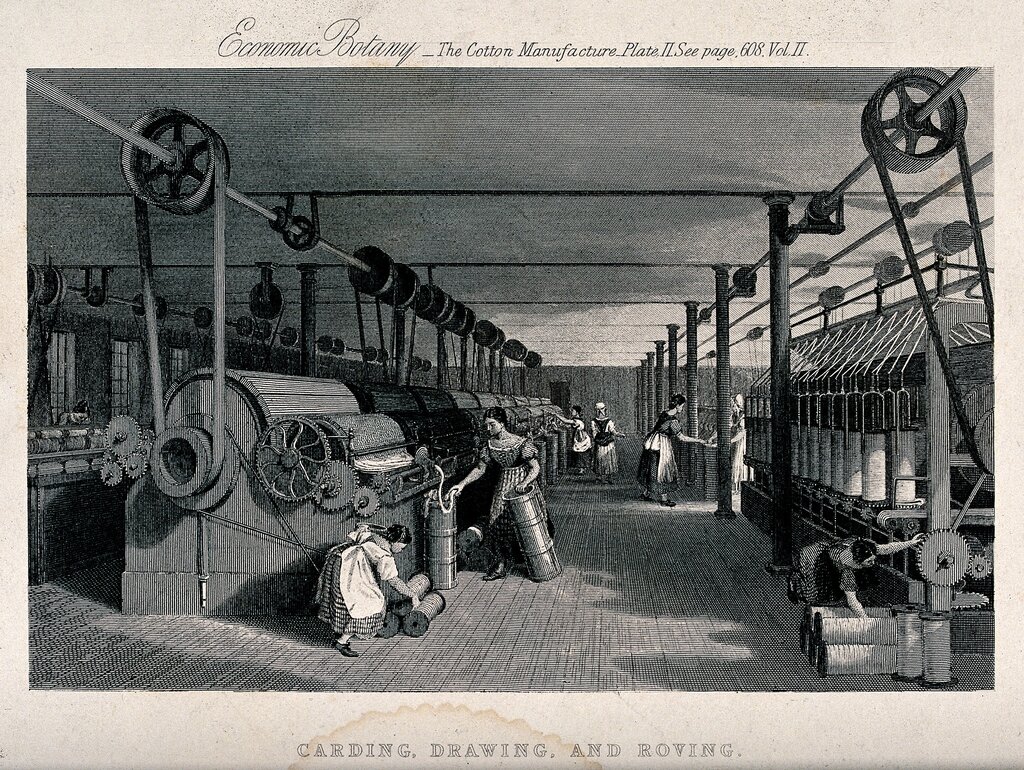
The textile industry was the poster child for this new era. For generations, spinning yarn and weaving cloth was a 'cottage industry'—a task performed by families in their homes. It was slow, painstaking work. But a wave of inventions completely upended this tradition.
Innovations like the spinning jenny allowed one worker to spin multiple spools of thread at once. Soon after, the power loom mechanized the weaving process, making cloth faster and cheaper than ever before.
These machines were too large and expensive for a cottage. They needed a new kind of workplace: the factory. Powered first by water wheels and later by steam engines, these factories brought workers and machines together under one roof. Cotton, imported from Britain's colonies, became the raw material for a massive new industry centered in cities like Manchester.
Iron, Steel, and Steam
Textiles were just the beginning. The new machines, factories, and railways all needed to be built from something strong and durable. That something was iron. Iron production had been limited by its reliance on charcoal, which required vast forests for fuel. The breakthrough came when innovators like Abraham Darby figured out how to use coke—a purified form of coal—to smelt iron ore. Since Britain had huge deposits of coal, iron production exploded.
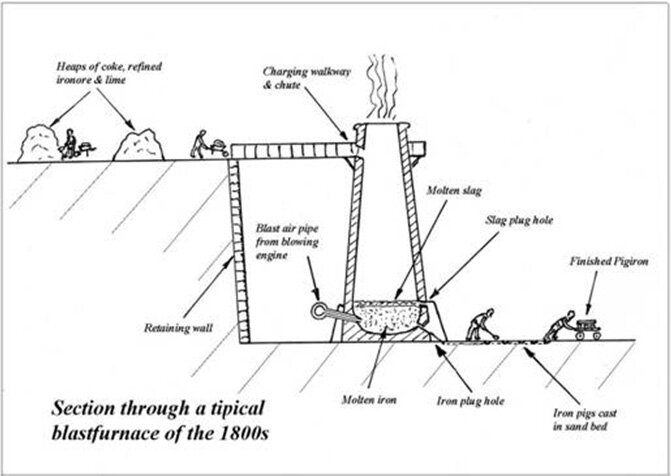
Iron was used for everything from factory beams to bridges and steam engines. Later in the period, new techniques like the Bessemer process made it possible to produce steel—an even stronger and more versatile metal—cheaply and in large quantities. The new materials, in turn, fueled more innovation. The steam engine, perfected by James Watt, was perhaps the most crucial invention of all. It provided a reliable source of power for factories, powered locomotives on the new railways, and drove steamships across the oceans.
A Society Transformed
This industrial boom fundamentally changed how people lived and worked. The factory system created a huge demand for labor, pulling people away from the countryside and into rapidly growing cities. This mass migration is known as urbanization.
Industrialization led to the creation of the factory, and the factory system contributed to the growth of urban areas as large numbers of workers migrated into the cities in search of work in the factories.
Cities like Manchester, Birmingham, and Glasgow swelled in size, but their growth was often chaotic. Housing was cramped and sanitation was poor, leading to difficult living conditions for the new working class. Work itself was also transformed. Instead of the varied tasks of farm life, factory work was repetitive and dictated by the relentless pace of the machine. Workers, including women and children, often faced long hours and dangerous conditions.
A new social structure began to emerge. A wealthy class of industrial capitalists—factory owners, inventors, and bankers—rose to prominence. Below them was a growing middle class of professionals like engineers, managers, and clerks. And at the base was the vast industrial working class, whose lives were now governed by wages and the factory clock.
Time to see what you've learned about this transformative period.
Which industry was the first to be transformed by the new machines and factory system during the Industrial Revolution?
The mass migration of people from rural areas to cities during this period is known as ____________.
The shift from an agrarian to an industrial society was one of the most significant turning points in human history, and it all began in Great Britain.