Breastfeeding Essentials
Breast Anatomy
Your Personal Milk Factory
Beneath the skin, the breast is a complex gland designed for one primary purpose: making milk. Think of it as a sophisticated factory with production lines, storage units, and a delivery system, all ready to nourish a newborn.
The main structures are glandular tissue, which produces milk, and fatty tissue, which gives the breast its size and shape. The amount of fatty tissue has no impact on the ability to produce milk. Inside the glandular tissue are 15 to 20 sections called lobes. Within each lobe are smaller structures called lobules, which contain clusters of tiny, grape-like sacs.
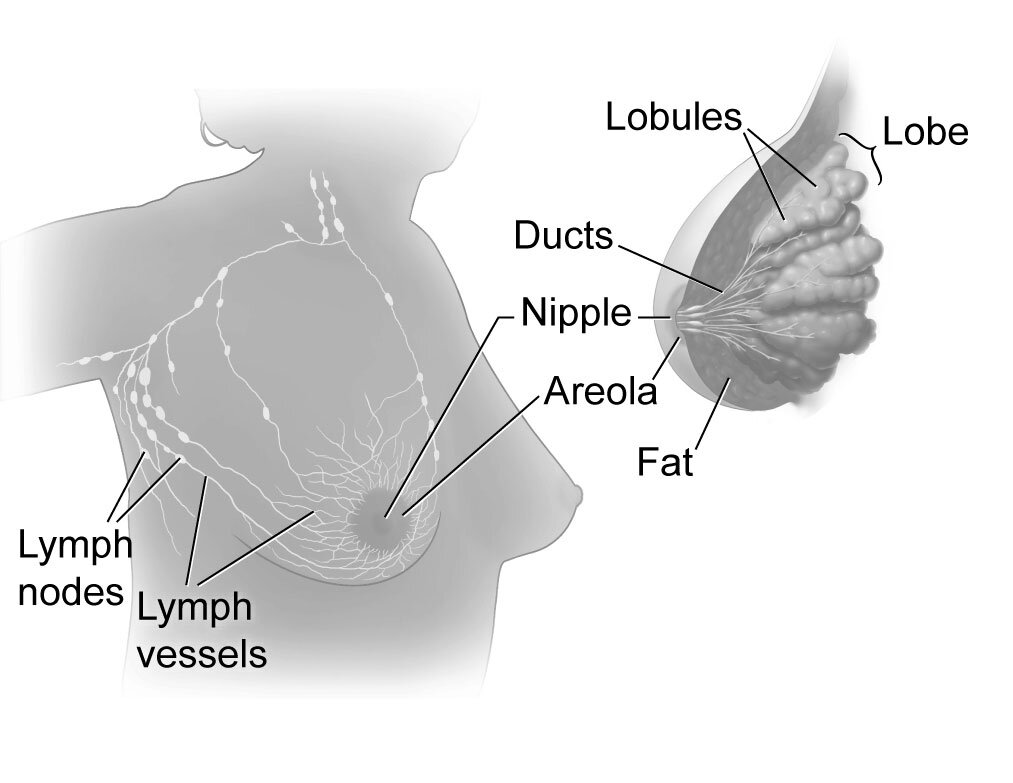
These sacs are where the magic happens. They are the individual milk-producing factories.
alveoli
noun
Tiny sacs within the breast's lobules where milk is produced from nutrients in the blood.
When a baby is born, hormones signal the alveoli to draw proteins, sugars, and fats from your bloodstream and convert them into breast milk. It’s a highly efficient process, custom-making the perfect food for your baby.
From Production to Delivery
Once the milk is produced in the alveoli, it needs a way to get to the baby. This is where the milk ducts come in. Each cluster of alveoli has tiny tubes, or ductules, that drain the milk. These small ductules merge into larger ducts, like small streams flowing into a river.
These larger milk ducts carry the milk from the lobes toward the front of the breast, ending at the nipple. There are about nine of these main ducts in each nipple, each with its own opening.
The nipple and the darker skin surrounding it, the areola, form a critical complex for feeding. The nipple has multiple tiny openings for milk to exit. The areola contains small glands, called Montgomery glands, which secrete an oily substance. This substance cleanses, lubricates, and protects the nipple during breastfeeding. Its scent may also help the newborn find the nipple.
The Hormonal Conductors
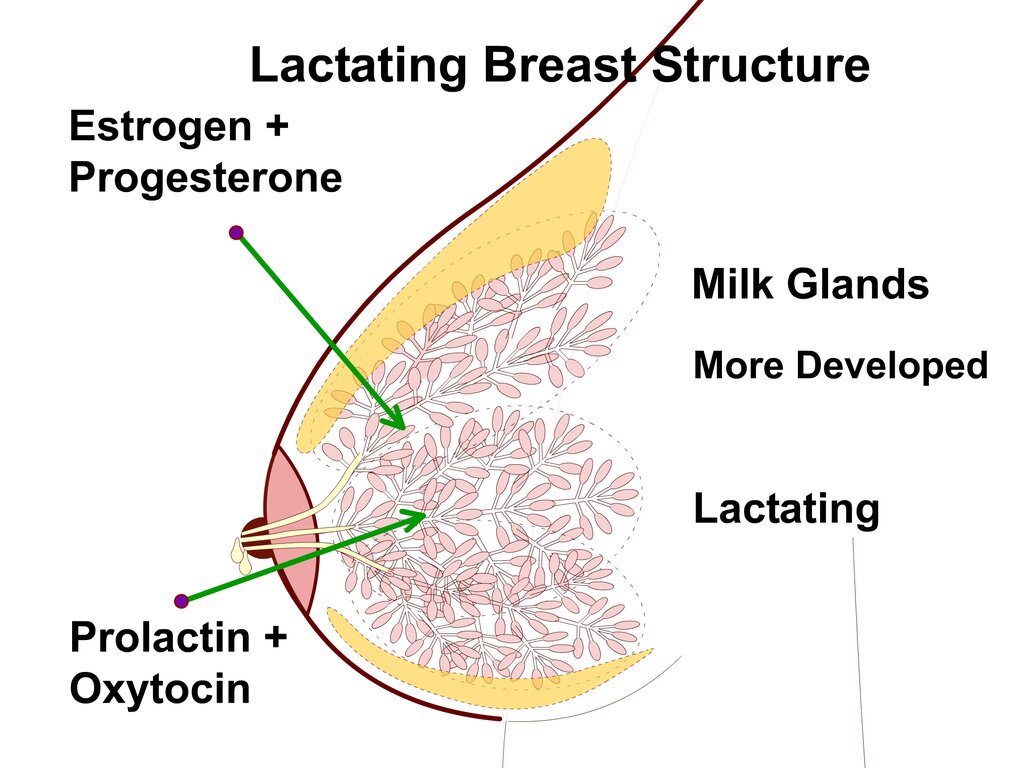
Lactation isn't just a mechanical process; it’s conducted by a precise hormonal orchestra. Two key hormones, prolactin and oxytocin, are the stars of the show. They are produced by the pituitary gland in your brain.
Prolactin is the "make milk" hormone. It tells the alveoli to start and continue producing milk.
After you give birth, your prolactin levels rise. Every time your baby suckles at the breast, it sends a signal to your brain to release more prolactin, which in turn tells your breasts to make more milk for the next feeding. It's a classic supply-and-demand system.
Oxytocin is the "let down" hormone. It makes the milk flow.
While prolactin works on milk production, oxytocin handles delivery. When your baby suckles, your brain releases oxytocin. This hormone causes tiny muscles around the alveoli to contract, squeezing the milk out into the ducts. This process is called the milk-ejection reflex, or "let-down." You might feel a tingling or warm sensation when it happens. Sometimes just hearing a baby cry can trigger it.
This elegant feedback loop ensures your baby gets the milk they need, exactly when they need it.
Now, let's test your knowledge of how this amazing system works.
What is the primary function of the alveoli in the breast?
The amount of fatty tissue in the breast directly impacts its ability to produce milk.
Understanding this anatomy and the hormones involved provides a solid foundation for the journey of breastfeeding.