Brazilian Jiu-Jitsu Fundamentals
Introduction to Brazilian Jiu-Jitsu
The Gentle Art
Brazilian Jiu-Jitsu, often called BJJ, is a martial art and combat sport based on grappling, ground fighting, and submission holds. It focuses on the skill of controlling a resisting opponent in ways that force them to submit.
The core philosophy is simple but profound: a smaller, weaker person can successfully defend themselves against a bigger, stronger, heavier assailant by using proper technique, leverage, and taking the fight to the ground.
Brazilian Jiu-Jitsu is often called “the gentle art” because it relies on leverage, timing, and strategy rather than brute force.
Instead of matching strength against strength, BJJ practitioners use principles of physics to gain mechanical advantage over their opponents. This makes it a fascinating puzzle of human chess, where strategy and intellect are just as important as physical conditioning.
From Japan to Brazil
The story of BJJ begins in the early 20th century. A Japanese judo master named Mitsuyo Maeda traveled to Brazil and befriended a politician named Gastão Gracie. As a thank you for his help, Maeda taught Gastão's son, Carlos Gracie, the art of judo and its predecessor, Japanese jiu-jitsu.
Carlos taught his brothers, and the youngest, Hélio Gracie, was physically frail. Unable to perform many of the techniques that required direct strength, Hélio began adapting them. He refined the movements, focusing relentlessly on leverage and timing. This adaptation became the foundation of Gracie Jiu-Jitsu, which would later be known worldwide as Brazilian Jiu-Jitsu.
Position Before Submission
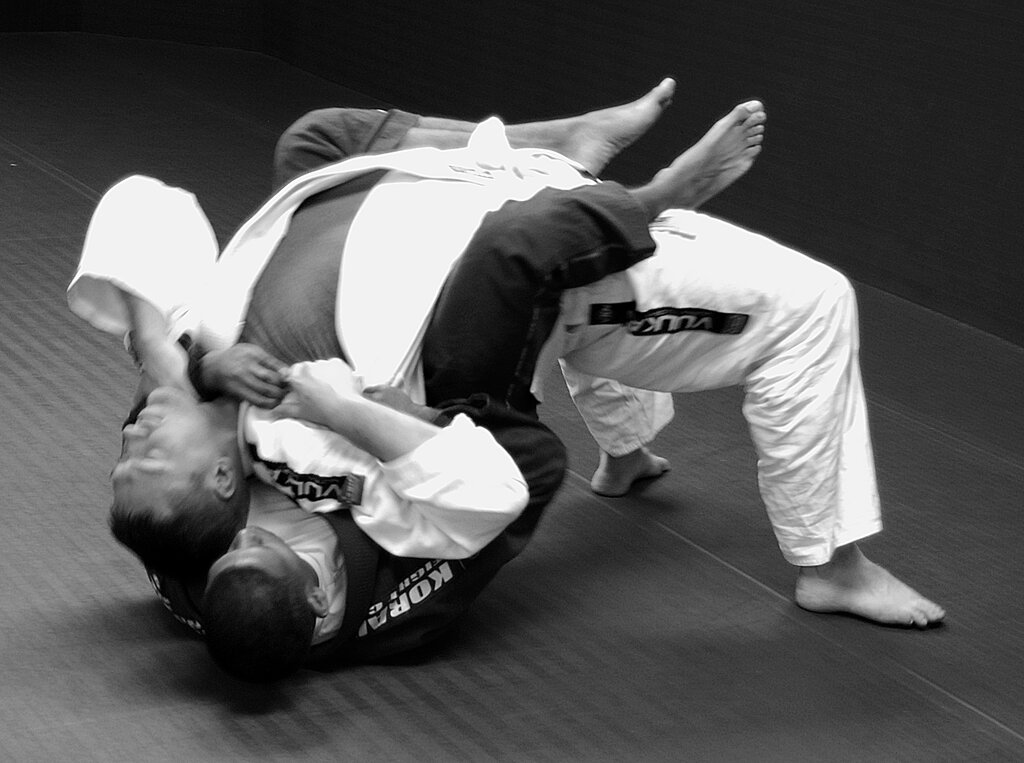
A central concept in BJJ is the idea of positional hierarchy. Before attempting to finish a fight with a submission, a practitioner must first establish a dominant position. This ensures they can control their opponent and attack with minimal risk of being attacked themselves.
In Brazilian Jiu-Jitsu (BJJ), one of the most fundamental principles is the concept of “position before submission.”
Think of it as securing high ground in a battle. There are several key positions, each offering different levels of control and attacking opportunities. The goal is to constantly improve your position while preventing your opponent from doing the same. This strategic game is what defines most of a BJJ match.
Here's a quick look at these common positions:
- Guard: This is a defensive position on your back where you use your legs to control the opponent. While you're on the bottom, a good guard can be a powerful attacking platform.
- Side Control: Here, you are past the opponent's legs and are pinning them to the ground from the side, chest-to-chest.
- Mount: A highly dominant position where you are sitting on your opponent's chest, freeing your hands to attack while they have limited mobility.
- Back Mount: Often considered the most dominant position. You are on your opponent's back, controlling their upper body and neck, where they cannot see or effectively defend against your attacks.
Fundamental Movements
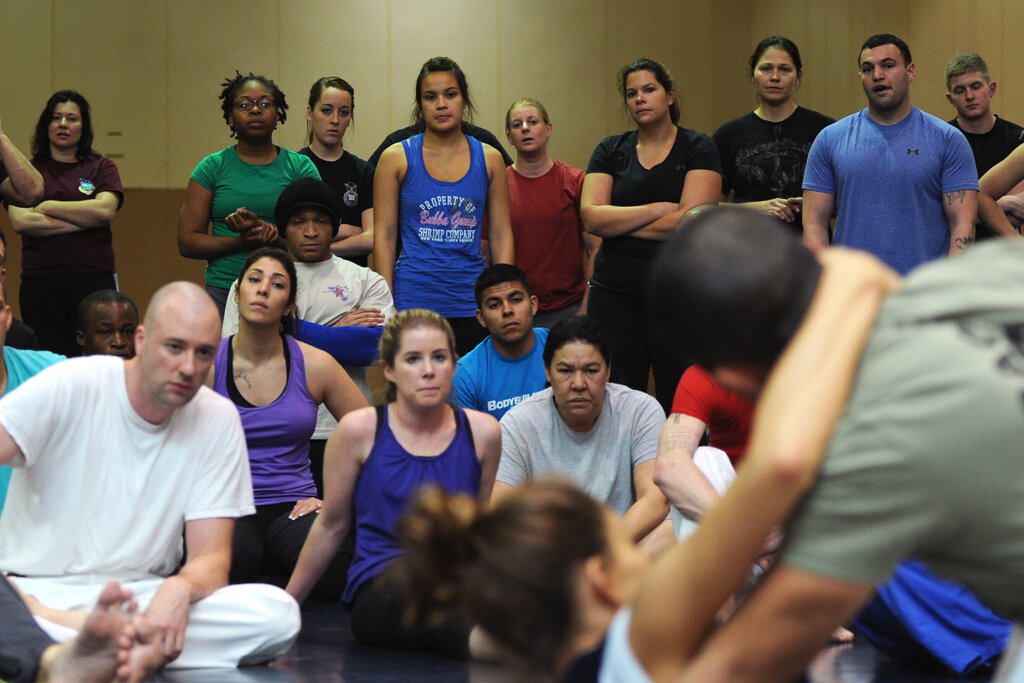
To navigate these positions, you need a vocabulary of movement. BJJ training begins with drilling a few essential actions that form the building blocks for almost every technique. These aren't fancy moves, but they are crucial for defense, escape, and positioning.
Three of the most important movements are:
-
Shrimping (or Hip Escape): This is the most critical defensive movement in BJJ. It involves lying on your side and pushing off with your feet to scoot your hips away from an opponent. This creates space, which is essential for escaping bad positions and re-establishing your guard.
-
Bridging: A powerful, explosive movement where you lie on your back, plant your feet close to your body, and lift your hips high off the ground. Bridging is used to disrupt an opponent's balance, create space, and escape from pins like the mount.
-
Technical Stand-Up: This is a safe and structured way to get back to your feet from the ground without getting knocked down again. It involves using one hand to post on the ground for balance while keeping the other hand up to protect your face, allowing you to create distance and stand up athletically.
Mastering these basic movements is non-negotiable. They are the alphabet of Jiu-Jitsu; without them, you can't form words or sentences.
Now you have a basic understanding of the history, philosophy, and core movements of Brazilian Jiu-Jitsu. Let's see what you've learned.
What is the core philosophy of Brazilian Jiu-Jitsu?
Who is credited with adapting Japanese jiu-jitsu and judo to create the foundations of what is now known as Brazilian Jiu-Jitsu?
By focusing on these foundations, anyone can begin to learn the effective and strategic art of Brazilian Jiu-Jitsu.