Brazilian Jiu-Jitsu Fundamentals for Beginners
Introduction to Brazilian Jiu-Jitsu
The Gentle Art
Brazilian Jiu-Jitsu, or BJJ, is a martial art and combat sport based on grappling, ground fighting, and submission holds. It focuses on the skill of controlling an opponent, gaining a dominant position, and using a variety of techniques to force them into submission.
The core philosophy is that a smaller, weaker person can successfully defend themselves against a bigger, stronger, heavier assailant. This is done by using leverage, proper technique, and taking the fight to the ground where size and strength advantages are minimized.
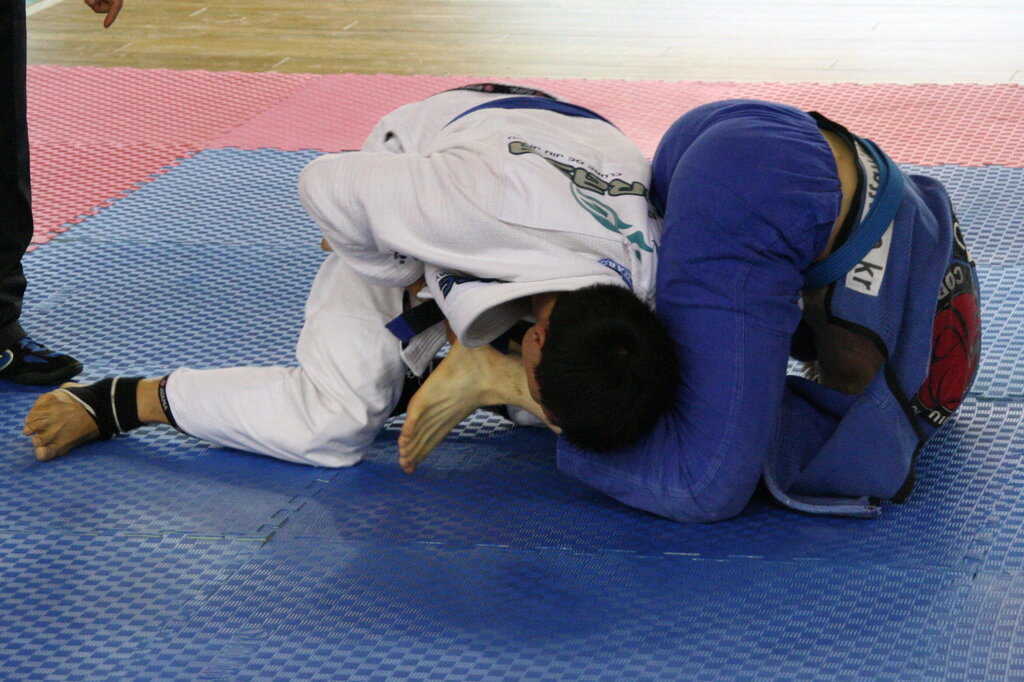
BJJ's story begins in the early 20th century. A Japanese judo master named Mitsuyo Maeda traveled to Brazil and taught the art to Carlos Gracie. Carlos and his brothers, especially the small and frail Hélio Gracie, adapted these techniques. Hélio refined the art to rely almost purely on leverage and timing, allowing him to defeat much larger opponents. This modified art became known as Gracie Jiu-Jitsu, and later, Brazilian Jiu-Jitsu.
It remained relatively unknown outside Brazil until the 1990s, when Royce Gracie, Hélio's son, dominated the early Ultimate Fighting Championship (UFC) events. Royce, appearing undersized against his opponents, used BJJ to defeat fighters from various other martial arts, proving its incredible effectiveness.
Fundamental Principles
BJJ is often called "human chess" because it's a game of strategy and problem-solving under pressure. Success doesn't come from brute force, but from understanding a few key principles.
Base: This is your connection to the ground. A solid base provides stability and balance, making it difficult for an opponent to knock you over or sweep you. Think of a pyramid, wide and heavy at the bottom. In BJJ, you achieve a good base by keeping your center of gravity low and distributing your weight across multiple points of contact.
Posture: This refers to the alignment of your spine. Maintaining good posture makes you strong and difficult to control. A straight, strong spine allows you to resist submission attempts and generate force effectively. If an opponent breaks your posture, forcing you to bend or twist, you become weak and vulnerable.
Pressure: In BJJ, pressure isn't about pushing hard. It's the strategic use of your body weight to control an opponent, limit their movement, and exhaust them. Effective pressure feels suffocating, making every movement for your opponent a struggle while you conserve energy.
The Positional Hierarchy
The goal in BJJ is to navigate a hierarchy of positions, moving from less dominant to more dominant ones. Each position offers different levels of control and attacking opportunities. The aim is always to improve your position before seeking a submission.
Guard: This is a position unique to grappling arts. You are on your back, but you are not losing. You use your legs to control the opponent, defend against their attacks, and set up your own sweeps or submissions. It's a neutral or defensive position that can be quickly turned into an attack.
Side Control: Here, you are past the opponent's legs and are controlling them from the side, typically with your chest on theirs. This is a dominant position that pins your opponent and opens up many submission opportunities.
Mount: In this position, you are sitting on your opponent's chest or stomach, facing their head. This is a highly dominant position that severely limits their movement and provides excellent leverage for attacks.
Back Control: Often considered the most dominant position in BJJ. You are on your opponent's back, with your legs hooked around them (like a backpack). From here, your opponent cannot see you, can't effectively attack you, and is very vulnerable to chokes.
Understanding these fundamentals is the first step on a long and rewarding journey in Brazilian Jiu-Jitsu. It's a sport that builds discipline, problem-solving skills, and confidence.
Who is primarily credited with refining Jiu-Jitsu techniques to emphasize leverage, allowing a smaller person to defeat a larger opponent?
In BJJ, what is the term for your connection to the ground, which provides stability and balance?