Brazilian Jiu-Jitsu Fundamentals
Introduction to Brazilian Jiu-Jitsu
The Gentle Art
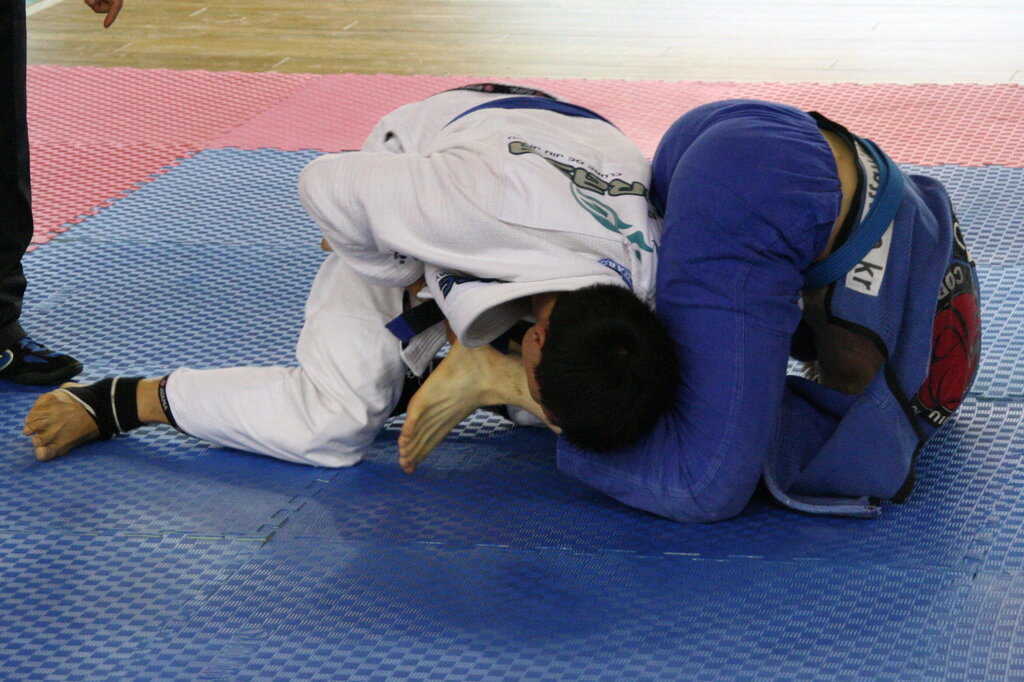
Picture a fight. Most people imagine two opponents standing, trading punches and kicks. But what happens when the fight goes to the ground? This is where Brazilian Jiu-Jitsu (BJJ) excels. BJJ is a martial art and combat sport that focuses on grappling, ground fighting, and submissions. It’s a system designed to allow a smaller, weaker person to defend themselves against a larger, stronger assailant using leverage and technique.
At its core, BJJ is about control. By closing the distance and taking the fight to the mat, a practitioner can neutralize a bigger opponent's advantages in reach and striking power. It's often called "human chess" because it requires strategy, patience, and problem-solving under pressure.
From Japan to Brazil
The story of BJJ begins in the early 20th century, not in Brazil, but in Japan. Mitsuyo Maeda, a master of Judo, traveled the world demonstrating his art. In 1914, he landed in Brazil and befriended a politician named Gastão Gracie.
Maeda began teaching Gastão's son, Carlos Gracie, the principles of Judo. Carlos, in turn, taught his brothers, most notably Hélio Gracie. Hélio was small and frail, and he struggled with many of the traditional Judo throws that required strength. So, he began to adapt the techniques. He refined them, focusing on leverage and timing, and placed a heavy emphasis on fighting on the ground where strength matters less.
This modified art became Gracie Jiu-Jitsu, which would later be known worldwide as Brazilian Jiu-Jitsu. The Gracie family tested and proved their system in countless challenge matches, building a reputation for effectiveness that continues to this day.
Brazilian Jiu-Jitsu is often called “the gentle art” because it relies on leverage, timing, and strategy rather than brute force.
Leverage Is Everything
The central principle of BJJ is that you don't need to match an opponent's strength with your own. Instead, you use leverage to amplify your force and control their body. Think of using a crowbar to lift a heavy rock. The crowbar allows you to move something you could never lift with your bare hands. In BJJ, your limbs and body positioning become the crowbar.
By using your entire body—your hips, legs, and core—against an opponent's isolated limb, you create an overwhelming mechanical advantage. An armbar, for example, isn't about bending someone's arm with your arm strength. It's about using the power of your hips and legs to hyperextend their elbow joint. This focus on leverage is what makes BJJ such an effective equalizer.
Most real-world altercations end up on the ground, whether intentionally or not. BJJ prepares you for this reality. By taking the fight to the mat, a practitioner can control the opponent's posture and movement, limiting their ability to strike effectively. From a dominant position, the BJJ practitioner can choose how to end the fight.
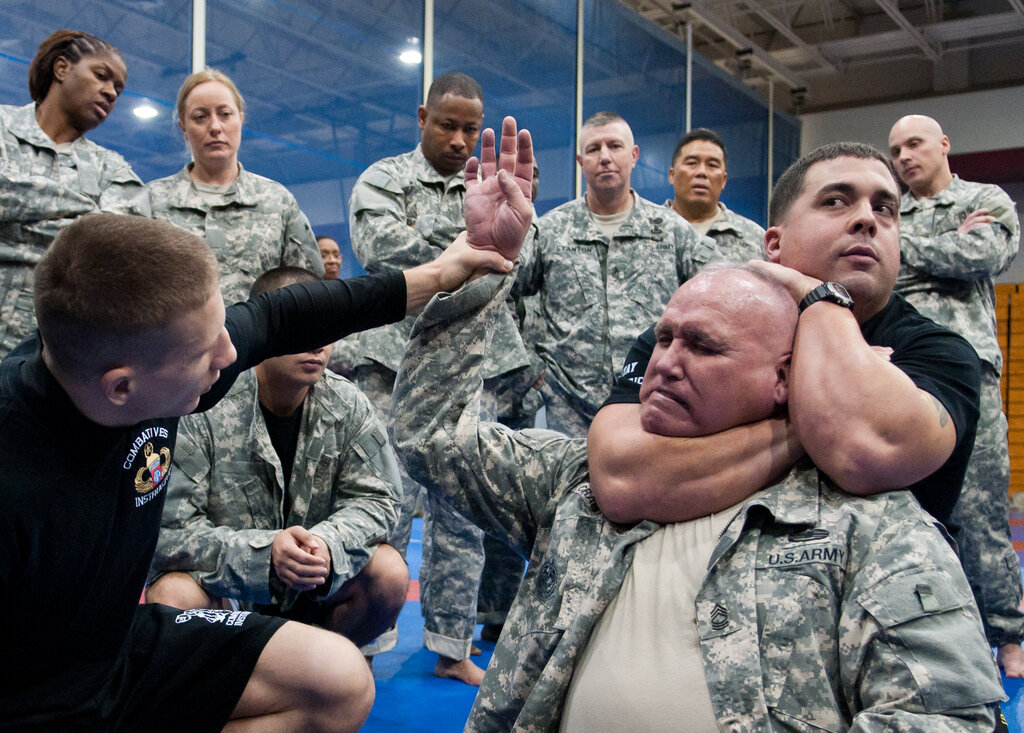
The goal is not to injure the opponent, but to apply a submission hold. These are techniques that either restrict blood flow to the brain (a choke) or target a joint (a joint lock). When applied correctly, a submission causes discomfort and forces the opponent to concede by tapping their hand. This "tap" is a universal signal to stop, making BJJ a way to control and end a conflict without causing lasting harm.
Ready to review the core ideas behind this powerful martial art?
Let's check your understanding of these foundational concepts.
What is the primary philosophy of Brazilian Jiu-Jitsu?
Who is credited with significantly adapting Judo techniques to better suit a smaller person, laying the foundation for modern BJJ?
Understanding these principles—the history, the focus on leverage, and the goal of submission—is the first step. It's not about memorizing a hundred moves, but about grasping the concepts that make BJJ so effective. Welcome to the gentle art.