Brain Parasite Infections Explained
Introduction to Parasitic Infections
The Uninvited Guests
A parasite is an organism that lives on or inside another organism, called the host, and gets its food from or at the expense of its host. It's a one-sided relationship where the parasite benefits and the host is harmed. While we often associate parasites with stomach bugs, some have the ability to invade our most protected organ: the brain.
parasite
noun
An organism that lives in or on a host organism and gets its food from or at the expense of its host.
Parasites that infect humans fall into three main categories:
| Category | Description | Common Examples |
|---|---|---|
| Protozoa | Microscopic, single-celled organisms. | Giardia, Plasmodium (malaria), Toxoplasma |
| Helminths | Worm-like parasites. Can be flat (tapeworms) or round (roundworms). | Tapeworms, flukes, roundworms |
| Ectoparasites | These live on the outside of the body. | Ticks, fleas, lice, mites |
For our purposes, we'll focus on the first two groups, protozoa and helminths, as they are the ones that can cause infections inside the body, including the brain.
A Parasite's Life Mission
A parasite's primary goal is to survive and reproduce. To do this, it follows a specific sequence of stages called a life cycle. These cycles can be simple or incredibly complex, sometimes requiring more than one type of host to complete.
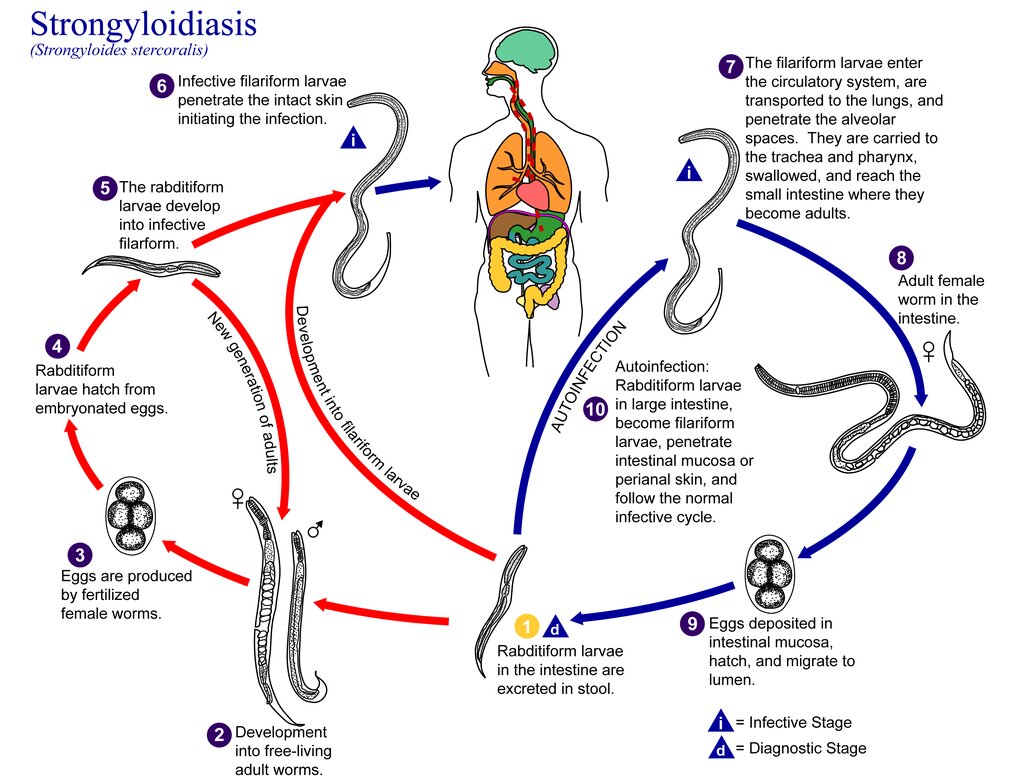
Hosts are generally classified into two types:
- Definitive Host: Where the parasite reaches adulthood and reproduces sexually.
- Intermediate Host: Where the parasite lives for a short period and may undergo some development, but doesn't reach sexual maturity.
Humans can be either a definitive or an intermediate host, depending on the parasite. Sometimes, a human can be an accidental host, a dead end for the parasite where it can't complete its life cycle but can still cause serious disease.
Breaking into the Fortress
The brain and spinal cord make up the central nervous system (CNS). This system is heavily protected by the blood-brain barrier, a network of specialized cells that acts like a highly selective security gate, preventing most germs and toxins from entering. It's an effective defense, but some parasites have evolved ways to get past it.
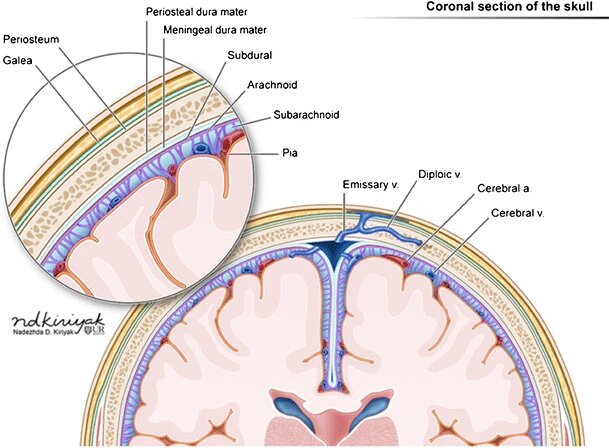
Parasites can invade the CNS through a few main routes:
-
Directly from the blood: Some parasites circulate in the bloodstream and can cross the blood-brain barrier. They might do this by infecting the cells that form the barrier itself or by releasing enzymes that break it down.
-
Via nerves: Certain parasites can travel along nerves, like the olfactory nerve from the nose, to gain direct entry into the brain.
-
The "Trojan Horse" method: Some parasites hide inside our own immune cells. When these infected cells are called to the brain to fight inflammation, they unknowingly carry the parasite with them past the barrier.
Once inside the CNS, a parasite can cause damage by feeding on brain tissue, triggering massive inflammation, or simply by taking up space and increasing pressure inside the skull.
Understanding these basic mechanisms is the first step in learning how these infections work and why they are so dangerous.
Ready to test your knowledge? Let's see what you've learned about the basics of parasitic infections.
What is the primary role of a definitive host in a parasite's life cycle?
The "Trojan Horse" method of brain invasion involves a parasite...
Now that we've covered the fundamentals of what parasites are and how they operate, we can begin to explore the specific types that pose a threat to the central nervous system.