Boxing Tactics and Ring Craft
Advanced Weight Management
Beyond the Static Stance
You've already learned the basic boxing stance: feet shoulder-width apart, knees slightly bent, weight evenly distributed. It's your home base. But in a real match, you can't stay home. Effective boxing is about movement, and movement starts with shifting your weight. Think of your weight not as something to keep static, but as a resource to be moved deliberately to power your offence and defence.
Every action you take, from a quick jab to an evasive slip, involves a subtle or dramatic shift of your (COG). This is the imaginary point where your body's mass is concentrated. When you're standing still, it’s low and centred between your feet, making you stable. But during a fight, you're constantly manipulating this point. Shifting your COG forward commits you to an attack, while shifting it back prepares you to defend or counter. Mastering these transitions without losing balance is what separates a novice from an experienced boxer.
Center of Gravity: Analyzing how shifting your center of gravity contributes to balance and performance can significantly benefit fighters.
Weighting With a Purpose
Weight distribution isn't random; it's tactical. Where you place your weight dictates your available options. Let's break down the two main approaches.
First is the forward-weighted stance. Here, you shift about 60% of your weight onto your lead leg. This is the stance of an aggressor. It shortens the distance your lead hand has to travel, making your jab quicker and more powerful. It also helps you close the distance on an opponent, applying constant pressure. However, this forward commitment makes you more vulnerable to counters if your attack fails, and it can be harder to retreat quickly.
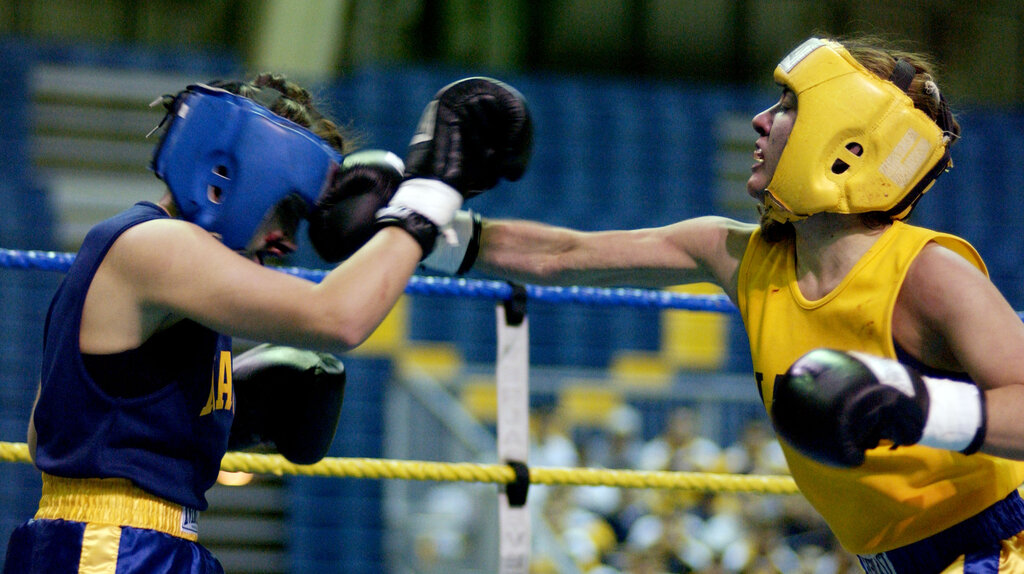
The opposite is the rear-weighted stance, with about 60% of your weight on your back foot. This is a defensive or counter-punching posture. With your head further from your opponent, you're a harder target to hit. This stance is perfect for drawing an opponent in and making them miss. By keeping weight on your back leg, you are essentially pre-loading a spring for a powerful cross or uppercut as you transfer that weight forward into a counter-punch.
| Tactic | Lead-Leg Weighting (60/40) | Rear-Leg Weighting (40/60) |
|---|---|---|
| Primary Goal | Offensive pressure, closing distance | Defensive, counter-punching |
| Best Punch | Fast, powerful jab | Loaded rear-hand cross |
| Mobility | Easier to move forward | Easier to move backward & pivot |
| Vulnerability | Susceptible to counters and pivots | Can be pushed back, less forward pressure |
The Art of the Pivot
Weight shifts aren't just for moving forwards and backwards. The pivot is a crucial tool that uses weight transfer to create angles. It’s not just about turning; it’s about changing your position relative to your opponent while staying in punching range. A well-executed pivot can take you from a dangerous position directly in front of your opponent to a safe, dominant angle on their flank.
The mechanics are simple in theory but complex in practice. To pivot, you transfer a slight majority of your weight to your lead foot. This foot becomes your anchor. You then use your rear foot to push off, rotating your body around the ball of your lead foot. The key is to keep your core engaged and your high. This means moving your entire body as one unit—hips, torso, and shoulders turning together. A sloppy pivot, where your feet move but your upper body lags, will leave you off-balance and exposed.
Pivoting allows you to escape pressure without simply backing up. If an opponent rushes you, a quick pivot changes the angle, and their forward momentum carries them past you, often leaving their side open for a counter-attack. It's a fundamental skill for controlling the ring and creating opportunities.
What is the primary purpose of shifting your centre of gravity (COG) in boxing?
A boxer who wants to be aggressive and throw a fast jab should adopt which type of stance?
Understanding how and when to shift your weight is key to unlocking the next level of your boxing. It transforms a static stance into a dynamic platform for both attack and defence.