Box-Behnken Design Explained
Introduction to Response Surface Methodology
Finding the Perfect Recipe
Imagine you're trying to bake the perfect loaf of bread. You have several ingredients to work with: flour, water, yeast, and salt. You also have process variables like baking time and temperature. How do you find the exact combination that results in the best taste, texture, and crust? You could try every possible combination, but that would take forever and waste a lot of flour.
This is where Response Surface Methodology (RSM) comes in. It's a powerful set of statistical and mathematical techniques used to figure out the relationship between several input variables and one or more key outcomes, or "responses." Essentially, it’s a smart way to run experiments to find the optimal settings for a process.
Response Surface Methodology
noun
A collection of statistical and mathematical techniques for designing experiments, building models, and finding the combination of factors that produces the best possible outcome.
RSM isn't a new idea. It was developed in the early 1950s by statisticians George E. P. Box and K. B. Wilson. They were working in the chemical industry and needed an efficient way to improve manufacturing processes. Their methods provided a systematic way to experiment and find the settings that would maximize product yield without running thousands of tests.
The Three Pillars of RSM
RSM stands on three core ideas: designing smart experiments, building a model from the data, and using that model to find the best outcome.
- Experimental Design: This is the planning phase. Instead of testing variables one at a time or trying every combination, RSM uses specific designs to select a small but powerful set of experiments. The goal is to gather the most useful information about how all the variables interact with the fewest number of trials.
Think of it as strategically sampling points on a map to understand the terrain, rather than walking over every single inch of it.
- Model Building: After running the experiments and collecting data, the next step is to create a mathematical model. This is usually a polynomial equation that approximates the relationship between the input variables and the response. This equation describes the "response surface," which is like a topographical map of your process, showing the hills (high response values) and valleys (low response values).
This model helps you predict the outcome for any combination of inputs, even for combinations you didn't actually test.
- Optimization: Once you have the model, you can use it to find the peak of the hill on your response surface map. This peak represents the combination of settings that produces the best possible result. This can be done using graphical methods (like looking at the 3D plot and its contour lines) or mathematical techniques.
Where Is RSM Used?
The power of RSM is its versatility. It's used across countless industries to improve products and processes.
| Field | Application Example |
|---|---|
| Manufacturing | Finding the ideal cutting speed and tool angle to maximize the lifespan of a drill bit. |
| Chemical Engineering | Determining the optimal temperature and pressure to get the highest yield from a chemical reaction. |
| Food Science | Adjusting the amount of fat and sugar in a recipe to achieve the highest consumer taste score. |
| Biotechnology | Optimizing the nutrient mix and pH in a bioreactor to maximize the production of an enzyme. |
| Environmental Science | Identifying the best conditions to remove pollutants from wastewater. |
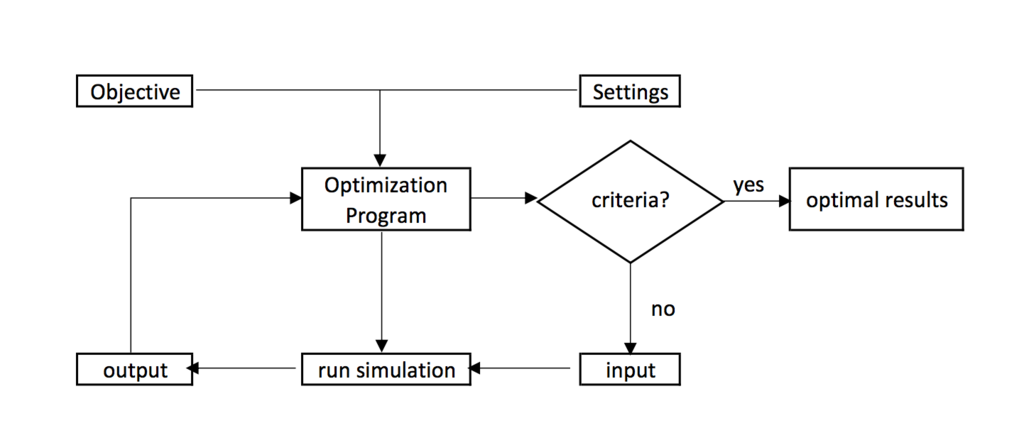
In any situation where you have multiple inputs affecting an outcome, RSM provides a structured and efficient framework for finding the sweet spot. It helps you understand not just what works best, but why it works best by showing how the different factors interact with each other.
Ready to check your understanding?
What is the primary purpose of Response Surface Methodology (RSM)?
The provided text compares RSM to "strategically sampling points on a map to understand the terrain." What does this analogy illustrate about RSM's efficiency?
By understanding these fundamentals, you can see how RSM serves as a bridge between running experiments and achieving process perfection.