Botanical Nomenclature Explained
Introduction to Botanical Nomenclature
Naming Nature
What do you call the little white flower with a yellow center that grows in lawns? Most people would say "daisy." But what one person calls a daisy, another might call a bachelor's button. Travel to a different country, and the local name for that same plant could be something else entirely. This is where common names get confusing.
To communicate clearly about plants, scientists needed a single, universal system. This is the purpose of botanical nomenclature: the formal, scientific method of naming plants. It ensures that when a botanist in Japan discusses a specific plant with a colleague in Brazil, they are both talking about the exact same organism.
A Universal Language
For centuries, plant names were long, descriptive phrases in Latin, which were difficult to remember and use. In the 18th century, a Swedish botanist named Carl Linnaeus popularized a much simpler system that became the foundation for the one we use today.
Linnaeus's great invention was the system of binomial nomenclature: he decided that all species should be named in two halves.
This two-part name, called a binomial, consists of the genus name followed by a species name. The genus is a group of closely related species, like a surname, while the species name identifies the specific plant, like a first name. For example, the scientific name for the common daisy is Bellis perennis. Bellis is the genus, and perennis is the specific epithet.
This system provides a unique and stable name for every plant, avoiding the ambiguity of common names, which vary by language, region, and sometimes even from person to person.
| Common Name | Scientific Name | Why the Scientific Name is Clearer |
|---|---|---|
| Bluebell | Hyacinthoides non-scripta | The "bluebell" in England is different from the "bluebell" of Scotland (Campanula rotundifolia). |
| Cedar | Cedrus libani | Many unrelated trees like junipers and cypresses are often called cedars. |
| Geranium | Pelargonium x hortorum | The common garden "geranium" is in the genus Pelargonium, while true Geranium species are called cranesbills. |
The Rulebook
To prevent chaos, with scientists naming and renaming plants at will, a set of rules was established. This governing document is the International Code of Nomenclature for algae, fungi, and plants, often abbreviated as the ICN. It's periodically updated by botanists from around the world at International Botanical Congresses.
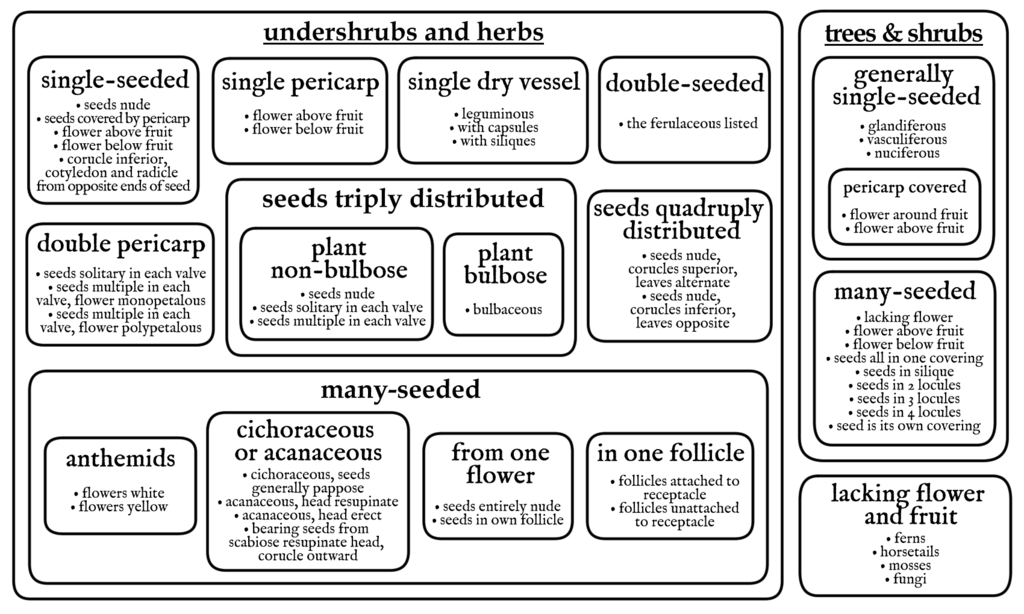
The main goal of the ICN is to provide one correct scientific name for each plant. It outlines the principles for how names are formed, published, and applied, ensuring that the system remains orderly and universal. It's the official rulebook that keeps the language of botany consistent for everyone.
Let's test your understanding of these foundational concepts.
What is the primary purpose of botanical nomenclature?
The two-part scientific naming system popularized by Carl Linnaeus is called a __________.
By providing a stable, unique name for every plant, botanical nomenclature allows us to study and discuss the plant kingdom with precision and clarity.