Boost Your Thinking and Speaking Skills
Introduction to Critical Thinking
What Is Critical Thinking?
Every day, we're flooded with information. News headlines, social media posts, ads, and conversations all compete for our attention. It’s easy to feel overwhelmed or just accept what we see at face value. Critical thinking is the skill that helps us navigate this flood.
It’s the process of actively and carefully examining information to form a judgment. It isn't about being negative or finding fault. Instead, it’s about being an active, thoughtful consumer of information rather than a passive one. It empowers you to look past the surface, question assumptions, and understand the 'why' behind a statement or belief.
Critical thinking is a fundamental skill that empowers students to analyse information, evaluate arguments, and form reasoned judgements.
By developing this skill, you move from simply receiving information to engaging with it. You learn to build a solid foundation for your beliefs and decisions, making you a more independent and effective thinker.
The Core Components
Thinking critically involves a few key mental actions. Think of them as a toolkit for dissecting and understanding information. The three most fundamental components are analysis, evaluation, and inference.
First comes analysis. This is the act of breaking down complex information into smaller, more manageable parts. Imagine a car mechanic who doesn't just look at a car and say "it's broken." They open the hood, examine the engine, check the battery, and inspect the individual components to understand how they work together and where the problem might be. That's analysis in action.
A news article, for example, can be analyzed by separating the headline, the main claims, the evidence provided (like statistics or quotes), and the sources mentioned.
Next is evaluation. Once you've broken the information down, you need to judge its quality. Is it credible? Is it biased? Is the evidence strong enough to support the claims? In our car mechanic analogy, this is when they decide if a part is just old or actually faulty and in need of replacement. You weigh the strengths and weaknesses of each piece of information to determine its value and reliability.
Inference
noun
A conclusion reached on the basis of evidence and reasoning.
Finally, you make an inference. This is where you form a logical conclusion based on your analysis and evaluation. It's an educated guess or a reasoned judgment. After examining the evidence and assessing its credibility, you can infer what is most likely true. If the mechanic finds a dead battery and corroded cables (analysis) and determines these are significant problems (evaluation), they can infer that replacing the battery will likely fix the car.
Better Decisions, Better Solutions
The main benefit of critical thinking is straightforward: it helps you make better decisions and solve problems more effectively. When you face a complex choice, whether it's a major life decision or a challenge at work, applying these components brings clarity.
By analyzing the situation, you can identify the core issues and all the relevant factors. By evaluating your options, you can weigh the pros and cons based on solid evidence, not just gut feelings or outside pressure. And by making a sound inference, you arrive at a decision that you can feel confident about and justify with reason.
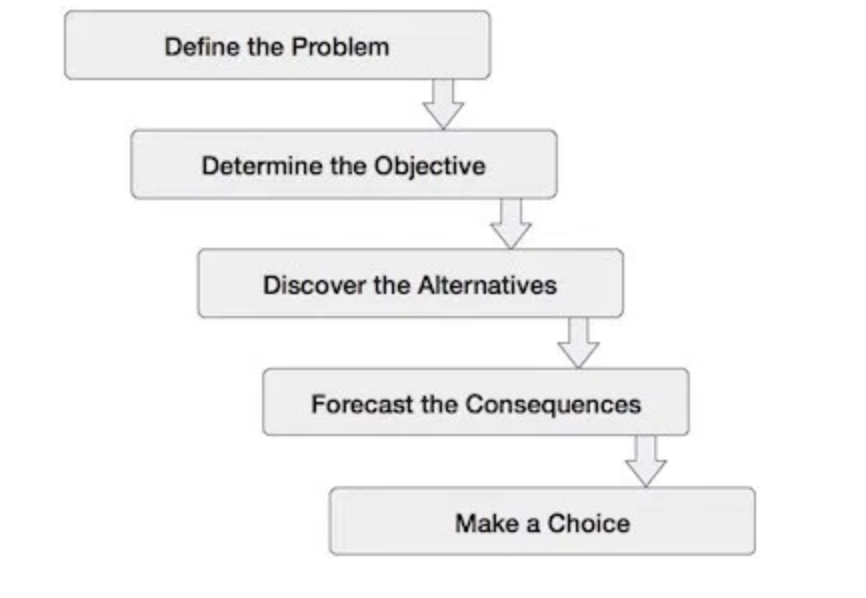
This process prevents you from jumping to conclusions or being swayed by flawed arguments. It's a skill that builds on itself. The more you practice thinking critically, the more natural it becomes, turning you into a more insightful, independent, and effective thinker in all areas of your life.
What is the primary purpose of critical thinking?
When reading a news article, you break down the author's argument into its main points, supporting evidence, and underlying assumptions. Which component of critical thinking are you primarily using?