Boost Your Spoken English Skills
Assessing English Proficiency
Where Do You Stand?
Before you can improve your conversational English, you need a clear picture of your current skills. A good assessment isn't about getting a score. It's about creating a map that shows where you are now, so you can chart a path to where you want to be.
The goal is to find your strengths and pinpoint the exact areas that need a little more work.
To do this, we'll use a widely recognized standard called the Common European Framework of Reference for Languages, or CEFR. Think of it like a ladder with six rungs, each representing a different level of language ability. It helps learners and teachers understand proficiency in a consistent way, no matter where they are in the world.
The CEFR Ladder
The CEFR divides language learners into three broad categories, with two levels inside each one.
| Category | Level | Description |
|---|---|---|
| Basic User | A1 | Can understand and use familiar, everyday expressions. Can introduce themselves and ask/answer basic personal questions. |
| A2 | Can understand sentences and frequently used expressions related to immediate needs. Can communicate in simple, routine tasks. | |
| Independent User | B1 | Can understand the main points on familiar matters. Can deal with most situations likely to arise while traveling. |
| B2 | Can understand the main ideas of complex text. Can interact with a degree of fluency and spontaneity with native speakers. | |
| Proficient User | C1 | Can understand a wide range of demanding, longer texts. Can express ideas fluently and spontaneously. |
| C2 | Can understand with ease virtually everything heard or read. Can express themselves spontaneously, very fluently, and precisely. |
Achieving an intermediate level isn’t only important to obtain a university degree, a scholarship, or a job, but also to demonstrate that your knowledge of the English language qualifies you as an “independent user,” according to the CEFR regulations.
Your goal right now is to find your rung on this ladder. You don't need a formal, expensive test to get a good idea. A self-assessment is a powerful first step.
Using a Self-Assessment Grid
A self-assessment grid breaks down language skills into specific "can-do" statements. You simply read through the statements for each level and decide which ones describe your abilities honestly. For conversation, you'll focus on the "Spoken Interaction" and "Spoken Production" sections.
For example, a B1 level statement for spoken interaction might be: "I can enter unprepared into conversation on topics that are familiar, of personal interest or pertinent to everyday life (e.g. family, hobbies, work, travel and current events)."
An A2 statement might be: "I can communicate in simple and routine tasks requiring a simple and direct exchange of information on familiar topics and activities."
Be honest with yourself. Can you really do that, or just sometimes? A realistic self-assessment is the most useful kind.
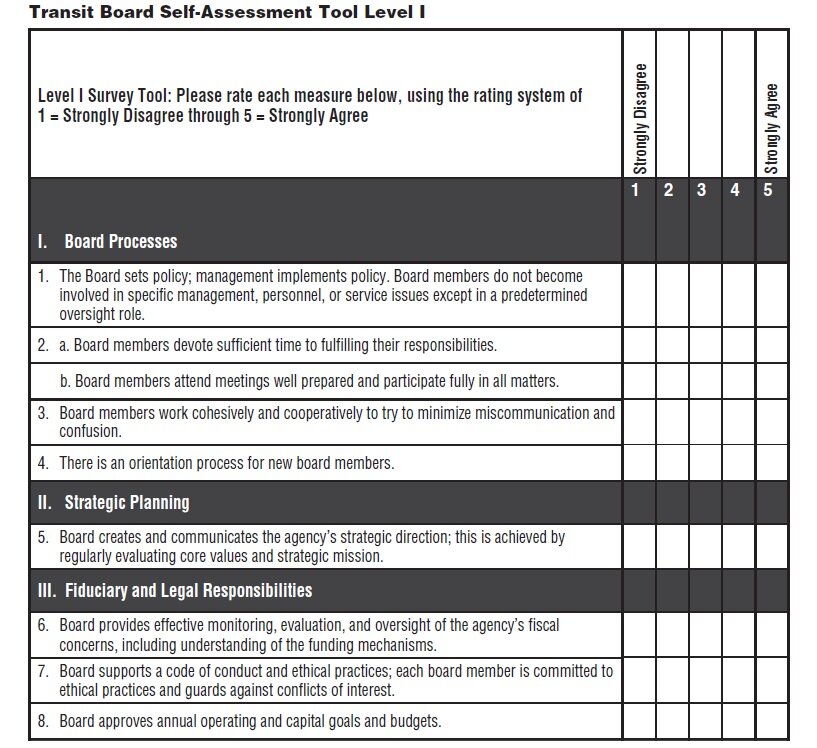
If you find that most of your abilities fall into the B1 category, but one or two feel more like A2, that's completely normal. Language skill isn't perfectly uniform. This information is exactly what you're looking for. It shows you precisely where to focus your practice.
Online Tests and Next Steps
After using a self-assessment grid, you can get a second opinion with a free online proficiency test. Many language learning websites offer them. These tests are often multiple-choice and focus on grammar, vocabulary, and listening comprehension. They can't fully measure your conversational ability, but they provide another valuable data point.
Once you have your results, whether from a grid or a quick online test, don't just focus on the level (e.g., "B1"). Look at the details. Did you struggle with a particular grammar tense? Did you find the listening section difficult? These are your clues. They tell you what to work on next.
Your result isn't a final grade. It’s a starting point. It empowers you to create a learning plan that’s tailored specifically to you.
Ready to check your understanding of these concepts?
What is the primary goal of assessing your English skills, according to the provided text?
The CEFR (Common European Framework of Reference for Languages) is best described as:
Taking the time to assess your starting point is the first step toward making real, measurable progress in your conversational English.