Boost Your Memory Power
Memory Fundamentals
The Journey of a Memory
Your memory isn't a single box in your brain where you toss information. It's a dynamic process, a bit like saving a file on a computer. For a memory to stick, it has to go through three distinct stages: encoding, storage, and retrieval.
Think of it this way:
- Encoding: You type out a document.
- Storage: You hit 'Save' and the computer stores it on the hard drive.
- Retrieval: You open the file later to read it.
Encoding is the first step, where your brain translates incoming information into a form it can understand and store. When you meet someone new, their name and face are encoded. This process is heavily influenced by your attention. If you're distracted, the information might not be encoded properly, which is why you can forget a name seconds after hearing it.
Storage is the process of maintaining that information over time. Once encoded, a memory needs a place to live. Some memories are stored for just a few moments, while others can last a lifetime.
Retrieval is the final step: accessing the stored information when you need it. This is the act of remembering. Sometimes retrieval is effortless, like recalling your own name. Other times, it's a struggle, like trying to remember a fact for a test. A failure to remember can be a problem with any of these three stages.
Your Brain's Filing Cabinets
Just as the memory process has stages, your brain has different systems for storing information. These are typically broken down into three main types: sensory memory, short-term memory, and long-term memory.
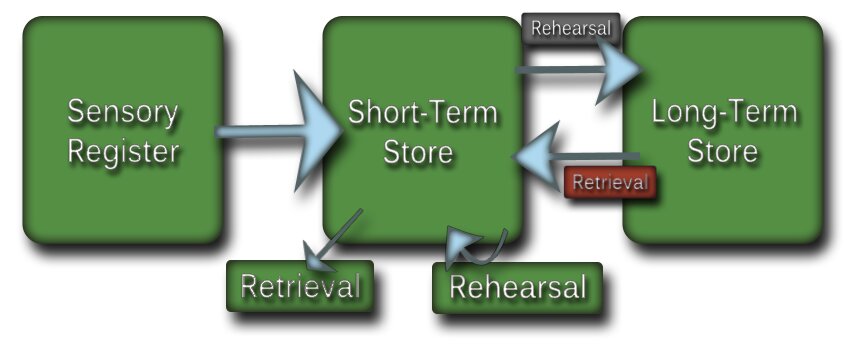
Sensory Memory is the briefest form of memory. It's the ultra-short-term storage of sensory information. Imagine seeing a sparkler wave through the air in the dark; the trail of light you see is your sensory memory at work. It lasts for only a fraction of a second, just long enough for your brain to process the incoming sights, sounds, and sensations and decide if they're important enough to pay attention to.
If you do pay attention, the information moves to Short-Term Memory, also known as working memory. This is your mind's temporary workspace or sticky note. It holds a small amount of information (usually about 7 items) for a short period (around 20-30 seconds). You use your short-term memory when you look up a phone number and hold it in your head just long enough to dial.
Finally, information that is rehearsed or deemed important can be moved to Long-Term Memory. This is the vast, durable storage system for your knowledge, skills, and experiences. It has a seemingly unlimited capacity and can last for days, weeks, or a lifetime. Your first bike ride, the capital of France, and how to tie your shoes are all stored in your long-term memory.
What Helps and Hurts Memory
Why do some memories stick while others fade? Several factors influence how well your memory performs.
Attention is critical. You can't remember something you didn't pay attention to in the first place. This is why multitasking often leads to forgetting.
Emotion plays a huge role. You're more likely to remember events that are tied to strong feelings, whether happy or sad. These emotionally charged memories are often more vivid.
Repetition and Rehearsal are classic ways to move information from short-term to long-term memory. Repeating a new piece of information over and over helps solidify its place in your brain.
Association is another key factor. Linking new information to things you already know creates a mental hook, making it easier to retrieve later. For example, if you meet a new person named Baker, you might associate them with the job of a baker to help you remember their name.
On the flip side, Interference can cause forgetting. Sometimes old information gets in the way of new information (proactive interference), and sometimes new information makes it harder to recall old information (retroactive interference). This is why studying two similar subjects back-to-back can be challenging.
Now, let's test what you've learned about the fundamentals of memory.
What is the correct sequence of the three stages of memory?
You look up a phone number online and repeat it to yourself just long enough to key it into your phone. Which memory system are you primarily using?
Understanding these basic building blocks—the processes and types of memory—is the first step toward learning how to improve it.