Boost Your Heart Rate Variability
Understanding Heart Rate Variability
More Than Just a Beat
Your heart doesn't beat like a metronome. If you have a resting heart rate of 60 beats per minute, it doesn't mean your heart beats exactly once every second. In one minute, the time between two beats might be 0.9 seconds, and the time between the next two might be 1.1 seconds. This constant variation in the time between consecutive heartbeats is called Heart Rate Variability (HRV).
Think of it this way: a healthy, adaptable system is flexible, not rigid. A perfectly regular, unchanging heartbeat is often a sign of stress or a system that's struggling to cope. The natural, subtle irregularity measured by HRV shows that your body is ready and able to react to its environment.
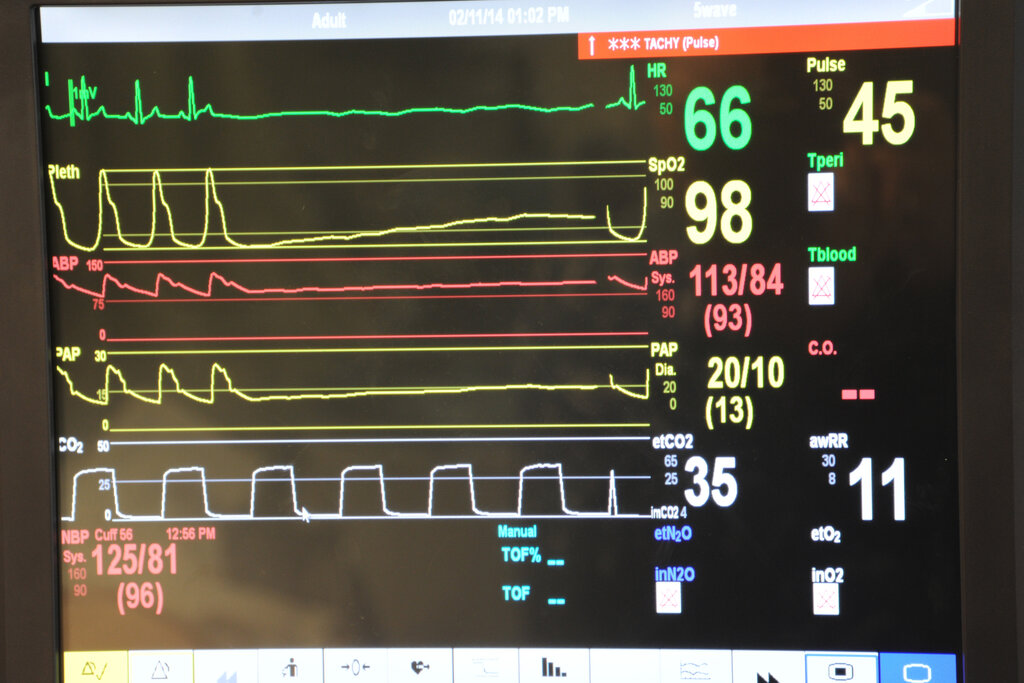
We measure the time between each heartbeat in milliseconds (ms). These are often called R-R intervals, named for the "R wave," which is the tallest spike you see on an electrocardiogram (ECG) trace.
A Window Into Your Nervous System
So why does this variability matter? Because it's a direct reflection of your Autonomic Nervous System (ANS). The ANS is the unconscious part of your nervous system that regulates essential functions like breathing, digestion, and, of course, heart rate. It has two main branches that are in a constant, delicate balance.
The Sympathetic Nervous System (SNS) is your "fight-or-flight" response. It's the gas pedal. When you're stressed, exercising, or excited, the SNS takes over, increasing your heart rate and making the rhythm more regular. This lowers your HRV.
The Parasympathetic Nervous System (PNS) is your "rest-and-digest" response. It's the brake. When you're relaxed and calm, the PNS is dominant, slowing your heart rate and allowing for more variation between beats. This increases your HRV.
HRV is essentially a measurement of this tug-of-war. A higher HRV indicates that the parasympathetic system is active and your body is in a state of rest and recovery. It signals resilience and good cardiovascular fitness. A consistently low HRV suggests the sympathetic system is in overdrive, a sign of stress, fatigue, or even potential illness.
Making Sense of the Numbers
HRV is typically reported in milliseconds (ms), with common metrics including SDNN and RMSSD. You don't need to memorize the formulas, but it's helpful to know they represent different ways of calculating the variability between heartbeats.
What's a "good" HRV value? It's highly personal. Age, fitness level, genetics, and daily habits all play a role. A 25-year-old athlete might have an average HRV of 80ms, while a 50-year-old office worker might have an average of 35ms. Neither is necessarily "better" without context.
The most important thing isn't a single number, but your personal trend over time. A stable or upward trend is a good sign, while a sudden drop can be a useful alert that you may need more rest.
| Day | Avg. HRV (ms) | Notes |
|---|---|---|
| Monday | 45 | Normal day, good sleep |
| Tuesday | 48 | Light workout, felt good |
| Wednesday | 32 | Stayed up late, stressed |
| Thursday | 38 | Recovering, took it easy |
| Friday | 46 | Back to baseline |
Notice how a single night of poor sleep and stress caused a significant dip. By monitoring this trend, the person could see a clear signal from their body that it needed to recover. In essence, HRV provides objective data about your body's readiness and resilience.
What is Heart Rate Variability (HRV)?
A higher HRV generally indicates that which part of the nervous system is more active?