Boost Team Motivation
Understanding Team Motivation
What Drives a Team?
Motivation is the “why” behind our actions. For a team, it’s the collective will to pursue and achieve shared goals. Think of it like the engine of a car. A car can have a sleek design and perfect wheels, but without an engine, it goes nowhere. Similarly, a team can have talented people and great resources, but without motivation, they won’t achieve much.
A motivated team is more than just a group of people working hard. They are engaged, collaborative, and invested in the outcome. This collective drive directly fuels performance and productivity. When people are motivated, they don’t just complete tasks; they solve problems, innovate, and support each other. Understanding what fuels this engine is the first step to building a high-performing team.
Motivation is the inward drive we have to get what we need.
The Foundation of Needs
To understand what motivates people, we first need to understand their fundamental needs. Psychologist Abraham Maslow created a simple but powerful model for this, known as the Hierarchy of Needs. He pictured our needs as a pyramid, with the most basic requirements at the bottom.
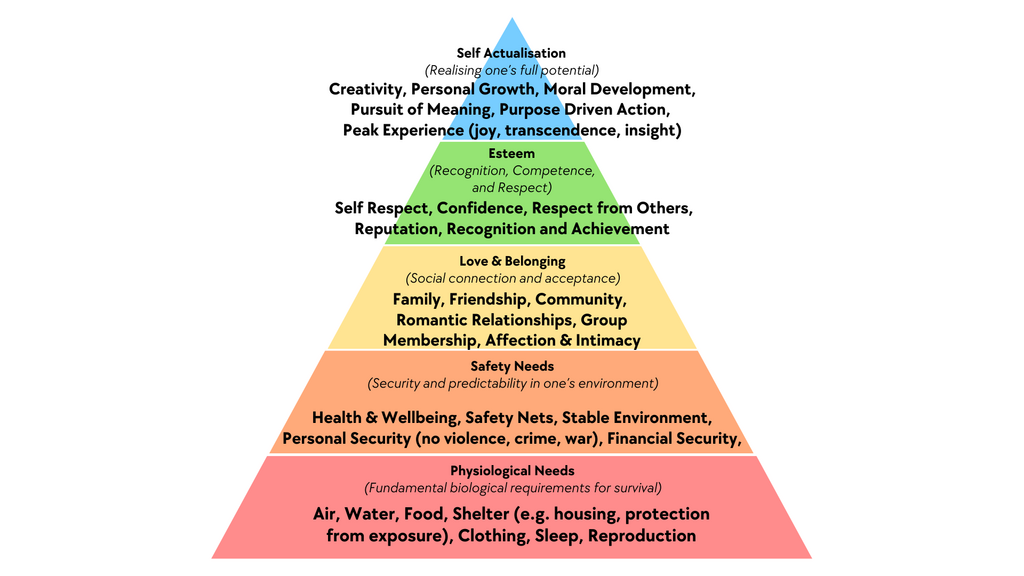
At the bottom are Physiological needs like food, water, and shelter. In the workplace, this translates to a salary that allows an employee to live comfortably.
Next is Safety, which includes job security, a safe working environment, and predictable routines. Once those are met, we seek Love and Belonging—the feeling of being part of a team, having good relationships with colleagues, and feeling accepted.
Further up is Esteem, which is about feeling respected, recognized for achievements, and having a sense of accomplishment. At the very top is Self-Actualization, which is the drive to become the best one can be, tapping into one's full potential through challenging and meaningful work.
Maslow's theory suggests that you have to satisfy the lower-level needs before you can effectively appeal to the higher-level ones. You can't inspire someone to reach their full potential if they're worried about paying their rent.
Satisfaction vs. Dissatisfaction
Another way to look at motivation is to separate the things that make us unhappy at work from the things that make us genuinely happy and driven. Frederick Herzberg did just that with his Two-Factor Theory.
He identified two distinct sets of factors:
-
Hygiene Factors: These are the basics that you expect from a job. Think of things like company policies, salary, work conditions, and relationships with supervisors. When these are poor, you feel dissatisfied. But when they're good, you just feel neutral. They don't actively motivate you; they just prevent unhappiness. A decent salary, for example, is expected. It won't make you leap out of bed in the morning, but an unfair salary will definitely make you want to stay there.
-
Motivators (or Satisfiers): These are the things that truly drive performance and job satisfaction. They include challenging work, recognition, responsibility, advancement, and personal growth. These factors are intrinsic to the work itself and give people a sense of achievement.
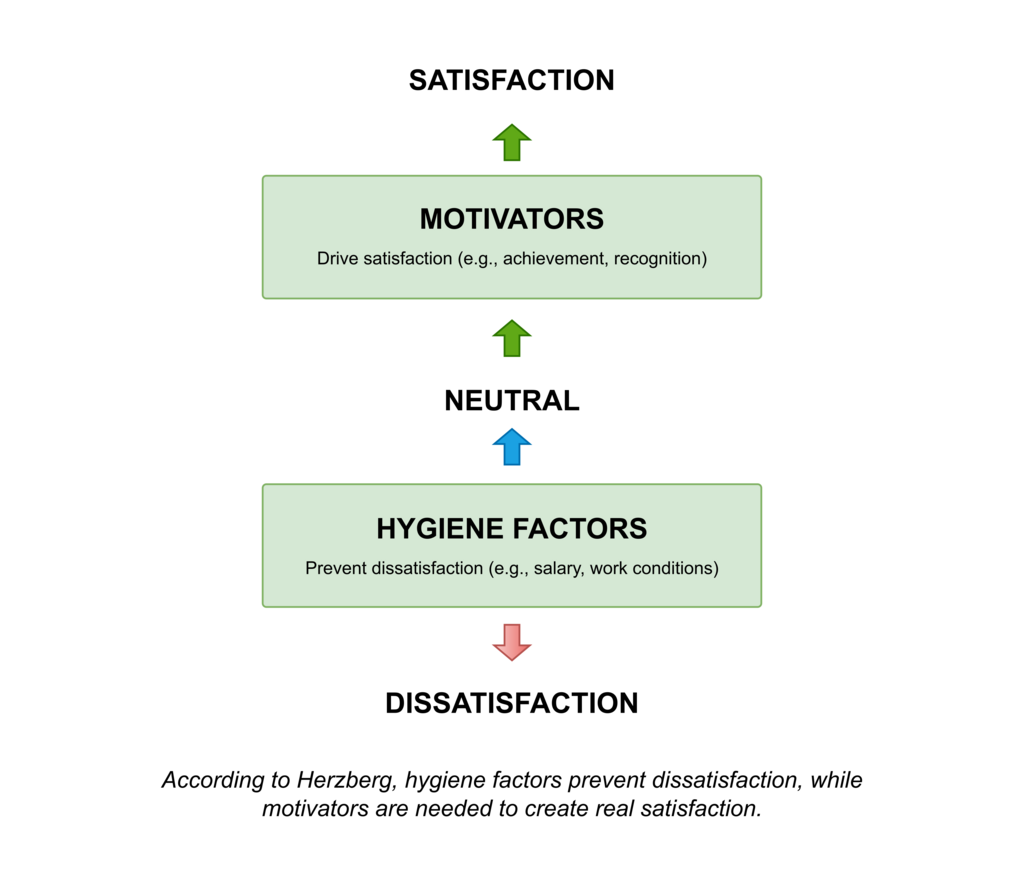
Herzberg's key insight was that satisfaction and dissatisfaction are not opposites. Eliminating dissatisfaction (by improving hygiene factors) doesn't automatically create satisfaction. To motivate a team, leaders need to focus on the motivators—the elements that make the work itself rewarding.
The Impact on Performance
Motivation isn't just a feel-good concept; it has a direct and measurable impact on a team's output. Motivated employees are more engaged, which means they are more focused, energetic, and committed to their work. This leads to higher quality work and greater productivity.
When a team is motivated, they are more resilient in the face of challenges and more likely to collaborate effectively to find solutions.
This creates a positive feedback loop. High performance leads to a sense of accomplishment (satisfying esteem needs), which in turn boosts motivation. A team that feels successful is more likely to stay motivated, creating a cycle of continuous improvement and achievement.
Now, let's test your understanding of these foundational theories.
According to the provided text, what is the primary role of motivation within a team?
In the context of Maslow's Hierarchy of Needs, a manager who publicly recognizes an employee's excellent work is primarily appealing to which need?
By understanding these core ideas, you have a framework for thinking about what drives the people you work with.