Bodybuilding Without a Gym
Mechanical Disadvantage Progressions
Bodyweight Bodybuilding
To build muscle without weights, you don't need more reps. You need better physics. The goal isn't to make an exercise easier, but to systematically make it harder. By changing your body's position, you can manipulate leverage to place incredible tension on your muscles, sparking growth just as effectively as picking up a heavier dumbbell.
This approach is all about decreasing your mechanical advantage—intentionally making your muscles work harder to move the same body weight. Instead of adding plates to a bar, you'll lengthen levers, shift your centre of mass, and change angles to increase the demand on the target muscle groups. This is how you achieve the progressive overload necessary for hypertrophy using only the machine you were born with.
Lengthen Your Levers
The simplest way to make an exercise harder is to lengthen the lever arm. Think about a basic push-up. Your hands are the fulcrum, and your body is the lever. In a standard push-up, your hands are directly beneath your shoulders, creating a relatively strong and stable position.
Now, what happens if you move your hands forward, towards your waist? This is the start of a planche lean push-up. The distance between the fulcrum (your hands) and your centre of mass has increased significantly. Your shoulders and chest now have to work exponentially harder to support and lift your body. The lever is longer, the work is greater, and the stimulus for muscle growth is immense.
This principle applies everywhere. An archer squat, where one leg is extended straight out to the side, forces the working leg to handle the load from a disadvantaged position. The same goes for moving from a regular pull-up to an archer pull-up. You're manipulating levers to put specific muscles under maximum tension.
Shift Your Centre
Another powerful tool is unilateral loading, or working one side of the body at a time. Progressing from a two-arm push-up to a one-arm push-up is a massive leap in difficulty, and not just because one arm is doing the work of two. You've also removed a point of support, forcing your core to work overtime to prevent rotation.
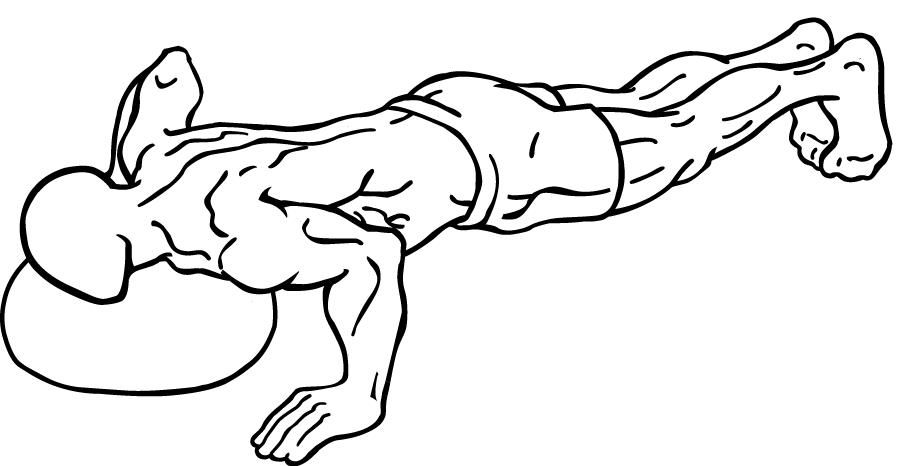
Adjusting your body's angle relative to gravity is another key progression. Elevating your feet on a box for push-ups shifts your centre of mass towards your head. This places a greater percentage of your body weight on your hands, increasing the load on your upper chest, shoulders, and triceps. Similarly, performing a row with your body more horizontal to the ground is far more difficult than doing it from a more upright position.
By combining these techniques—lengthening levers, shifting your weight to one side, and adjusting your body angle—you have an infinite toolkit for progressive overload. Each exercise can be tweaked to find the point of maximum tension, forcing your muscles to adapt and grow stronger, all without ever needing to pick up a weight.
What is the primary principle behind using physics to make bodyweight exercises harder for muscle growth?
How does moving your hands further forward in a push-up (towards a planche lean) increase the difficulty?