Bodybuilding Transformation and Hypertrophy Mastery
Hypertrophy Science
The Science of Muscle Growth
Muscle hypertrophy is the process of increasing muscle cell size. It’s not just about lifting heavy weights; it’s about creating a specific stimulus that tells your body it needs to build bigger, more resilient muscle tissue. Think of it as your body's adaptation to stress. To trigger this adaptation, you need to apply the right kinds of stress. The scientific consensus points to three primary drivers: mechanical tension, metabolic stress, and muscle damage.
To begin, keep in mind three primary factors that trigger hypertrophy: mechanical tension, muscle damage and metabolic response, according to the National Strength and Conditioning Association (NSCA).
While all three play a role, mechanical tension is the undisputed king. This is the force generated within a muscle when it contracts against resistance. When you lift a weight, your muscle fibers are stretched and pulled, creating tension. This process is sensed by specialized cells called mechanoreceptors, which initiate a cascade of signaling pathways that command the muscle to grow. The greater the tension, the stronger the growth signal. This is why progressively lifting heavier weights over time is a fundamental principle of getting stronger and bigger.
Next is metabolic stress. If you’ve ever felt the “pump” during a high-rep set, you’ve experienced metabolic stress. It’s the buildup of byproducts, or metabolites, like lactate and hydrogen ions within the muscle. This accumulation happens when you work your muscles in a way that temporarily deprives them of oxygen, forcing them to rely on anaerobic glycolysis for energy. This cellular swelling and acidic environment trigger anabolic signaling, partly through the mTOR pathway, contributing to muscle growth, especially the kind that increases the fluid volume within the muscle cell.
Two Types of Growth
Not all muscle growth is the same. Hypertrophy can be broadly categorized into two types, and understanding the difference is key to tailoring your training.
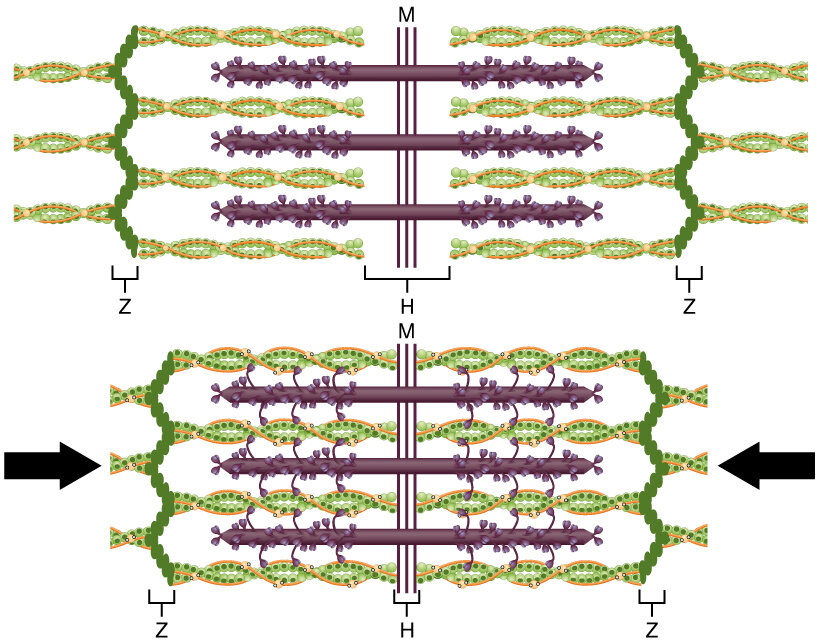
Myofibrillar Hypertrophy is the growth of the actual contractile proteins within your muscle fibers, specifically the actin and myosin filaments. This type of growth leads to a direct increase in muscle strength and density. It’s primarily stimulated by high levels of mechanical tension, which is why it's the dominant adaptation for powerlifters and strength athletes who focus on heavy, low-rep training.
Think of myofibrillar growth as adding more engines to your car. The car doesn't just look more powerful—it actually is.
Sarcoplasmic Hypertrophy, on the other hand, is an increase in the volume of the sarcoplasm, the fluid-filled space surrounding the myofibrils. This includes glycogen, water, and other non-contractile elements. This type of growth increases the overall size of the muscle without a proportional increase in strength. It's largely driven by metabolic stress and higher training volumes, making it the specialty of bodybuilders who often use moderate weights for higher repetitions to maximize the pump.
| Feature | Myofibrillar Hypertrophy | Sarcoplasmic Hypertrophy |
|---|---|---|
| Primary Driver | Mechanical Tension | Metabolic Stress |
| Main Outcome | Increased Strength & Density | Increased Muscle Size (Volume) |
| Best Stimulus | Heavy Loads, Low Reps (1-6) | Moderate Loads, High Reps (8-20) |
| Adaptation | More contractile proteins | More intracellular fluid |
| Primary Athlete | Powerlifter, Weightlifter | Bodybuilder |
Training for Growth
To maximize hypertrophy, you need to apply these principles effectively. This means focusing not just on what you lift, but how you lift it. Two key concepts are effective reps and time under tension.
An "effective rep" is a repetition performed close to muscular failure—the point where you can no longer complete a rep with good form. The last few reps of a challenging set are the most potent for growth because they recruit the maximum number of muscle fibers, including high-threshold motor units that are otherwise dormant. Whether you reach this point with 5 heavy reps or 20 lighter ones, it’s the intense effort at the end of the set that provides the powerful growth stimulus.
Time Under Tension (TUT) refers to the total time a muscle is actively engaged during a set. You can manipulate TUT by controlling the tempo of your repetitions. A typical rep might take 2-3 seconds, but by slowing down the eccentric (lowering) phase to 3-4 seconds, you can significantly increase the mechanical tension and muscle damage, further stimulating hypertrophy. For example, instead of quickly performing 10 reps in 20 seconds, you could perform 10 reps with a 4-second eccentric, resulting in a TUT of 50 seconds for the set. This deliberate control ensures every portion of the lift is contributing to your goal.
By combining these elements—creating sufficient tension and stress, pushing close to failure, and controlling your tempo—you shift your training from simply moving weight to strategically communicating with your body in the language it understands: the language of growth.