Blockchain in Healthcare Product Design
Introduction to Blockchain
What Is a Blockchain?
Think of a shared digital notebook that’s open for everyone in a group to see. Anyone can add a new page, but no one can go back and erase or change what’s already been written. Once a page is added, it’s there forever, linked to the one before it.
At its most basic level, a blockchain is a digital ledger maintained by a decentralized network of computers.
This is the core idea behind blockchain. It’s a chain of digital "blocks" that contain information. The technology first appeared in 2009 as the foundation for Bitcoin, but its potential goes far beyond digital currency. It’s a new way of storing and verifying information securely, without needing a central authority like a bank or government to oversee it.
How It Works
A blockchain is built from three main components: blocks, nodes, and a chain.
Blocks are like the individual pages in our shared notebook. Each block records a batch of transactions, a timestamp for when it was created, and a unique code called a hash. It also includes the hash of the previous block.
The Chain is what links these blocks together securely. The hash of the previous block is included in the new block, creating a chronological and unbreakable link. If someone tried to alter the data in an old block, its hash would change. This would break the entire chain from that point forward, making the tampering immediately obvious to everyone on the network.
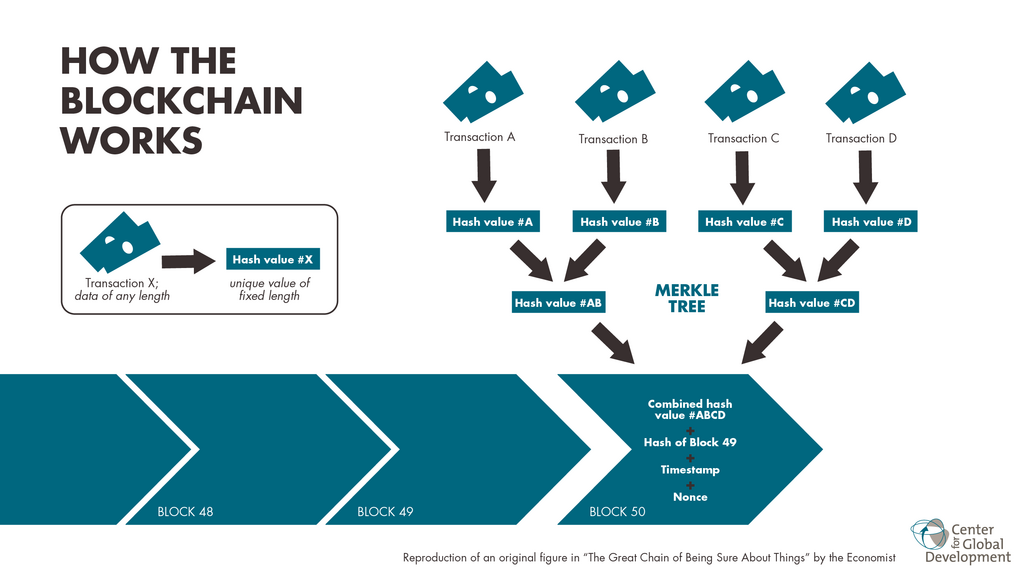
Nodes are the computers or servers that participate in the network. Each node maintains its own copy of the entire blockchain. When a new block is added, it’s broadcast to all the nodes, which then verify it and add it to their copy of the ledger. This distribution is what makes the system decentralized and incredibly resilient. There’s no single point of failure.
Key Features
Blockchain’s structure gives it three powerful features: decentralization, immutability, and transparency.
Decentralization: Because the ledger is spread across many computers, no single person or entity is in control. Information isn’t stored in one central place, making it difficult to attack or corrupt.
Immutability: This means the data recorded on a blockchain cannot be changed or deleted. The cryptographic linking of blocks ensures that once a transaction is recorded, it's permanent. This creates a trustworthy and unalterable audit trail.
Transparency: While the identity of participants can be anonymous, the transactions themselves are often visible to everyone on the network. Anyone can view the ledger and verify its contents, which fosters trust and accountability.
Reaching an Agreement
If no one is in charge, how does the network agree on which new blocks to add? This is handled by a consensus mechanism. It’s a set of rules that all the nodes follow to validate transactions and keep the chain in sync. The two most common types are Proof of Work and Proof of Stake.
Proof of Work (PoW): This was the original consensus mechanism, used by Bitcoin. Nodes, often called "miners," compete to solve a complex mathematical puzzle. The first one to solve it gets to add the next block to the chain and is rewarded. This process requires a massive amount of computational power, which makes the network secure but also consumes a lot of energy.
Proof of Stake (PoS): This is a more energy-efficient alternative. Instead of competing to solve puzzles, participants are chosen to create a new block based on the amount of cryptocurrency they hold and are willing to "stake" as collateral. If they validate fraudulent transactions, they lose their stake. This incentivizes them to act honestly.
Let's check your understanding of these foundational concepts.
What is the primary role of a 'node' in a blockchain network?
Why is a blockchain considered 'immutable'?
With these fundamentals in mind, you're ready to explore how this technology is being applied in various fields.