Blockchain Fundamentals Explained
Introduction to Blockchain
What is a Blockchain?
Imagine a shared digital notebook that’s duplicated and spread across an entire network of computers. Every time someone wants to add a new entry, or transaction, it gets added to every copy of the notebook. This shared, synchronized database is the basic idea behind a blockchain.
At its most basic level, a blockchain is a digital ledger maintained by a decentralized network of computers.
Unlike a traditional bank ledger, which is controlled by a single entity, a blockchain is managed by its users. It was created to allow people to exchange value directly with each other, without needing a middleman like a bank or a credit card company to approve the transaction. This peer-to-peer system is what makes it a groundbreaking technology.
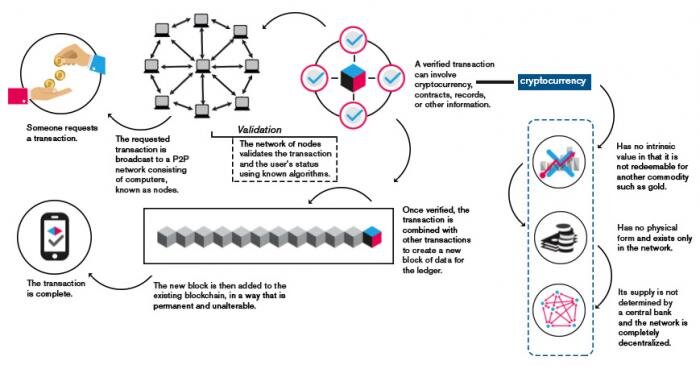
To achieve this without a central authority, a blockchain relies on a few core principles. These characteristics work together to create a system that is secure, reliable, and transparent.
Core Characteristics
Three key features define how a blockchain works: decentralization, immutability, and transparency.
Decentralization
noun
The distribution of control and decision-making from a central authority to a distributed network.
Decentralization means there is no single point of control or failure. In a centralized system, like a bank's database, all data is stored in one place. If that central server goes down or is compromised, the entire system is at risk. On a blockchain, the ledger is copied across many computers. This distribution of data makes the network incredibly resilient. To take the network down, a bad actor would have to attack thousands of computers at once, which is practically impossible.
Immutability refers to the fact that once data is recorded on a blockchain, it cannot be changed or deleted. Transactions are grouped into blocks, and each new block is cryptographically linked to the one before it, forming a chain. This link is a hash, a unique digital fingerprint. If someone tried to alter a transaction in an old block, it would change that block's hash. This would break the link to the next block, and so on, making the tampering immediately obvious to everyone else on the network. The chain's integrity would be broken, and the network would reject the fraudulent change.
Think of it like a book where each page is magically sealed once it's written. You can add new pages, but you can't go back and edit the old ones.
Transparency might sound contradictory to privacy, but on a blockchain, they coexist. Most blockchains are public, meaning anyone can view the entire history of transactions. However, the participants are typically pseudonymous. Instead of using real names, transactions are linked to alphanumeric addresses. So while you can see that address A sent 1 Bitcoin to address B, you don't know who owns those addresses. This creates a system of transparent accounting without revealing users' real-world identities.
A Brief History
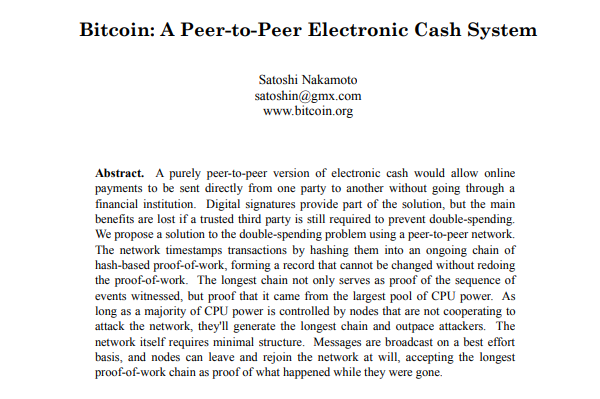
While the ideas behind blockchain existed in computer science for decades, the first practical application was Bitcoin, launched in 2009. The blockchain was invented to serve as the public ledger for all Bitcoin transactions. For the first few years, blockchain technology was almost exclusively associated with the cryptocurrency.
However, developers soon realized the underlying technology could be used for much more. In 2015, the Ethereum blockchain was launched. It introduced a key innovation: smart contracts. These are self-executing contracts with the terms of the agreement written directly into code. This opened the door for building decentralized applications (or dApps) for everything from finance and gaming to supply chain management and voting systems.
Since then, the field has exploded with new blockchains and applications, each aiming to solve different problems. But they all share the same foundational principles of decentralization, immutability, and transparency that were first introduced with Bitcoin.
Let's check your understanding of these core concepts.
Which of the following best describes the core concept of a blockchain?
What does 'immutability' mean in the context of a blockchain?
Blockchain is a foundational technology that enables new forms of digital interaction. By understanding its core characteristics, you can begin to see its potential to reshape various industries.