Blockchain Fundamentals Explained
Introduction to Blockchain
What Is a Blockchain?
At its heart, a blockchain is a special kind of digital notebook. Unlike a regular notebook kept by one person, this one is shared among many people across a computer network. Every time someone adds a new entry, or transaction, everyone gets the update. This creates a single, shared record of events that is incredibly difficult to change once it's written down.
A blockchain is a shared, unchangeable ledger for recording transactions and tracking assets in a network.
The main purpose of this technology is to allow people, especially those who don't know or trust each other, to share valuable data in a secure, tamper-proof way. This removes the need for a central authority, like a bank or government, to act as a middleman. The information is stored in groups, known as blocks, and each new block is securely linked to the one before it, forming a chain.
The Power of Decentralization
Most systems we use today are centralized. Think of a bank. It holds all your financial information on its private servers. You have to trust the bank to keep your records safe and accurate. If their server goes down, you can't access your money. If it gets hacked, your data could be compromised.
A blockchain, on the other hand, is decentralized. The ledger isn't stored in one central place. Instead, an identical copy exists on many computers across the network. This distribution of power has huge implications. There is no single point of failure, making the system incredibly resilient. It's also transparent, as participants can see the record of transactions.
This structure makes it extremely difficult for any single person or group to take control or make changes for their own benefit. To alter the ledger, a malicious actor would have to control more than half of the computers in the network, which is practically impossible on large, public blockchains.
Secured by Digital Fingerprints
So, how does a blockchain stay secure? The key is cryptography, specifically a process called hashing. A hash is a unique, fixed-length string of characters generated from any piece of digital data. Think of it as a unique digital fingerprint.
Even a tiny change to the original data, like adding a comma, will produce a completely different hash. In a blockchain, the transactions in a block are run through a hashing algorithm to create a hash for that block. This hash is then included in the next block in the chain.
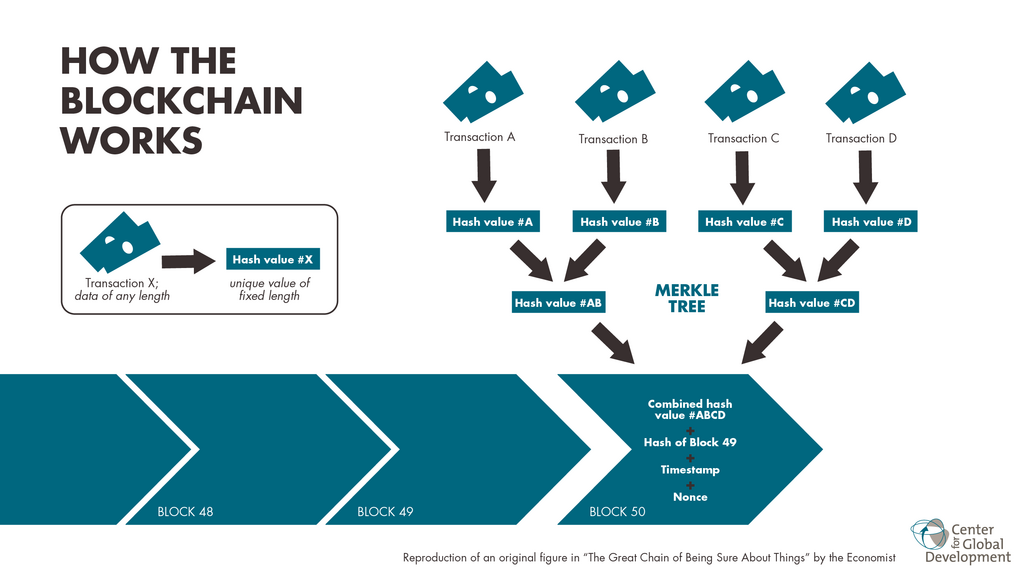
This creates a powerful security feature. If someone tried to alter a transaction in an old block, that block's hash would change. Since that hash is part of the next block, the next block would also have to change, which would change its hash, and so on. Any attempt to tamper with the chain would create a ripple effect, immediately signaling to the rest of the network that something is wrong.
Reaching an Agreement
Since there's no central boss, how does the network agree on which new blocks should be added to the chain? This is achieved through something called a consensus mechanism. It's a set of rules that all participants in the network follow to agree on the state of the ledger.
There are different ways to reach consensus. One famous method requires participants, often called "miners," to solve a complex mathematical puzzle. The first one to solve it gets to propose the next block and is rewarded for their effort. This process ensures that adding new blocks requires significant computational work, making it expensive and difficult to cheat. This collective agreement is what maintains the integrity and accuracy of the blockchain without a central authority.
A Brief History
The idea of a cryptographically secured chain of blocks was first described in 1991. But the technology didn't take off until 2008, when a person or group using the pseudonym Satoshi Nakamoto published a white paper called "Bitcoin: A Peer-to-Peer Electronic Cash System."
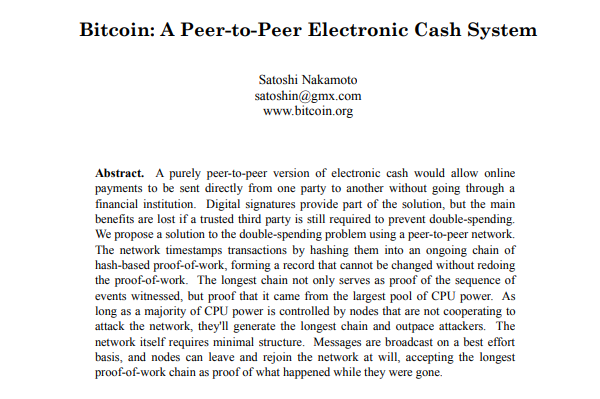
Nakamoto's innovation was to combine existing technologies to create the first decentralized digital currency, Bitcoin. This was the first time blockchain was used in the real world. For years, blockchain was synonymous with Bitcoin.
However, people soon realized the underlying technology could be used for much more than just digital money. It could be used to track supply chains, manage healthcare records, verify identity, and create new kinds of digital contracts. This has led to an explosion of interest and development, transforming blockchain from a niche concept into a groundbreaking technology with the potential to reshape countless industries.
What is the primary advantage of a decentralized system like a blockchain compared to a centralized one like a traditional bank?
What is the function of 'hashing' in securing a blockchain?
Now you've got the basics down. You understand what a blockchain is, why decentralization is important, and how security is maintained. These are the core building blocks for understanding this powerful technology.