Blockchain Fundamentals
Introduction to Blockchain
A Shared Digital Notebook
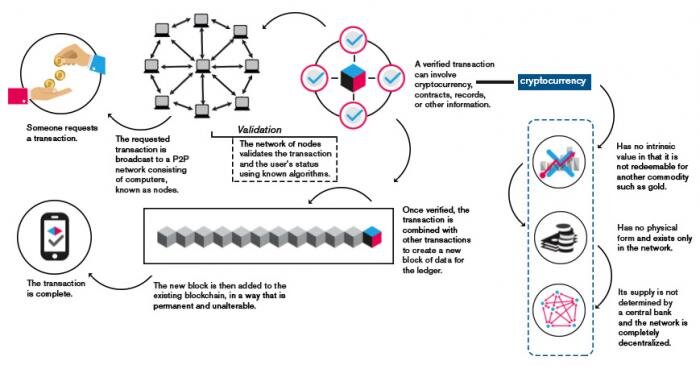
At its most basic level, a blockchain is a digital ledger maintained by a decentralized network of computers.
Imagine a special notebook that's shared among a group of people. Every time someone wants to add an entry, they announce it to the group. Everyone then adds that new entry to their own copy of the notebook. Because everyone has a copy, and all the copies are kept in sync, it becomes a trusted, collective record of everything that's happened.
That's the basic idea behind blockchain. It's a technology for storing information in a secure, transparent, and unchangeable way. The name itself gives a clue to its structure: it's a chain of blocks. Each block holds information, and they are linked together in chronological order.
Blocks, Chains, and Nodes
To understand how a blockchain works, let's break down its three main parts.
Blocks are like pages in our shared notebook. Each one contains a list of recent transactions or data. When a block is full, a new one is created to continue the record.
These blocks aren't just separate pages; they are linked together to form a chain. Each new block is connected to the one before it, creating a timeline of data that stretches all the way back to the very first block. This linking is crucial for security. If someone tried to change the information in an old block, they would break the chain, and the network would immediately notice.
So who holds these notebooks? This is where nodes come in. A node is simply a computer that's part of the blockchain network. Each node keeps a full copy of the entire blockchain. When a new block is created, it's sent to every node on the network. They all check it to make sure it's valid and then add it to their copy of the chain. This distribution across many computers is what makes the system so robust.
Its Core Features
The structure of a blockchain gives it three powerful characteristics that set it apart from traditional databases.
Decentralization
noun
The transfer of control and decision-making from a centralized entity (individual, organization, or group thereof) to a distributed network.
Unlike a bank or a government, a blockchain has no central authority. The network is maintained by its participants—the nodes. This lack of a central point of control means it's very difficult for any one person or group to manipulate the data or shut the system down. Power is distributed across the entire network.
Next is transparency. On public blockchains, anyone can view the entire history of transactions. While the real-world identities of the participants are typically hidden, the flow of data is open for all to see. This creates a level of accountability that's hard to achieve in a closed, private system.
Finally, and perhaps most importantly, blockchains are immutable. This means that once data has been recorded in a block and added to the chain, it cannot be altered or deleted. To change a past transaction, you would have to alter that block and every single block that came after it, across thousands of computers simultaneously. This makes a blockchain a highly reliable and tamper-proof record.
These three features work together to create a system for recording information that is secure, transparent, and resistant to control by any single entity.
What is the best analogy for a blockchain, based on the description?
What is the primary security benefit of linking blocks together in a chain?