Blockchain Explained
Introduction to Blockchain
A Digital Ledger for Everyone
At its heart, a blockchain is a special kind of digital notebook. Think of it like a shared ledger that isn't stored in one single place, like a bank's central computer. Instead, it's copied and spread across a network of many computers. This is what makes it a "distributed ledger."
Its main job is to record transactions in a way that is permanent and transparent. Once something is written down in this notebook, it's extremely difficult to change it. This creates a trustworthy record without needing a middleman like a bank or government to vouch for it.
At its core, blockchain is a decentralized digital ledger that records transactions across multiple computers in a secure and transparent manner.
The name "blockchain" hints at how it's built. Information is gathered into groups, called blocks. Each block is filled with a list of recent transactions. When a block is full, it's added to the end of the line, creating a chain of blocks.
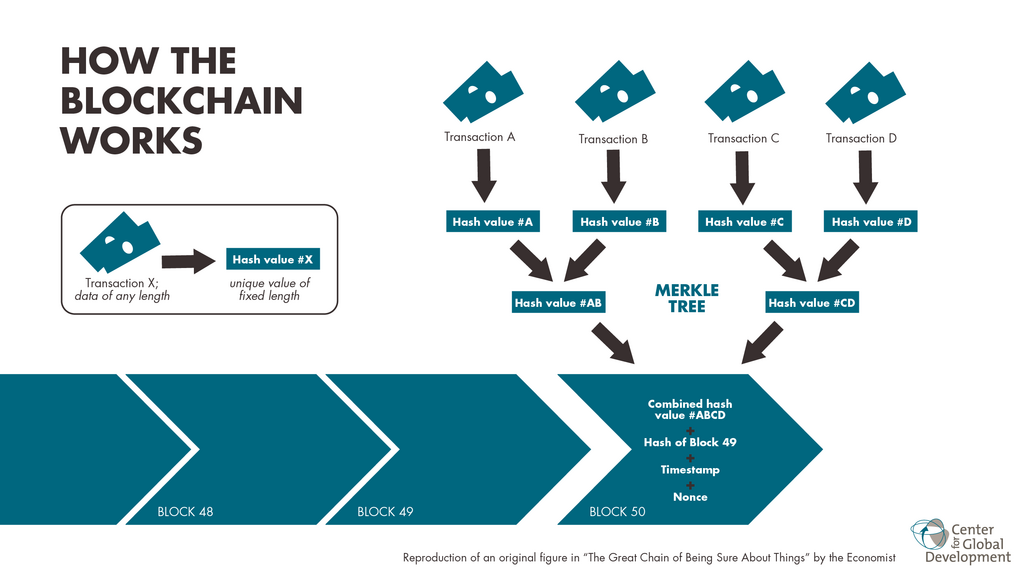
This linking process is what makes the chain so secure. Each new block contains not only its own transaction data but also a unique, cryptographic fingerprint of the block that came before it. If someone tried to alter an old block, its fingerprint would change. This would break the link to the next block, and the entire network would immediately spot the discrepancy.
This structure creates an immutable, or unchangeable, record. It's like each page of a book having a unique reference to the page before it. If you tried to secretly change a page in the middle, the references would no longer match up, and the tampering would be obvious.
The Power of Decentralization
In a traditional system, a central authority like a bank holds the master copy of the ledger. They control it, they update it, and everyone has to trust them to maintain it correctly and honestly. Blockchain turns this model on its head.
There is no master copy. Instead, every computer in the network, known as a node, keeps a full copy of the entire blockchain. When new transactions happen, they are broadcast to all the nodes.
This decentralization brings two key benefits:
-
Transparency: Since many people have a copy of the ledger, it’s open for anyone on the network to see. This makes the system very transparent.
-
Security: With no single point of failure, the network is incredibly resilient. To successfully attack the system, a malicious actor would need to control over half of the computers in the network, which is practically impossible on large blockchains.
Reaching an Agreement
If there's no boss, how does the network decide which new transactions are valid and which new block gets added to the chain? This is handled by a consensus mechanism.
A consensus mechanism is a set of rules that all the nodes in the network follow to agree on the state of the ledger. It ensures that everyone's copy of the blockchain stays synchronized and that only legitimate transactions are added.
Consensus mechanisms are the methods that allow a distributed network to work together and stay secure.
There are different types of consensus mechanisms. One of the most well-known is called Proof of Work. In this system, nodes compete to solve a complex mathematical puzzle. The first one to solve it gets to propose the next block and is rewarded for their effort. This process, often called "mining," requires significant computing power, which helps secure the network by making it expensive and difficult to cheat.
Other methods exist, but the goal is always the same: to allow the network to agree on a single version of the truth without needing to trust a central authority.
Ready to check your understanding? Let's see what you've learned about the fundamentals of blockchain.
What is the most accurate description of a blockchain at its core?
How does a blockchain ensure that its records are permanent and hard to change?
By distributing the ledger across many computers, blockchain creates a system that is both transparent and secure, forming a foundation for new kinds of digital interaction.