Blockchain Essentials
Introduction to Blockchain
A Shared Notebook
At its heart, a blockchain is just a special kind of database, or a ledger. Think of it like a shared digital notebook that a group of people can all see and write in. But there are a few important rules.
- New entries (blocks) are added to the end of the notebook.
- Each new entry is cryptographically linked to the one before it, forming a chain.
- Once an entry is added, it can't be changed or deleted.
This structure is what makes a blockchain so secure. Changing a past entry would break the chain, and the network would immediately spot the fraud. The main purpose is to allow people who don't necessarily trust each other to agree on a set of facts without needing a central authority, like a bank or government, to verify things for them.
At its most basic level, a blockchain is a digital ledger maintained by a decentralized network of computers.
Decentralized and Distributed
Instead of one person or company holding the notebook, every participant in the network holds an identical copy. These participants are called nodes. Each node is a computer running the blockchain's software. When a new transaction happens, it's broadcast to all the nodes in the network.
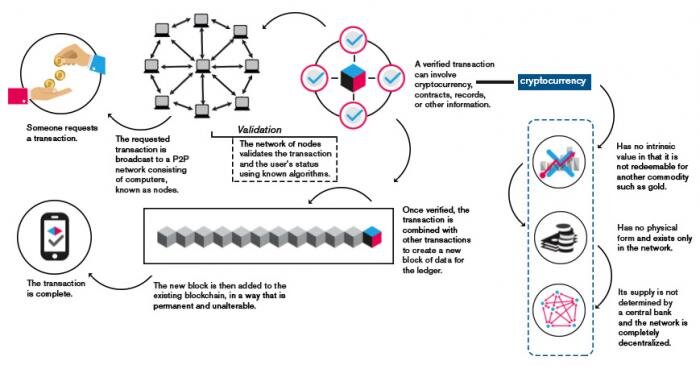
This distribution of power is key. There's no single point of failure. If one node goes offline or is compromised, the network keeps running because thousands of other nodes still have the correct copy of the ledger. This creates a system that is transparent, secure, and incredibly resilient.
How Does Everyone Agree?
With so many copies of the ledger, how does the network decide which new transactions are valid and should be added? This is handled by a consensus mechanism. It’s a set of rules that nodes follow to agree on the state of the ledger. Think of it as the network’s voting system.
A consensus mechanism ensures that all copies of the ledger are identical and that new blocks are added in a fair and secure way. It's what allows a decentralized network to function without a central coordinator.
This agreement process makes the blockchain immutable. Once a block of transactions is approved by consensus and added to the chain, it's practically impossible to alter. To change it, an attacker would need to control more than half of the network's computing power, which is an enormous and usually prohibitive task.
Different Types for Different Needs
Not all blockchains are the same. They can be designed with different levels of access and privacy, depending on their purpose.
| Type | Who can join? | Who can see data? | Example |
|---|---|---|---|
| Public | Anyone | Everyone | Bitcoin, Ethereum |
| Private | By invitation only | Only participants | A company's internal supply chain |
| Consortium | Pre-selected group | Group members | A group of banks sharing data |
Public blockchains are completely open, offering maximum decentralization. Private blockchains are controlled by a single organization, providing privacy and speed. Consortium blockchains are a hybrid, governed by a group of organizations with a shared interest. Each type leverages the core benefits of security and transparency in a way that fits its specific use case.
At its core, what is a blockchain?
What is the primary role of a 'consensus mechanism' in a blockchain network?
This foundational structure—a decentralized, secure, and immutable ledger—is what allows blockchain technology to be applied to so many different industries and problems.