Blockchain Creative Branding and Tokenization
Digital Packaging Design
From Box to Blockchain
In the world of physical goods, packaging is the first handshake. It protects the product, tells its story, and catches the eye on a crowded shelf. But when your asset is digital, like an NFT on the Ethereum blockchain, what does packaging become? It becomes the asset's primary identity, a high-fidelity digital twin of its physical counterpart.
This isn't just about taking a photograph of a box. It's about creating a digital object that carries the same weight, quality, and brand story as the physical item it represents. For small brand owners, this is a powerful new frontier. Your digital packaging isn't just a container; it's a gateway, a certificate of authenticity, and a piece of art all in one.
Think of the digital package not as a wrapper to be discarded, but as the key to a new experience.
Creating Your Digital Twin
A successful digital twin is a meticulous 3D recreation of your physical packaging. It captures every fold, texture, and finish. This requires moving beyond 2D design tools into 3D modelling software to build an object that can be viewed from any angle. The goal is photorealism that feels tangible even on a screen.
Once designed, the file needs to be optimised. High-resolution renders are essential for marketplaces, but the files must be manageable. Formats like .glb or .gltf are standard because they bundle 3D data, textures, and animations into a single, compact file. This optimised asset is then typically stored on a decentralised network like IPFS, ensuring the visual identity of your NFT remains permanently accessible and tamper-proof, linked directly from the blockchain.
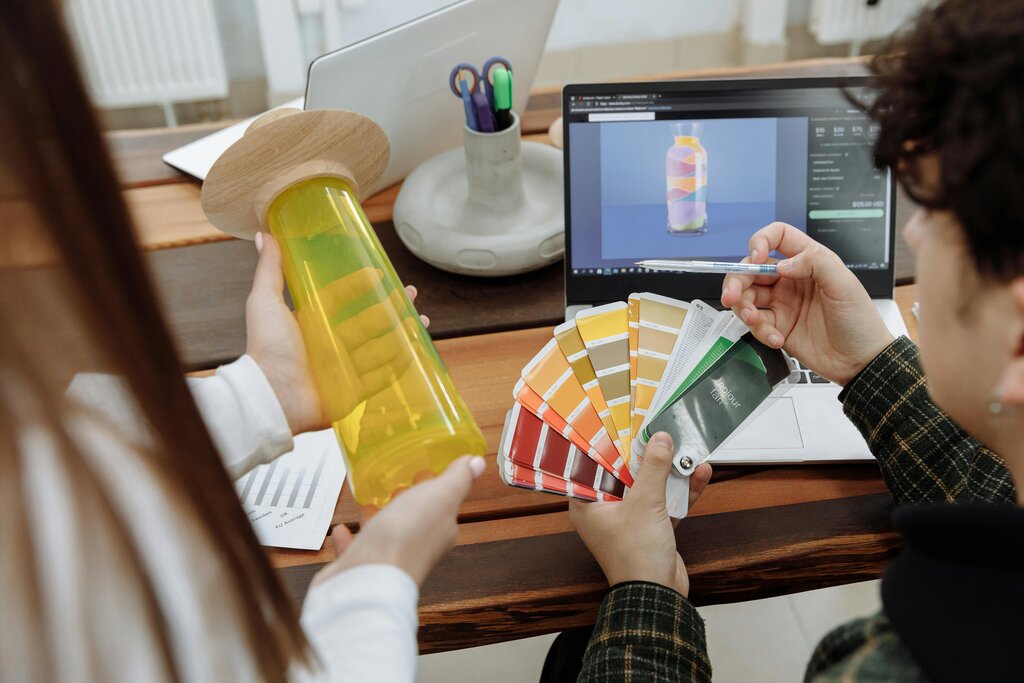
This workflow ensures your digital asset is not just a pretty picture, but a robust and permanent part of the blockchain ecosystem.
Bridging Physical and Digital
Brand consistency is paramount. The digital twin must be instantly recognisable to anyone familiar with your physical product. This means perfectly matching colours—a challenge, given the difference between CMYK for print and sRGB for screens. It also means replicating materials. Is your box glossy, matte, or embossed? These subtle textures must be baked into the 3D model’s material properties to achieve a convincing result.
Beyond simple replication, the design can be enhanced for the digital realm. This is where you can integrate AR-ready features. Imagine a customer scanning your physical box with their phone to see an animated version of the digital twin appear on their table. The physical packaging becomes a launchpad. This is often achieved with subtle markers or QR codes that act as triggers for AR applications, creating a seamless bridge between the two worlds.
This creates a richer brand ecosystem where the physical and digital products enhance one another. The digital asset gains perceived value from its physical counterpart, while the physical product becomes more engaging through digital interaction.
Packaging as a Portal
Ultimately, the digital package is more than just a visual identifier. It is an interactive portal to a wider brand experience. Owning the NFT can grant access to exclusive content, a community Discord server, or future product drops. The package itself is the key.
This concept is being formalised through ideas like the Digital Product Passport, a digital record that accompanies a product throughout its lifecycle. For an NFT, the digital packaging is the front cover of this passport, providing proof of ownership and unlocking its associated rights and privileges. It transforms the asset from a static collectible into a dynamic token with ongoing utility.
Products and product packaging will become a window onto rolling programmes of exclusive content – see precursor Balenciaga’s use of a digital product passport (DPP) to unlock music, and/or – as the cognitive economy booms – soundtracks specifically to boost mood or cognitive health.
By treating your digital packaging as a portal, you give customers a reason to engage with your brand long after the initial purchase. It's a strategy that builds lasting loyalty in a digital-first world.
Ready to test what you've learned about bringing packaging into the digital age?
What is the primary role of digital packaging for an NFT, as described in the text?
Which file formats are considered standard for optimised 3D digital packaging because they can bundle 3D data, textures, and animations into a single file?