Blockchain Basics Explained
Introduction to Blockchain
What Is a Blockchain?
Think of a notebook that you share with a group of friends. Every time someone adds a new entry, everyone in the group gets a copy of the updated notebook. No single person owns it, and because everyone has a copy, it’s really hard for someone to secretly change an entry without everyone else noticing.
A blockchain is basically a digital version of that shared notebook. It's a ledger, or a record of transactions, that is copied and spread across a network of computers.
At its most basic level, a blockchain is a digital ledger maintained by a decentralized network of computers.
So, what problem does this solve? Traditionally, we rely on trusted middlemen, like banks, to handle our transactions. If you want to send $100 to a friend, you tell your bank, which then moves the money. The bank is a central authority that validates and records the transaction.
Blockchains remove the need for that central authority. They allow people to exchange value directly and securely. Because the ledger is shared among many participants, the network itself validates the transactions. This creates a system where trust is built into the network, not placed in a single institution.
A Quick History
The idea of a secure chain of blocks isn't entirely new, but it came to life in 2008. An anonymous person or group known as Satoshi Nakamoto published a paper called "Bitcoin: A Peer-to-Peer Electronic Cash System." This paper outlined the first practical application of blockchain technology: a digital currency called Bitcoin.
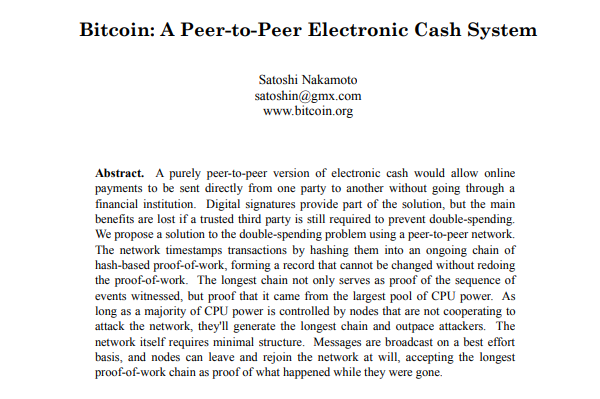
Bitcoin was designed to be a form of electronic cash that could be sent directly from one person to another without going through a financial institution. The blockchain was the underlying technology that made this possible.
Since then, the concept has exploded. Developers realized that blockchains could be used to record more than just financial transactions. They can securely store medical records, track supply chains, manage voting systems, and even represent ownership of digital art. The technology has evolved from a single-purpose tool for cryptocurrency into a versatile platform for all sorts of applications.
Core Features
Three key characteristics give blockchains their power: decentralization, immutability, and transparency. Let's break down what each one means.
Decentralization
noun
The transfer of control and decision-making from a centralized entity (individual, organization, or group thereof) to a distributed network.
As we've covered, there's no single person or company in charge of a blockchain network. The ledger is maintained by a network of participants, and decisions are made by consensus. This structure makes the system incredibly resilient. If one computer on the network goes down, the blockchain keeps running on all the others.
Immutable means unchangeable. Once data is written to a blockchain, it's permanent.
Each block of transactions is cryptographically linked to the one before it, forming a chain. Tampering with a transaction would mean changing its block, which would also change the link to the next block, and the next, and so on. To successfully alter the record, someone would have to change every subsequent block on a majority of the computers in the network—a practically impossible task.
Finally, transparency. For public blockchains like Bitcoin's, anyone can view the ledger and its history of transactions. You can't necessarily see who made a transaction, as users are pseudonymous (represented by an address, not a name), but you can see every transaction that has ever happened. This open and verifiable nature builds trust among participants.
Ready to test what you've learned?
What is the best analogy for a blockchain, based on the provided text?
According to the text, what is the primary problem that blockchain technology was designed to solve?
Together, these features create a powerful new way to record information and transfer value securely, without needing to trust a middleman.