Blockchain Architecture and Ecosystem Dynamics
Consensus Trade-offs
The Unsolvable Puzzle
In blockchain design, you can't have everything. A network must constantly balance three core properties: security, scalability, and decentralization. This challenge is famously known as the Blockchain Trilemma. Trying to maximize one property almost always means sacrificing another.
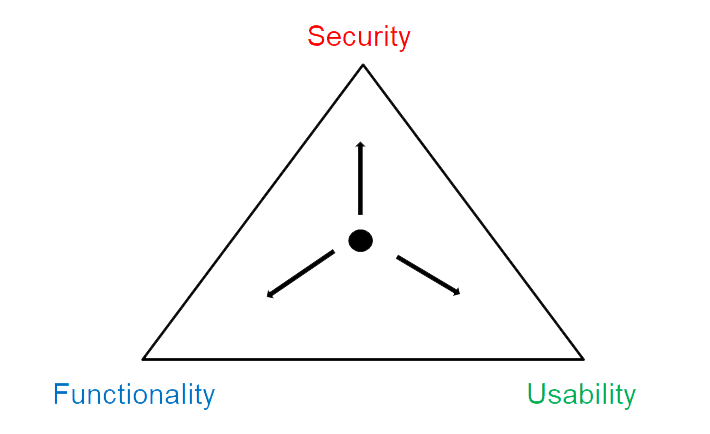
Let's break them down:
- Security: How resistant is the network to attacks? A secure blockchain can defend itself against malicious actors trying to alter the ledger or halt its operation.
- Scalability: How many transactions can the network process, and how quickly? Scalability is measured in transactions per second (TPS). High TPS is crucial for widespread adoption.
- Decentralization: How distributed is the power and control? A decentralized network has no single point of failure and is resistant to censorship by any single entity, whether it's a corporation or a government.
The Blockchain Trilemma posits that it is challenging to optimize all three aspects—scalability, security, and decentralization—simultaneously.
Proof of Work vs. Proof of Stake
The consensus mechanism a blockchain uses reveals its priorities. Bitcoin's Proof of Work (PoW) is a fortress. It leverages immense computational power, or hashpower, to secure the network. Miners compete to solve complex puzzles, and this work makes it incredibly expensive and difficult to attack the chain. The trade-off? Speed. Bitcoin can only handle a handful of transactions per second. Its security and decentralization come at the cost of scalability.
PoW chains also achieve finality differently. A transaction has , meaning its inclusion in the blockchain becomes more certain with every new block added after it. It's never 100% final in theory, but it quickly becomes practically impossible to reverse.
Ethereum, on the other hand, transitioned to Proof of Stake (PoS) to tackle the scalability problem. Instead of computational work, security comes from economic stakes. Validators lock up their own crypto as collateral. If they act maliciously, their stake can be "slashed" or taken away. This system is far more energy-efficient and allows for higher TPS.
PoS systems can offer , where transactions are considered irreversible once included in a block that a supermajority of validators have agreed upon. The main risk here is centralization. If a few wealthy entities control a large portion of the staked coins, they could potentially exert undue influence over the network.
| Feature | Proof of Work (PoW) | Proof of Stake (PoS) |
|---|---|---|
| Security Model | Computational Power (Hashrate) | Economic Stake (Collateral) |
| Scalability (TPS) | Low | High |
| Energy Use | Very High | Low |
| Finality | Probabilistic | Often Deterministic |
| Centralization Risk | Mining Pools | Large Stakers (Validators) |
Modern Hybrids
Newer blockchains experiment with hybrid models to find a better balance. Solana, for example, is known for its incredible speed, achieving tens of thousands of TPS. It does this by using a novel timing mechanism called (PoH) alongside its PoS consensus.
PoH creates a verifiable timestamp for every transaction before it's bundled into a block. This pre-ordering allows validators to process transactions in parallel, dramatically boosting throughput. The trade-off, however, leans toward centralization. Running a Solana validator requires high-end, expensive hardware, which limits the number of people who can participate in securing the network.
What does the "Blockchain Trilemma" refer to?
Bitcoin's Proof of Work (PoW) consensus mechanism is known for prioritizing which two aspects of the trilemma, often at the expense of the third?
Ultimately, every consensus mechanism is a set of compromises. Understanding the Blockchain Trilemma is key to evaluating why a network is built the way it is and what it values most.