Blockchain and Cryptocurrency Fundamentals
Introduction to Blockchain
What Is a Blockchain?
Think of a shared digital notebook that’s duplicated and spread across a vast network of computers. Every time someone adds a new page, that page is sent to everyone else, and they all add it to their copy. This is the basic idea behind a blockchain. It’s a distributed digital ledger.
At its core, blockchain is a decentralized digital ledger that records transactions across multiple computers in a secure and transparent manner.
Unlike a traditional bank ledger, which is controlled by a single entity, a blockchain is maintained by its participants. This structure allows for secure and transparent record-keeping without needing a central authority to verify everything. Its purpose is to create a trustworthy and unchangeable record of transactions.
Blocks and Chains
The name “blockchain” hints at its structure. Information is grouped together into 'blocks'. Each block contains a batch of transactions, a timestamp, and a crucial piece of information: a reference to the block that came before it.
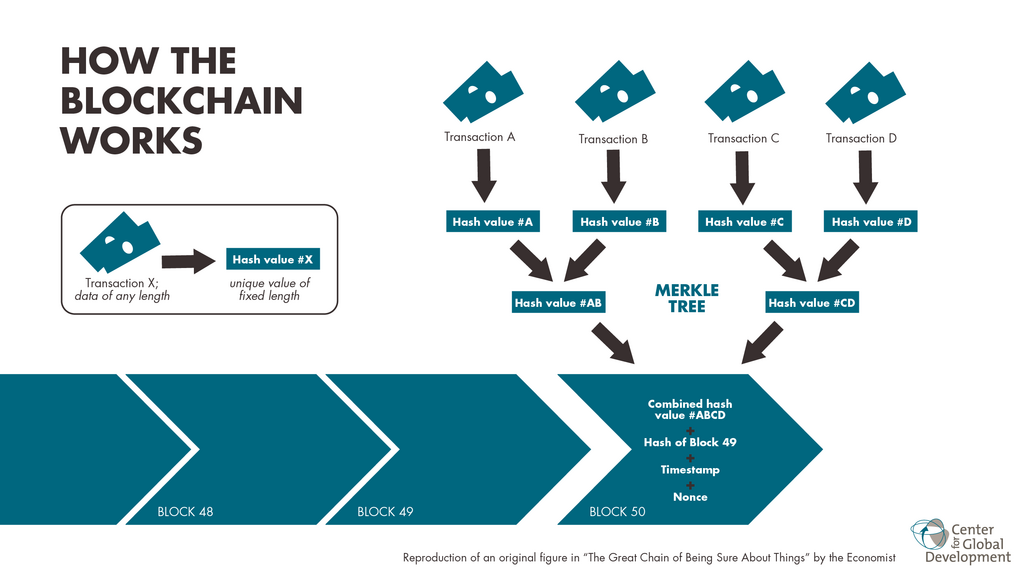
This reference is a cryptographic hash. A hash is a unique, fixed-length string of characters generated from a piece of data. If you change even a single character in the original data, the hash will change completely. Each block contains the hash of the previous block, creating a secure link between them. This forms the 'chain'.
This chaining makes the ledger immutable, or unchangeable. If someone tried to alter the data in Block 1, its hash would change. This would break the link to Block 2, because Block 2's 'Previous Hash' would no longer match. To successfully alter the chain, an attacker would need to recalculate the hashes for every single block that came after it, which is practically impossible on a large network.
The Power of Decentralization
Traditional databases are centralized. Think of a bank storing all your financial records on its own servers. If those servers are hacked, corrupted, or shut down, the data is at risk. A single entity has total control.
Blockchain is decentralized. The ledger isn't stored in one place; it's distributed among all the participants in the network. Every participant, or 'node', holds a complete copy of the ledger. This design has several key advantages.
First, there's no single point of failure. If one computer on the network goes offline, the blockchain continues to operate without interruption. Second, it's resistant to censorship. Since no single person or group is in charge, no one can decide to block or reverse transactions they don't like. Finally, it provides transparency, as all participants can see the history of transactions.
Reaching an Agreement
If everyone has a copy of the ledger, how does the network agree on which new blocks to add? This is solved using a consensus mechanism. It's a set of rules that allows the distributed nodes to stay in sync and agree on the true state of the ledger. The two most common mechanisms are Proof of Work and Proof of Stake.
Proof of Work (PoW) This was the first consensus mechanism. In PoW, network participants called 'miners' use powerful computers to solve complex mathematical puzzles. The first miner to solve the puzzle gets to add the next block to the chain and is rewarded for their effort. This process requires significant computational power, which helps secure the network by making it expensive and difficult for anyone to attack.
Proof of Stake (PoS) In a PoS system, participants 'stake' their own cryptocurrency to get a chance to be chosen to create the next block. Think of it like a lottery where the more you stake, the higher your chance of being selected. If a participant validates a fraudulent transaction, they lose their stake. This incentivizes honest behavior without the massive energy consumption of PoW.
Both methods achieve the same goal: they provide a secure way for a decentralized network to agree on new transactions, add them to the blockchain, and ensure that everyone's copy of the ledger remains identical.
What is the primary purpose of a blockchain?
What links one block to the next in a blockchain?
By combining these elements—blocks of data, a cryptographic chain, decentralization, and a consensus mechanism—blockchain technology creates a powerful system for secure and transparent record-keeping.