Blockchain and Cryptocurrency Explained
Introduction to Blockchain
What Is a Blockchain?
At its heart, a blockchain is a special kind of digital notebook. Imagine a notebook that's copied and shared with a huge group of people. Whenever someone adds a new page, that page is instantly added to everyone else's copy. This isn't just any notebook; it's a shared, synchronized, and secure record book.
In more technical terms, a blockchain is a distributed, immutable ledger. Let's break that down.
Ledger
noun
A book or other collection of financial accounts of a particular type.
The main purpose of a blockchain is to allow people, who may not even know or trust each other, to share valuable information in a secure, tamper-proof way. It removes the need for a central authority, like a bank or government, to act as a middleman and verify things. It creates a system where trust is built into the technology itself.
The Three Pillars
Three key characteristics make blockchain technology unique and powerful: decentralization, transparency, and immutability.
Decentralization means there is no single point of control. In a traditional system, a company like a bank stores all your data on its central servers. If those servers go down or are hacked, your data is at risk. A blockchain, however, is distributed across a network of many computers. The ledger lives on every computer in the network, so there’s no single point of failure. To take down the network, you'd have to take down all the computers at once.
Transparency might sound contradictory to security, but in a blockchain, it means that all transactions are visible to everyone on the network. When a new transaction is added, it's broadcast to all participants. This shared visibility ensures that everyone has the same version of the ledger, making it difficult for anyone to cheat the system. However, this transparency is usually pseudonymous. Participants are identified by an address, not their real name, offering a layer of privacy.
Immutability means that once data is recorded on the blockchain, it cannot be changed or deleted. Transactions are recorded in blocks, and each new block is cryptographically linked to the one before it, forming a chain. If someone tried to alter the data in an old block, they would change its unique cryptographic signature. This would break the link to all subsequent blocks, and the rest of the network would immediately reject the change. This makes a blockchain an incredibly reliable record of events.
A Brief History
While the core ideas behind blockchain existed for years, the technology came to life in 2008. A person or group using the pseudonym Satoshi Nakamoto published a paper outlining a digital currency called Bitcoin. In January 2009, the Bitcoin network was launched, and blockchain technology was used for the first time as the public ledger for all its transactions.
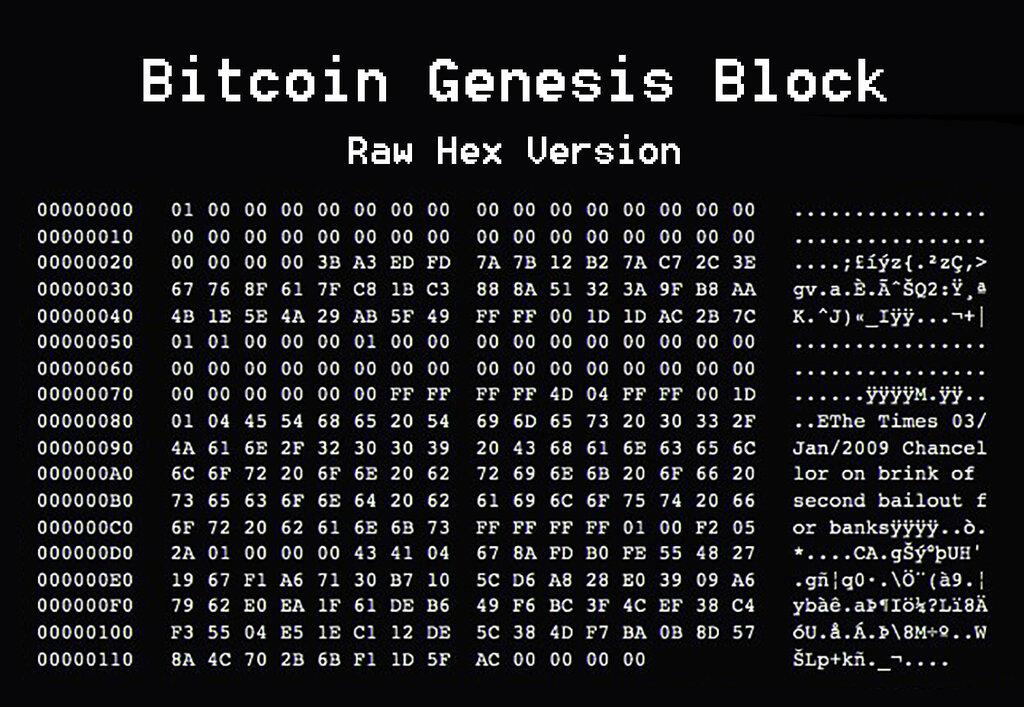
Initially, blockchain was seen only as the engine that powered Bitcoin. It solved a long-standing computer science problem for digital money: how to prevent someone from spending the same digital coin twice without a central bank to verify it. But developers soon realized the potential was much bigger. The concept of a secure, decentralized ledger could be applied to almost any type of transaction or data, from medical records and voting systems to supply chains and property rights.
The Role of Cryptography
Cryptography is the science of secure communication, and it's the mathematical magic that makes blockchain work. It's used in two fundamental ways: to secure the identity of participants and to link the blocks together.
Every transaction on the blockchain is digitally signed, proving its authenticity. More importantly, cryptography is used to create the chain itself. Each block of transactions is run through a mathematical function called a "hash function." This function takes the data in the block and converts it into a short, unique string of characters, like a digital fingerprint.
Each new block contains its own data, its own unique hash, and the hash of the block that came before it. This is what creates the strong, unbreakable chain.
If even a tiny detail in a block were changed, its hash would change completely. Because the next block contains the original hash, the chain would break. This simple but powerful mechanism is what ensures the integrity of the entire blockchain, making it an immutable and trustworthy record.
What is the primary purpose of blockchain technology?
In the context of blockchain, what does 'immutability' mean?